Being prepared for natural and man-made disasters is important, especially for the disability community. Safe rooms can save lives — here’s how to prepare one so you’re ready if disaster strikes.
Safe Room vs. Storm Shelter
Safe rooms and storm shelters both serve the purpose of protecting individuals during extreme weather events, but they differ in location, accessibility, capacity, and versatility.
A safe room is typically built inside a home—often in a bedroom, closet, or other reinforced interior space—making it easily accessible during a storm. It is generally intended for a smaller number of people, such as a single family. Though safe rooms can be more expensive to construct due to integration within existing structures, they may also increase the value of a home.
There are two main types of residential safe rooms: In-Residence, which are integrated into the home (like a reinforced closet or bathroom), and Stand-Alone, which are separate structures outside the home, either above or below ground.
A storm shelter may be located above ground in a garage or outbuilding, or below ground in a basement or excavated area. While they might be harder to access quickly, they often have larger capacities and can double as storage or utility spaces. Storm shelters, especially prefabricated ones, are generally more affordable, though underground versions may face flooding risks. A common example would be an underground concrete shelter in a yard.
Storm shelters are especially common in the Southeast and Midwest United States, where tornado activity is frequent and lower water tables allow for underground construction.
FEMA offers comprehensive resources for understanding and planning for both safe rooms and storm shelters, including guidance on assessing risk, preparing emergency kits, and understanding the types of damage caused by tornadoes and hurricanes.
Where to Put Your Safe Room
Where should you put a safe room in your home? FEMA suggests:
- Find a room that is large enough for everyone in the household, including your pets. Account for extra space for all needed mobility equipment.
- Find an area in the lowest floor of your home. If there is no basement, an area on the first floor should be your next option. Below ground space is the safest location.
- The chosen room should be an interior room without windows. None of the walls of the safe room should be an exterior wall, and it is preferable to have only one door.
- The safe room should be away from masonry chimneys, trees, or electrical poles.
- Avoid rooms with high ceilings. These rooms can have long-span roofs that can collapse from high winds.
- If you do take refuge in a basement, there should be no exterior doors or large windows. If this your only option, choose an area in the basement away from doors and windows.
- The safe room should be free of clutter to allow room for needed items and equipment.
- Consider potential flood hazards.
How are Safe Rooms Built?
Most often safe rooms can be built onto an existing home or included in the construction of a new home. Homeowners can build or retrofit the interior spaces of their home or garage to safe-room standards or choose to buy prefabricated safe rooms designed to withstand tornado-force winds. Closets, bathrooms, laundry rooms and outdoor rooms like garden sheds and pool houses can also be enhanced to serve as safe rooms.
If you decide that you want to build your own safe room or hire a contractor, ensure you have enough time to plan and consider the cost. The safe room or shelter must meet all of the applicable Federal Emergency Management Standards. and if you hire a contractor the National Association of Home Builders offers important tips.
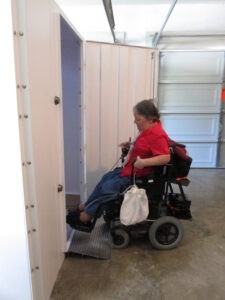
There are also pre-fabricated safe rooms. They are built with reinforced concrete, concrete block or wood framed walls with plywood or steel sheathing. The ceiling of the safe room is covered with similar materials and is independent of the house structure. Everything is then tied down to the foundation from the top of the safe room to help against the uplift forces that can take place during a tornado or hurricane.
The exterior material helps to protect the occupants from flying debris. There are accessible options for pre-fabricated safe rooms, such as those offered at Tornado Alley Armor.
Kleo King, Senior Director of Accessibility Operations & Counsel for Accessibility Services says there should be on an accessible route, the door must provide clear width and maneuverability, have accessible hardware including the locking mechanism, accessible light switches and maneuvering space in the room.
Cost?
The cost for a shelter varies depending on the location. A garage shelter will range from $3,000-$9,000, a basement shelter $6,000-$15,000, and a safe room could cost between $3,000-$10,000. Factors that affect the cost:
- Size and location
- If you are building a safe room in a new home or retrofitting in an existing home
- Construction materials
- Type of foundation
- Cost of Excavation
- Geographical location within the United States
- Added amenities
- Installation of the safe room door assembly
The pre-fabricated safe rooms often cost less than safe rooms that are built on-site. These are usually installed outside of the home or installed in-ground. The cost involved with these safe rooms most likely includes the cost of the unit, delivery, labor, and any foundation work that is needed. Keep in mind if a supporting foundation is needed, the cost of the reinforced concrete slab to anchor the unit will increase the cost.
There are possible funding opportunities for people wanting to build a residential safe room. To learn about eligibility and financial assistance, you can contact your State Hazard Mitigation Officer (SHMO). The SHMO can tell you what information you must provide to be considered for funding, and what federal, state, and local design requirements that must be applied.
Stocking Your Safe Room
Working group member, Sandy Byrd, suggested the following when considering necessary supplies:
- Water
- Blankets, rags, or towels
- First Aid Kit with a supply of your personal medications
- Any specific medical supplies, such as catheters
- Gloves and hand sanitizer
- Pen and paper with necessary phone numbers
- LOUD whistle to air horn to alert rescue teams
- Hand cranked NOAA radio with built in flashlights
- Battery operated flashlights with extra batteries or battery banks
- Power source and chargers for needed equipment
- A supply of non-perishable food
- Don’t forget about your pets and their needed items such as food and medication
Working Group member, Donna Harris, shared a Pet Disaster Kit Checklist to help with ensuring our pets and service animals are safe during disasters.
You can also refer to the resource, How to Build Emergency Preparedness Go-Bags and Stay-at-Home Kits, to help guide your preparation.
According to the US Census Bureau, disabled people are almost twice as likely to be displaced by natural disasters and are often left behind during evacuation and recovery efforts. They are up to four times more likely to die as the result of a natural disaster.
The neglect of people with disabilities during natural disasters is mostly due to their exclusion from the planning process. Addressing this disparity and improving outcomes for all people is now more important than ever as disasters fueled by climate change become more frequent and intense.
Resources
- Taking Shelter from the Storm: Building or Installing a Safe Room for Your Home
- Safe Rooms and Refuge Areas in the Home
- Residential Tornado Safe Room Doors
- Additional One-Page Safe Room Resources
- Flood Hazard Siting and Elevation Criteria for Residential Safe Rooms
- Federal Alliance for Safe Homes
- State Hazard Mitigation Officers
- Pet Disaster Kit: Easy as 1-2-3
- The Wheelchair Emergency Preparedness Compendium You Always Wanted
- How to Build Emergency Preparedness Go-Bags and Stay-at-Home Kits
- Generators and Emergency Preparedness
United Spinal’s Emergency Preparedness Working Group collaborates with advocates across the United States to ensure people with disabilities are safe when disaster strikes.