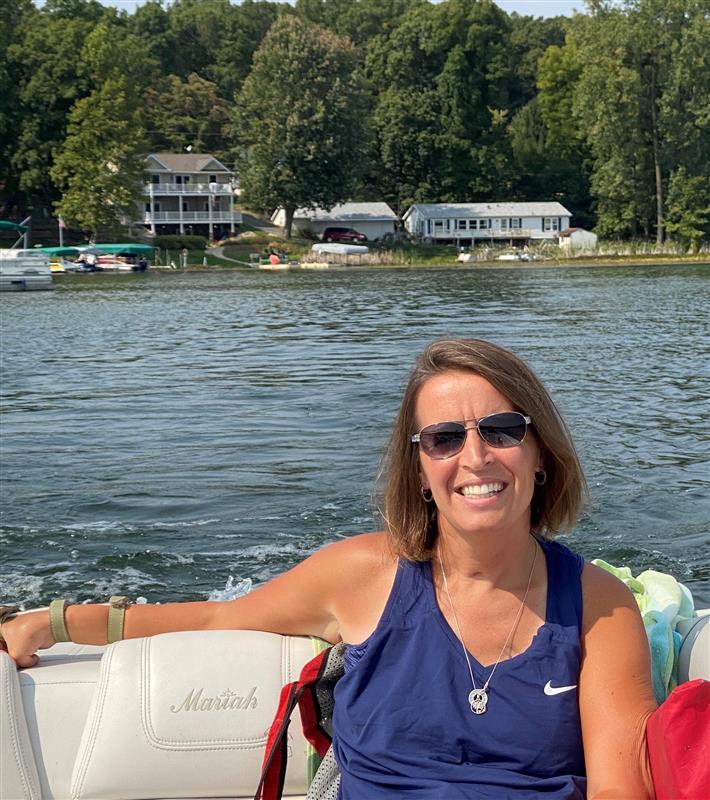
Meet Linda Norah-Davis, an attorney and the United Spinal Association of Houston Chapter Advocacy Coordinator. When she was 18, she was hospitalized for a spinal cord tumor that resulted in an SCI. She received a few months of physical therapy in her home state of Louisiana but was never referred to rehab.
Over 30 years later, she decided to go to TIRR Memorial Hermann in Houston, Texas, for rehabilitation.
It was a life-transforming decision.
“My experience with TIRR, a Spinal Cord Injury Model System, changed my life tremendously,” says Linda. She shared why increasing funding for SCIMS, the National Spinal Cord Injury Statistical Center (NSCISC), and the Model Systems Knowledge Translation Center (MSKTC) is so important during United Spinal Association’s Education Day, which helps to prep those taking part in United Spinal’s Virtual Advocacy Day.
The right rehab can undo years of painful misinformation
Linda spent 34 years using an indwelling catheter. This resulted in over six hospitalizations with some very critical and near-death situations. Yet, she was told by her urologist that the Foley could never be removed. She persistently asked about new products as they emerged but was repeatedly told that she was not a candidate.
This was not accurate information.
On Linda’s second day at TIRR, a urologist informed her that they could remove the Foley catheter she had been battling with for all those years. “It was an amazing moment! Really? After being told for 34 years that would never happen for me,” she says. That was the moment she realized she had been receiving inadequate care for a person with an SCI. “My urologist didn’t have the expertise or knowledge to find what would be great for me.”
After her time at TIRR, Linda gained a newfound independence that improved her life tremendously. “I continue to improve my confidence,” she says. “I’m going out and being social with people because I no longer have the Foley and the bag, which affected me emotionally and psychologically. It took something from me.”
Linda later became a community advisor for TIRR, which opened her eyes to the importance of research. “People are living longer with their spinal cord injuries because these Model Systems are there to research what we need to improve our quality of life,” she says.
Linda supports and advocates for the SCI Model Systems because they have extended her life and positively impacted others undergoing rehabilitation.
“The Spinal Cord Injury Model Systems is not just a name,” says Linda. “It has impactful effects when you are in the right place that just focuses on all these different disciplines to treat the patient with a spinal cord injury.”
How you can help
Over 100 wheelchair users and allies held virtual meetings with their Congresspeople on March 13 as part of United Spinal’s Virtual Advocacy Day. They presented our community’s priorities for inclusion in legislation to fund the government for the fiscal year 2025.
You can participate by sending the Help Our Model Systems and the Support Disability Independence Now Action Alerts to your Members of Congress.