
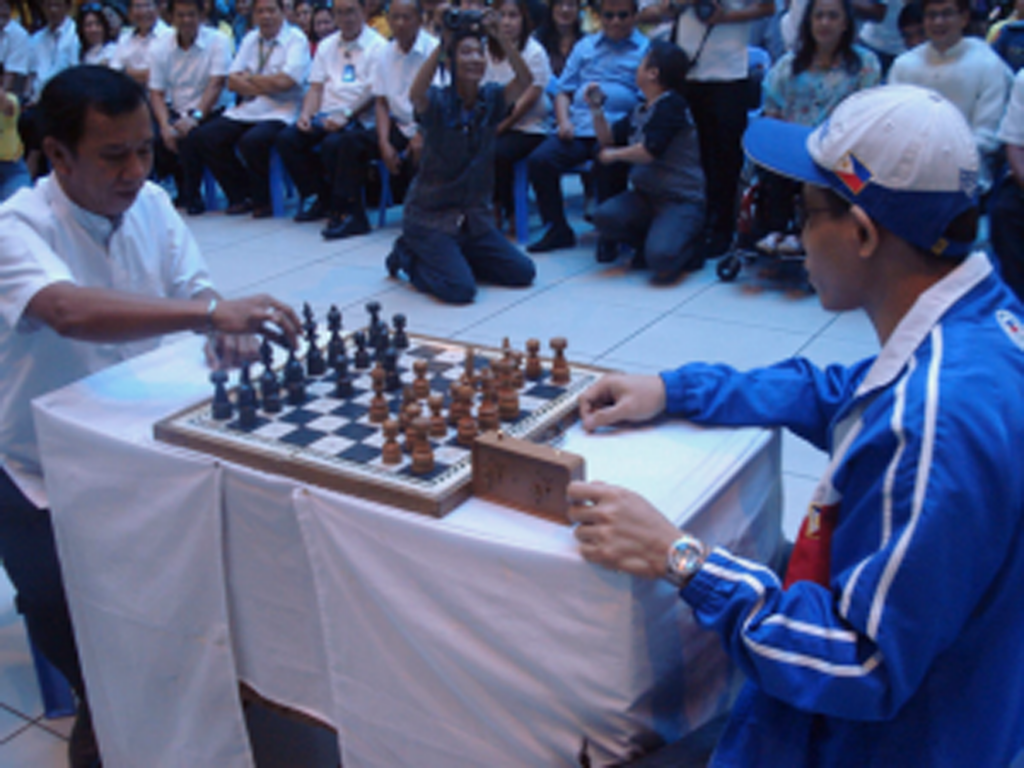
Francis Ching isn’t content with being the top blind chess player in his country. He wants to be the first Filipino blind chess grand master.
After a high fever at the age of three, Francis became partially blind. As his eyes progressively degenerated from an inherited eye disease called retinitis pigmentosa, he became totally blind at the age of 20. “Most people think that because we are blind, we are also deaf. They raise their voice to us. And they think that we cannot understand them easily.”
By day, Francis is a massage therapist – “an ordinary employee” – at Vibes Massage, a massage centre in his home city of Mandaluyong, east of Manila. The business, led by a visually impaired president and vice-president, hires more than 800 visually impaired employees across four cities.
Embracing a passion
As a child, he knew how to play chess – for fun. But his visual impairment has brought his recreational play to new heights.
“When I got totally blind, I stopped playing. But when I discovered that there’s chess for the blind, I joined the Philippines team.”
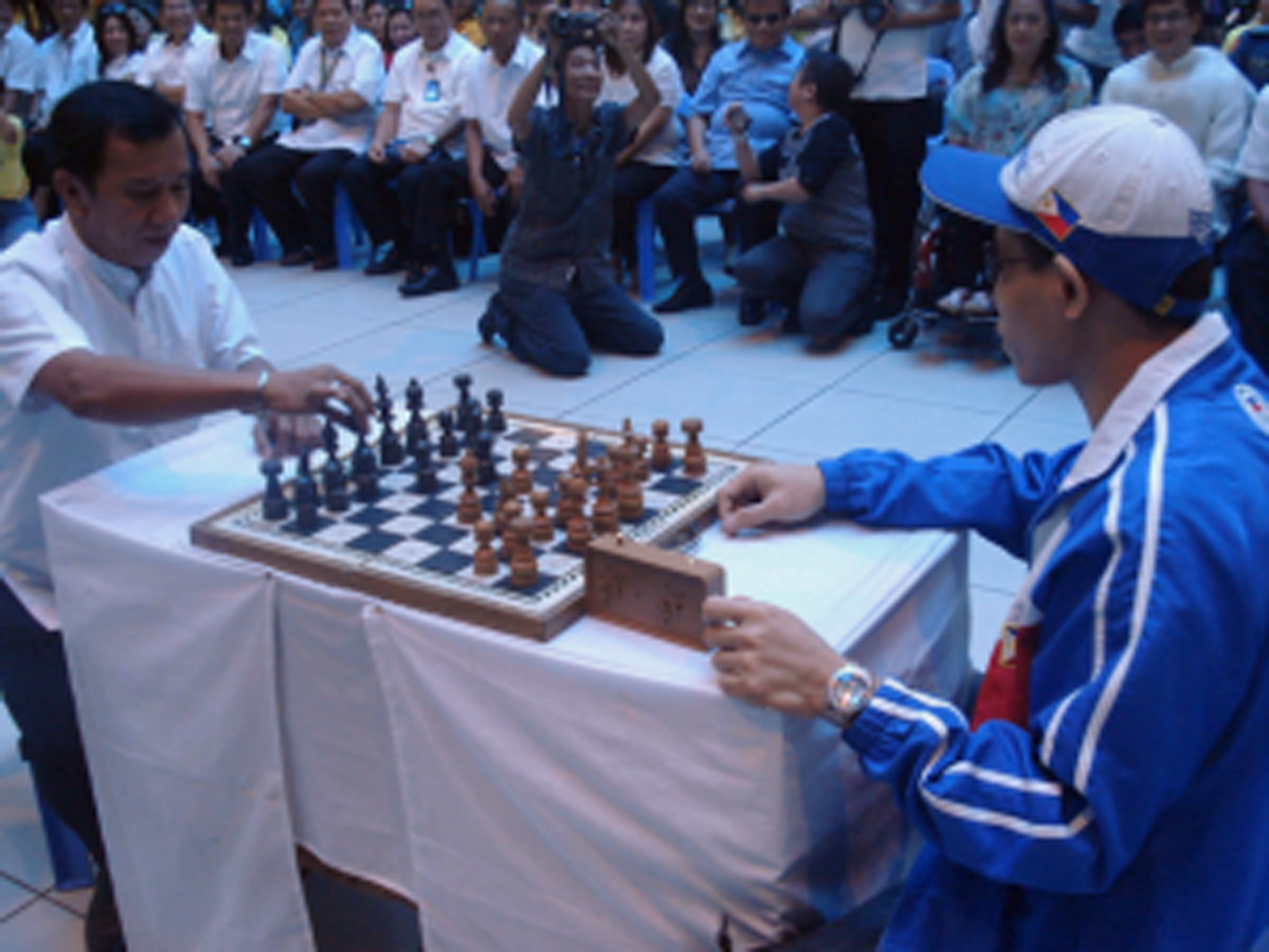
While blindfold chess is a form of advanced chess play that has been around for centuries, it is played by a blindfolded sighted player with one or more sighted players and not by the visually impaired. The sighted players announce their own moves, manoeuvre the pieces of the blindfolded players and also let them know when it’s their turn.
In contrast, chess for people with disabilities has only been officially recognised in the last 60 years and is played by athletes who are partially blind, totally blind, or who have a physical disability. In chess for the blind, players rely on the chess clock to know when to make their move. The chess board is functionally adapted with holes to hold the chess pieces. This allows the players to feel for the location of the pieces without knocking them over. Black pieces are fixed with pins on top, which helps players to differentiate the two colours.
Going beyond strategy
While seeing players only have to work on their strategies, Francis has to work harder in order to play as well as he does. Having lost his sight only at the age of 20, he can appreciate both perspectives of his training needs.
“Before, I didn’t have to memorise pieces on the chessboard. But now I have to memorise the pieces, in addition to the squares and the tactics. It’s hard, very hard.”
Since 2005, Francis has been the top blind chess player in his country. While he won gold in the recent national games in March, he only manages a second or third finish at the regional level. “I’ve won medals in the ASEAN Para Games many times. Every Games I get silver or bronze, [since] Myanmar always takes the gold medal.” His ultimate goal however, is to be “the first blind chess master in the Philippines”, a title that has not yet been conferred on any blind player there.
He feels that playing chess has taught him to be more patient. Indeed, that is his advice for anyone thinking of taking up chess. “Playing chess is time consuming. You have to be patient and determined, and you have to practise maybe two hours a day.”
“I’m very proud of my talent. Here in Mandaluyong I’m always acknowledged by the city mayor. I’m proud that I can contribute to my city and country.”