
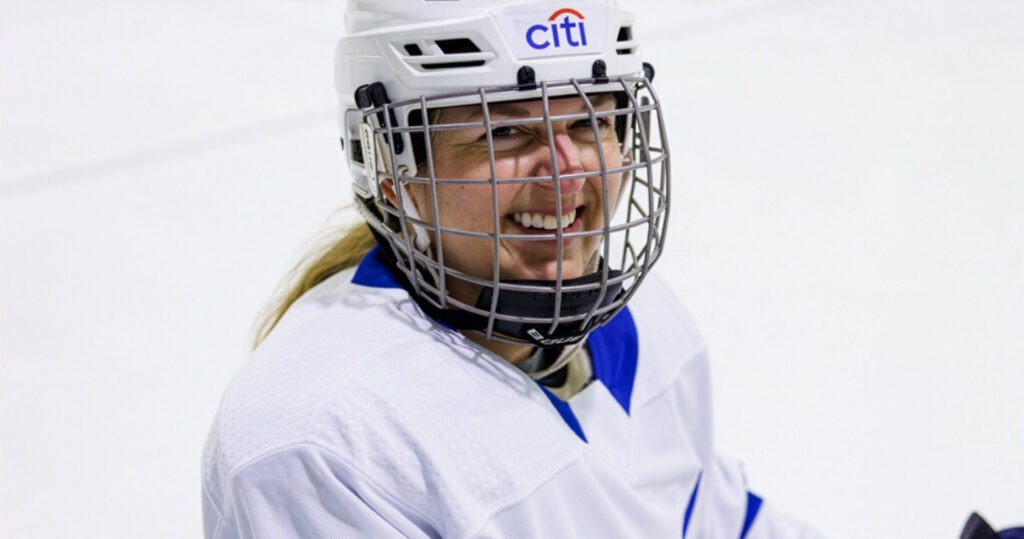
Monica Quimby is booked and busy. Since she was injured in a 2006 skiing accident, she served as Ms. Wheelchair Maine 2011. She’s been a member of the Team USA para hockey team for 12 years and she has worked as a biology professor at Southern Maine Community College.
She recently shared more of her story on United Spinal’s Meet an Advocate series with Annie Streit, United Spinal’s grassroots advocacy manager. Here are the highlights of their conversation.
Annie: Can you give a little background about yourself and how you’re involved with the disability community?
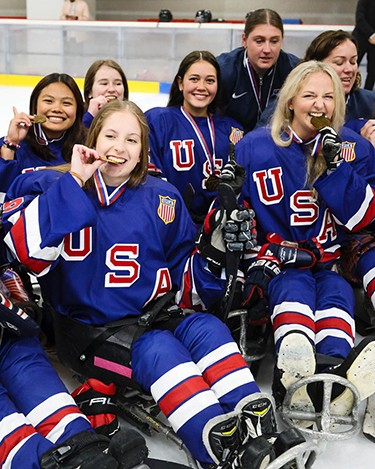
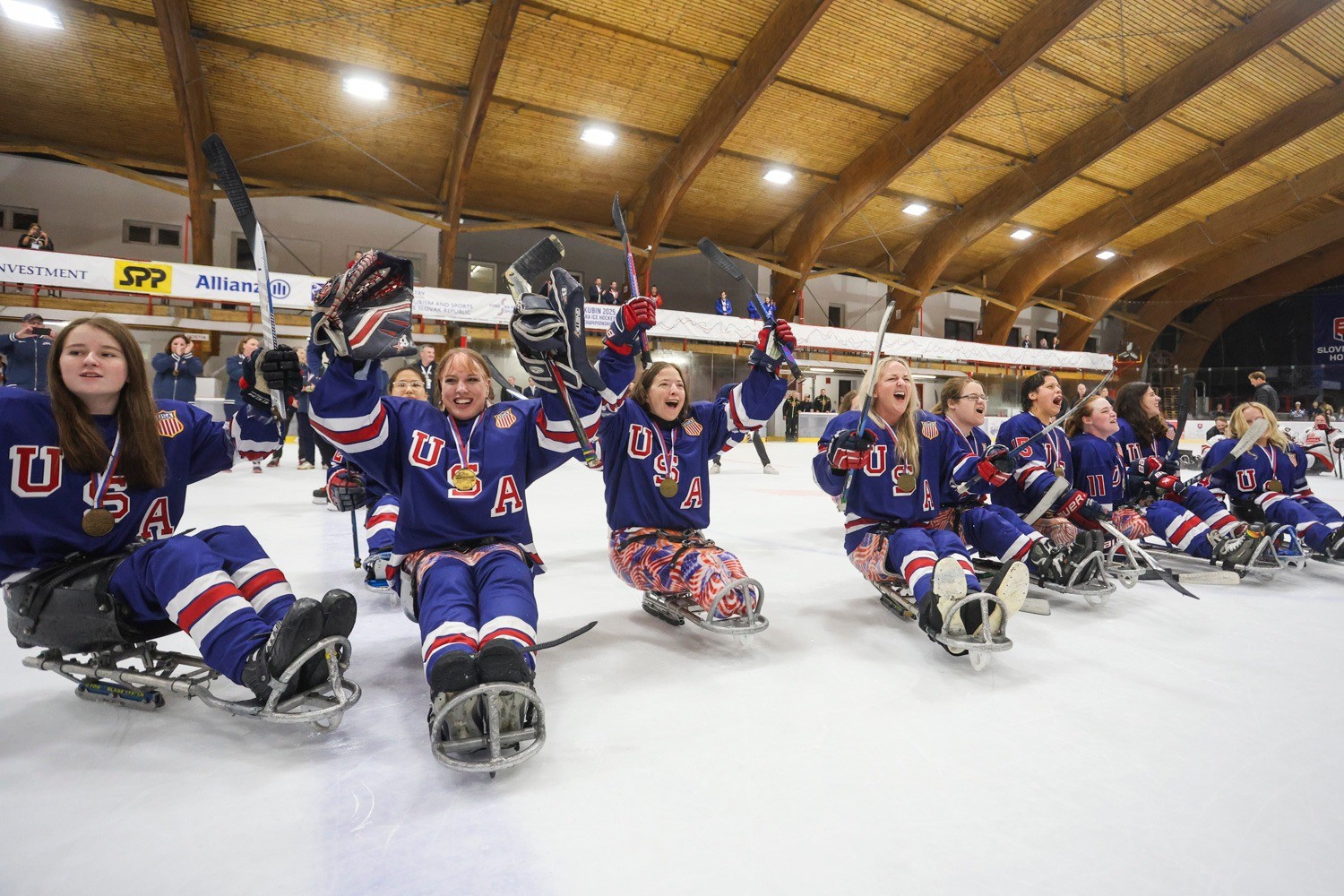
Monica: I have been paralyzed for 20 years and got into advocacy through Ms. Wheelchair America. It was a bunch of women that were super involved and driven. And I was like, this is exactly where I need to be. I’ve been a biological science professor and I’ve been published in strawberry research. I’ve also been on Team USA for 12 seasons. We just won in Slovakia at our first world championship in 2025.
Annie: You were Ms. Wheelchair Maine in 2011. What was your driving force behind doing that?
Monica: I was trying to find something to get involved with that wasn’t just academics. I had just become a full-time professor at 23. And I really wanted to connect more with the part of me that’s disabled.
I was like, there’s got to be more people like me out there. That was my first real connection to other women with disabilities and that was such a huge thing to be able to experience.
Annie: How did you get involved with sled hockey?
Monica: I kind of had a quarter-life crisis, if you will. I was 25 and it snowed over 120 inches in Maine. So I bought a convertible and I moved to Florida. Initially, I actually did paracanoe and I have a silver medal from that in 2014. Soon after, I got involved with the Tampa Bay Lightning sled hockey team and I fell in love.
I missed having a team sport. I love that it was super intense and it’s full check [body-to-body contact]. It felt able-bodied and very independent to me because I can get on the sled anywhere in the country, anywhere in the world. And it gave me that same freedom that I used to have from skiing, where I was able to just go whenever I wanted, blow off some steam and have a good time.
The best part as a team sport is that you’re also there with your best friends, right? Just like with Ms. Wheelchair America. I have this sisterhood and I have these amazing teammates on both the USA and Tampa Bay Lightning team.
Annie: We have the Olympics and Paralympics coming up, but women’s sled hockey is not part of the Paralympics yet, correct?
Monica: Not yet. We’re on the Paralympics track, which is super exciting. There’s all these check boxes that you need to have in order to have a Paralympic bid. We’ve officially had our first world championship. So that’s a huge milestone.
You have to have six teams from at least three different areas and we’ve achieved that. Our next goal is to have eight teams from at least three different areas at a world championship. And then we can put in a Paralympic bid, which is super exciting. It’s looking really great for 2030.
Annie: I love watching the Paralympics. It’s one of my favorite things because I was an athlete before my injury and was the same way. I love team sports and the camaraderie. And I really feel like the competitiveness that is embedded in you from being an athlete helped me with my spinal cord injury journey.
Monica: That adapt and overcome mentality, right? You can’t tell me I can’t do it. I’m going to find out how to do it and do it twice as well.
But it’s more difficult for me to play the sport. Because the majority of people on the team are amputees and have various disabilities. With sled hockey, you have to have an impairment where you can’t skate upright. I’m pretty much the most disabled on the men’s or the women’s team at this point. But I’m very proud to represent.
And for those who don’t know, for you to propel yourself, it’s all arms and core. I had a specially made high back so that I’m able to strap myself to the top of the sled so that when my back does fatigue at the final moment, I’m able to still continue on. I’ve had to work three times as hard just to be competitive on that level. But I’ve always been driven and I’m never going to say no if it’s something that I love.
Annie: What advice do you have for new advocates or someone new to the disability community after sustaining a spinal cord injury?
Monica: Don’t give up. It’s okay to pivot. It’s okay if you don’t do what you did before. Give yourself grace. You have survived something catastrophic and that is incredible. So honor that. And reach out, that’s the biggest thing. That’s why it’s important to have United Spinal and people like Annie and myself. We’re always here to help, so feel free to drop me a line.
Follow Monica’s journey on Instagram and watch the full Meet an Advocate conversation below.