
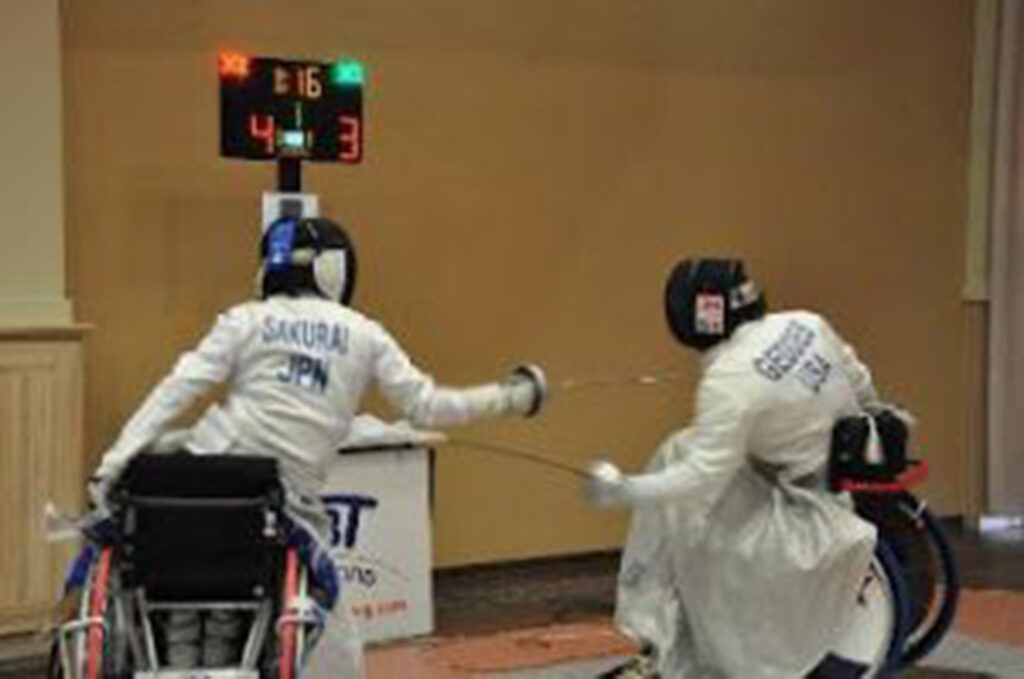
“A fast and athletic sport for sure, wheelchair fencing is as strategic as for those without disabilities, except for the fact that the wheelchairs are hooked into a frame so the competitors cannot move,” writes Kara Aiello, blogger. She interviewed fencer and fierce competitor Ellen Geddes to get the inside scoop.
Discovering wheelchair fencing
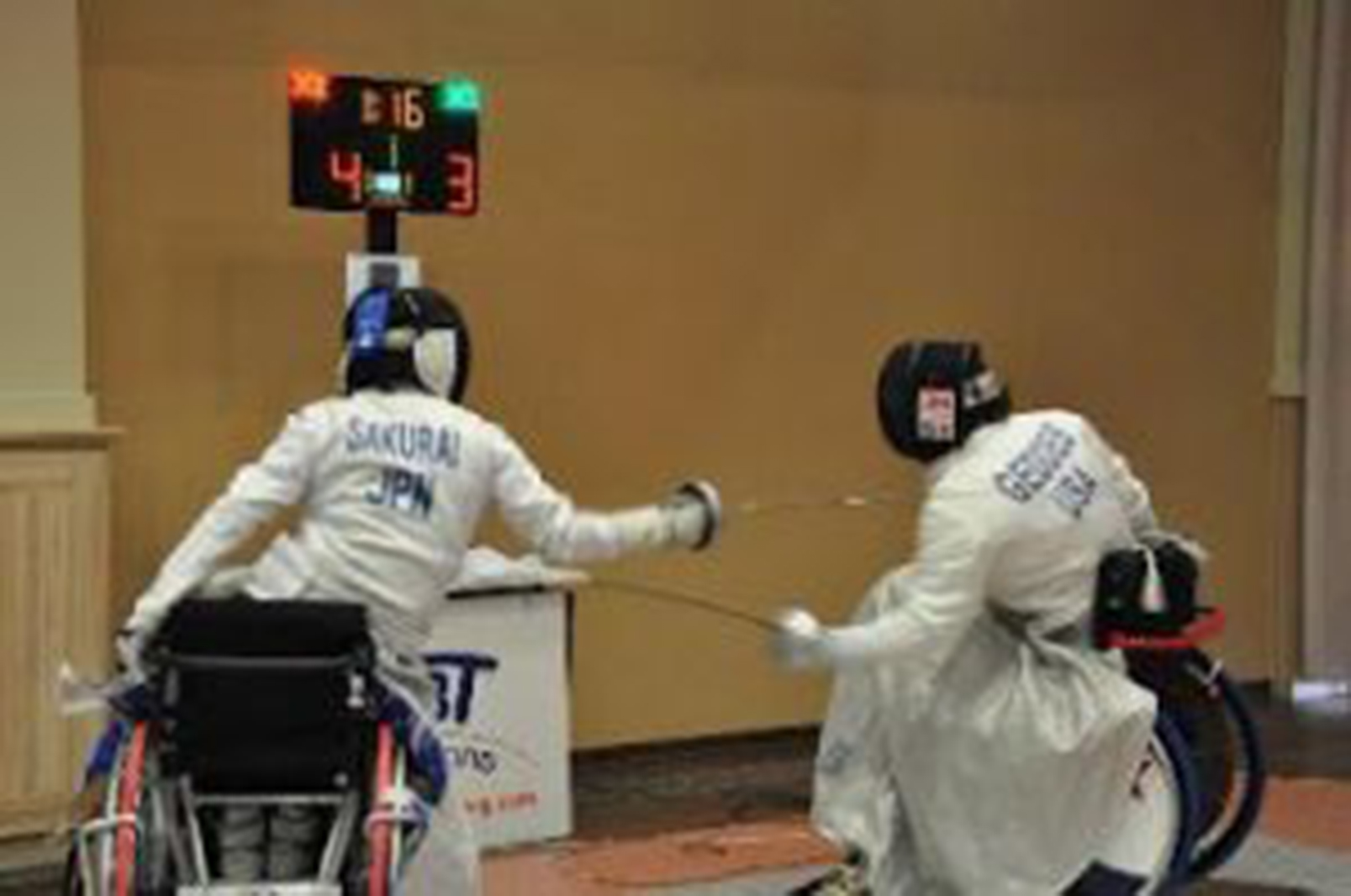
“Ms. Geddes came to learn about Fencing after she was injured in a June 2011 car accident and now lives with a complete spinal cord injury level T-10,” explains Aiello. “Upon her time in rehab in Atlanta, GA at the Shepherd Center, she was approached by the Shepherd Fencing Team Captain…and asked her if she would like to hold a sword and stab some people.” Interested at the prospect, Geddes signed up and began her fencing career in 2012. In just a short time, she qualified for her first Wheelchair World Championship Team and won her first medal.
There are three categories within fencing and one’s level of mobility determines the category one will play in. From those who can walk to those with limited arm function and everything in between, each fencer has a place. Geddes enjoys pushing herself to be better and improve, aiming for the 2016 Paralympics in Rio.
The process of qualifying for elite competitions is no joke. It requires going to multiple competitions and earning points as an individual. There are three types of fencing competitions: Espee, Foil and Sabre. (Geddes is ranked number 1 in the US for Espee, by the way!) There are may fencing clubs throughout US states, and more people working to start local chapters to encourage more growth in the sport. No doubt Geddes will inspire new athletes along the way!
Know someone interested in trying a new sport? Share this post and get the word out about fencing.