
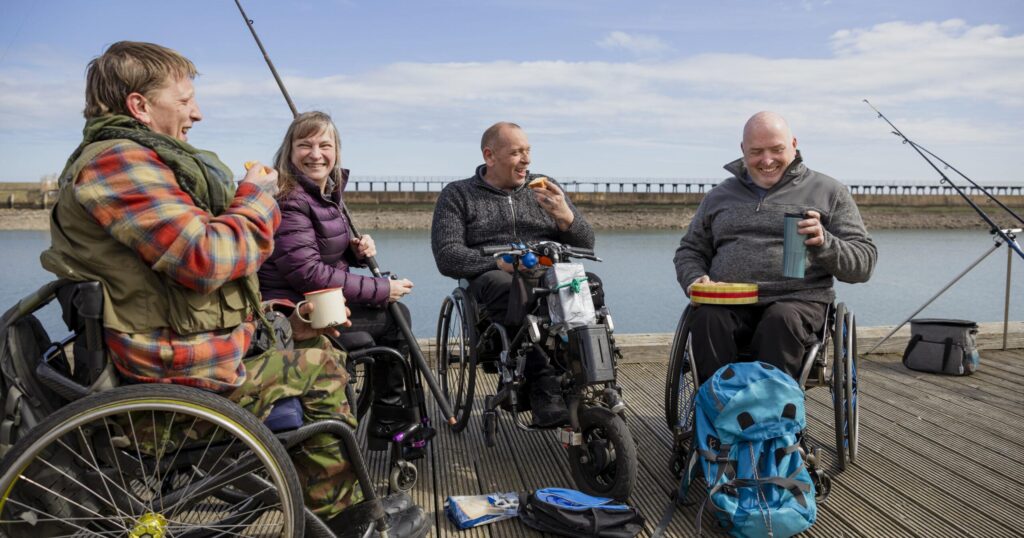
Becoming a wheelchair user can bring significant changes to one’s life. While it may seem daunting at first, there are many resources and strategies available to make the transition smoother.
United Spinal staff members reflect on their experience adapting to a spinal cord injury and offer essential advice.
The importance of a well-fitting wheelchair
Shannon Kelly: The first two chairs I had were folding chairs that were too big. The one I have now is much more comfortable and functional. It’s hard to know what will work at first, so I spent a lot of time trying my friends’ chairs.
Matt Castelluccio: Knowing your rights, the insurance appeals process, how to advocate for your needs and where to find information on different styles of chairs is important.
Find community
Annie Streit: I wish I had been aware of organizations such as United Spinal as a way to meet others through support groups or chapters.
Kent Keyser: The quicker you make friends with fellow SCI folks, the sooner you are able to get the information and support you need to put your new life and world together.
Shannon Kelly: I have been injured since I was 2 and didn’t have a group of friends in wheelchairs until I went to college. Meeting people in similar situations did wonders for my confidence and independence.
View this post on Instagram
Managing personal care
Kent Keyser: The team you need for daily living care is something you have to create. Sadly there is no program you can just plug into. Living alone, I had to assemble an entire team to continue physical therapy and to provide proper nutrition. Together over a couple of years, I gained a tremendous amount of functional independence with daily living and work.
Matt Castelluccio: In the early stages, I required assistance in the morning and evening. I used a local agency that sent me individuals who seemed to have their own ideas of what they were willing to do for me. I had workers show up intoxicated or fall asleep while I was in the shower. I wish I knew then how to go about finding and hiring my own help.
Annie Streit: The term independence doesn’t mean doing everything on my own. Rather, it means being in control of my life by learning how to care for myself, directing my personal care and being a part of any decisions that directly affect me.
Maintaining relationships with family & friends
Matt Castelluccio: I had some really great friends and family, but I felt at times that they were pitying me. Maybe I was overly sensitive to the disability. I know they did not mean to treat me differently but at times they would immediately help me without even asking if I wanted help. I felt infantile and not empowered. I wish I knew how to properly express to them how I was feeling so they better understand why I was reacting the way I was.
I wish families were taught to empower their loved ones and to challenge them to explore independence. I also wish I learned that it doesn’t make you weak to ask for help.
Annie Streit: I wish I had known that sometimes I needed to take the initiative to show friends and family, that even though I had an SCI, I am still the same person with the same loves and aspirations.
Get involved with advocacy
Annie Streit: I wish I had known that there was no reason to be intimidated by the term advocacy, and that simply sharing my story is one of the best forms of advocacy.
Shannon Kelly: We have come a long way in terms of disability rights — appreciate the dedication of past advocates while continuing to work towards change.
View this post on Instagram
Dealing with secondary conditions
Annie Streit: I wish I had known more about dealing with secondary conditions of a SCI, such as nerve pain.
Shannon Kelly: Save your shoulders — we rely on them for everything, do everything you can to keep them strong.
Daniela Castagnino: Skin care is really important.
Navigating body image
Annie Streit: I wish I had more information on dealing with my body image after my SCI. As an early 20-year-old and athlete, at times, it was difficult accepting and being comfortable with the changes my body went through.
Matt Castelluccio: My self-image was a struggle for me as well. Clothes did not fit the same, I couldn’t wear the same shoes, and it directly impacted how I felt about myself. I felt like I lost who I was to my disability. For two years, I did not look at myself in a full-length mirror because I did not want to see the chair. I wish I had clothing designed for someone who is sitting all the time. I also wish someone taught me proper nutritional health so I can manage my weight better. This would have significantly improved my self-image.
Stay active
Matt Castelluccio: I wish I got involved in adaptive sports and recreation sooner. I learned so much about life in a chair from my teammates and fellow athletes.
Kent Keyser: Find an accessible gym and use it as much as you can. Make one at home too!
Shannon Kelly: Going to the gym every week has been instrumental for my mental and physical wellness. It helps me keep up with the strength and range of motion I do have.
View this post on Instagram
You know your body best
Kent Keyser: Remember your body is still your body. So you know your body best. Advocate with your physicians and clinicians for what you think will work best to help you. I cut dosages of my prescriptions, Bactofin and Lyrica, in half within a year of rehab so I could function more normally, especially mentally. Primarily not being sleepy all day.
Shannon Kelly: Doctors don’t know everything — you know your body best and it is important to trust yourself.
Learn about insurance options
Kent Keyser: Know your health insurance inside and out and know that you can advocate successfully for coverage beyond what’s in their fine print.
Matt Castelluccio: Learn about the insurance appeals process and organizations like the Tri-State Advocacy Project that assist with appealing a denial.
Daniela Castagnino: You are eligible for a new wheelchair every five years!
Find a virtual or in-person support group on United Spinal’s Peer Support Group page. Contact our Community Support team for more information about all United Spinal’s chapters and programs. Join us by signing up for a free membership.