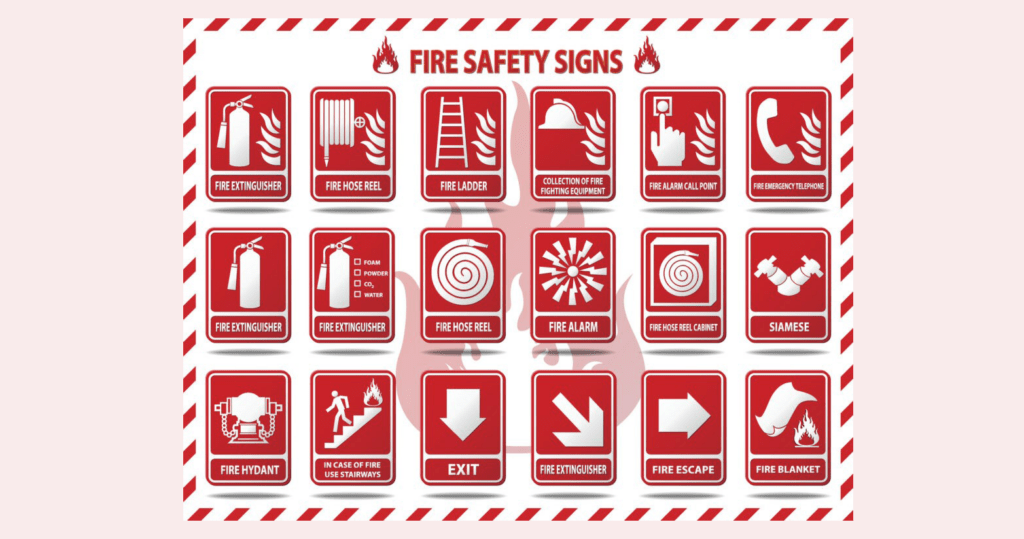
Most of us have heard the advice since childhood: if there is a fire, get out fast and call 911. For many wheelchair users and people with disabilities, it is not that simple.
What happens if you can’t get out of bed independently? What if your wheelchair is charging when the power goes out or if your accessible exit is blocked by smoke? What if first responders do not know you use a wheelchair or need assistance to evacuate?
These critical questions highlight why emergency preparedness looks different for people with disabilities, and why having a plan can save lives. Members of United Spinal Association’s Emergency Preparedness Working Group are using their experience and insight to raise awareness and encourage others to create fire safety plans that are accessible and practical for disabled people’s needs.
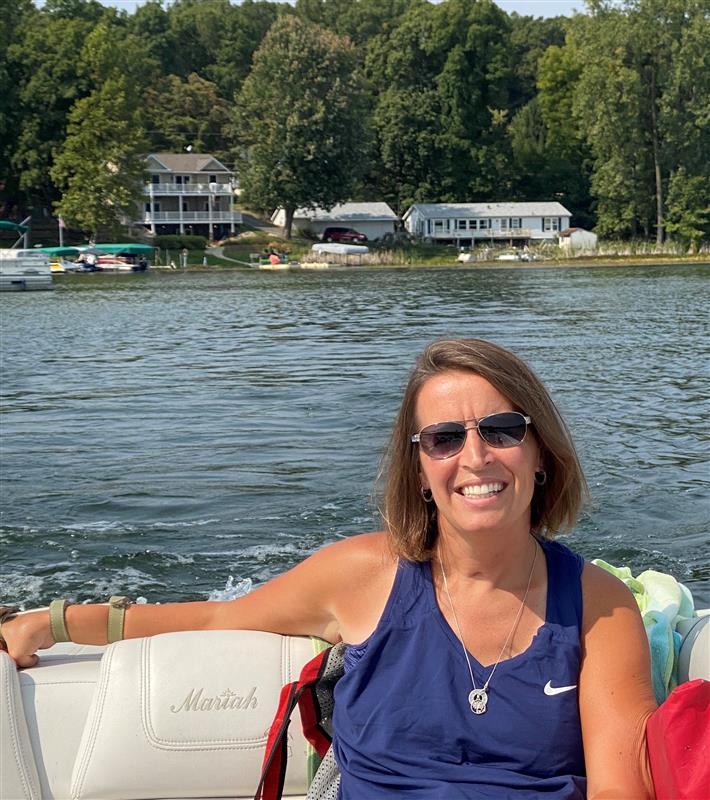
As the Northern Florida State Advocacy Coordinator for United Spinal, and a manual wheelchair user herself, Kim Harrison knows the amount of time it takes to evacuate can be dramatically different when transfers, mobility equipment, caregivers, service animals, medications or medical devices are involved.
“We have to plan ahead because of all of the equipment that we need,” she says. “That planning is what makes all the difference.”
A Close Call That Changed Everything
While none of the working group members interviewed had experienced a major house fire since becoming wheelchair users, some shared experiences that emphasize how vulnerable people with disabilities can be during emergencies.
For Spencer Blomquist, a quadriplegic and full-time power wheelchair user who relies on 24-hour nursing care, that experience was his power wheelchair unexpectedly starting to smoke while he was home alone. Thankfully, it never turned into an actual fire, but the incident changed the way he approached emergency preparedness.

“My biggest concern is honestly whether I have someone there who is physically capable, competent, and calm enough under pressure to get me out quickly,” he says.
Many group members echoed his concern, reenforcing the idea that often the fear is not the fire itself — but being trapped without assistance or a viable plan to escape.
Shanta Favors, Michigan’s Chapter Advocacy Coordinator and quadriplegic, has a stair lift and an egress window in her basement, but worries that evacuating will be significantly more challenging without a direct roll-out exit.
Kent Keyser, United Spinal’s Public Policy Fellow, lives alone as a quadriplegic and full-time power wheelchair user and fears being stuck in bed during a fire.
Accessible Housing Saves Lives
Blomquist believes housing design is one of the most overlooked aspects of emergency preparedness. “Accessible housing is not just about convenience. In some cases, it is literally about survivability.”
Living in a single-story home with three ramped, accessible exits simplifies Blomquist’s evacuation planning. “If a fire occurred while I was in bed, the emergency plan would be to get me quickly into my Adapts Transfer Sling so my nurse could drag or move me out of the house as quickly as possible if there was not enough time for a full transfer into my wheelchair.”
For wheelchair users who live above the ground floor, evacuating on short notice can be especially difficult. John Beer wrote about his experience being evacuated on a Med Sled and how it changed how he prepared for disasters in “In Case of Fire … Take Stairs?” in the January 2022 issue of New Mobility.
Apartment dwellers often face additional challenges, as elevators often become unavailable during emergencies. Wisconsin Chapter Advocacy Coordinator, Julie Withers, recommends the Fire Readiness for Wheelchair Users (FEW): An Online Fire Preparedness Program for Wheelchair User’s Manual, which includes guidance on evacuation chairs, mattresses, and sheets for individuals living on upper floors. Meeting with your building manager about evacuation and personal safety plans can be lifesaving when evacuation methods are not accessible.
Don’t Wait Until an Emergency to Meet Your Fire Department
One of the most valuable pieces of advice from working group members is simple: Communicate with emergency responders before an emergency happens.
Favors has proactively informed local responders about her quadriplegia, severe spasticity, baclofen pump, service dog, medications and physician contact information.
Many people assume firefighters will automatically know how to assist a wheelchair user during a rescue. The reality is that every disability is different. Emergency responders benefit from knowing whether someone uses a power wheelchair, requires medical equipment, has caregivers present, can transfer independently, or has medical conditions that may complicate an evacuation. The more they know, the more effectively they can help.
“Buying” Critical Time
Advances in technology are helping make homes safer and more accessible. Many working group members have incorporated multiple layers of protection into their homes.
“Technology is so important because for many people with disabilities, technology is not just convenience — it can buy critical time during an emergency,” says Blomquist. He has multiple accessible exits, automatic door openers with battery backups, smart smoke detectors, carbon monoxide alarms, gas detectors, battery-backup systems and automated emergency notifications.
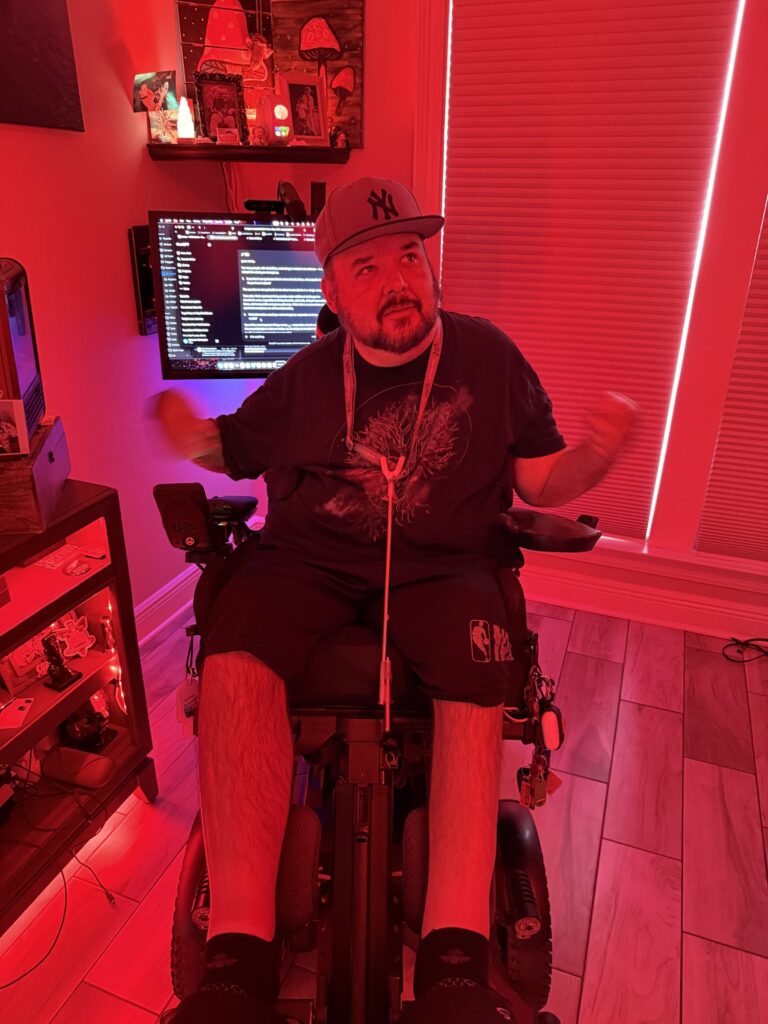
When an alarm is triggered, his home’s smart technology springs into action. “My blinds automatically open and the smart bulbs throughout the house begin flashing,” he explained. For individuals who are hard of hearing, asleep, or unable to quickly move throughout their homes, flashing lights, automated notifications and smart devices can provide precious additional seconds during an emergency.
Favors keeps accessible fire extinguishers on every level of her home and has ensured that she can reach emergency exits independently. She also uses fire blankets and intercom systems, and she has informed neighbors and local officials about her emergency needs.
Knowing a fire extinguisher is only useful if you can safely lift and operate it, disability advocate and caregiver Kathryn Carroll says fire extinguisher adaptions, such as those on Adapted Safety and A Shepard’s Protection can be especially helpful for those with limited mobility.
Preparedness Is About Independence
Being prepared is not a response to fear. It is a way to maintain independence, protect loved ones and improve the chances of a successful outcome during an emergency. By taking proactive steps, using available technology, communicating with emergency responders, and advocating for accessible housing and emergency planning, we can help ensure that no one (especially us) is left behind when seconds matter most.
Five Steps You Can Take Today
You do not have to overhaul your entire home to improve fire safety. Start with a few practical steps:
- Create and practice a written emergency evacuation plan
- Identify at least two accessible exits whenever possible.
- Install and regularly test smoke alarms and carbon monoxide detectors.
- Ensure fire extinguishers are accessible and can be operated independently.
- Notify your local fire department about mobility needs, medical equipment, service animals, and other important information.
Resources
- Fire Safety for Wheelchair Users at Work and at Home (United Spinal Association)
- In Case of Fire … Take Stairs? (John Beer)
- The Reset (Kary Wright)
If you are interested in collaborating with advocates from across the country to improve emergency preparedness for wheelchair users and people with spinal cord injuries and disorders, consider joining United Spinal Association’s Emergency Preparedness Working Group. Together, we can help build safer, more inclusive communities for everyone.