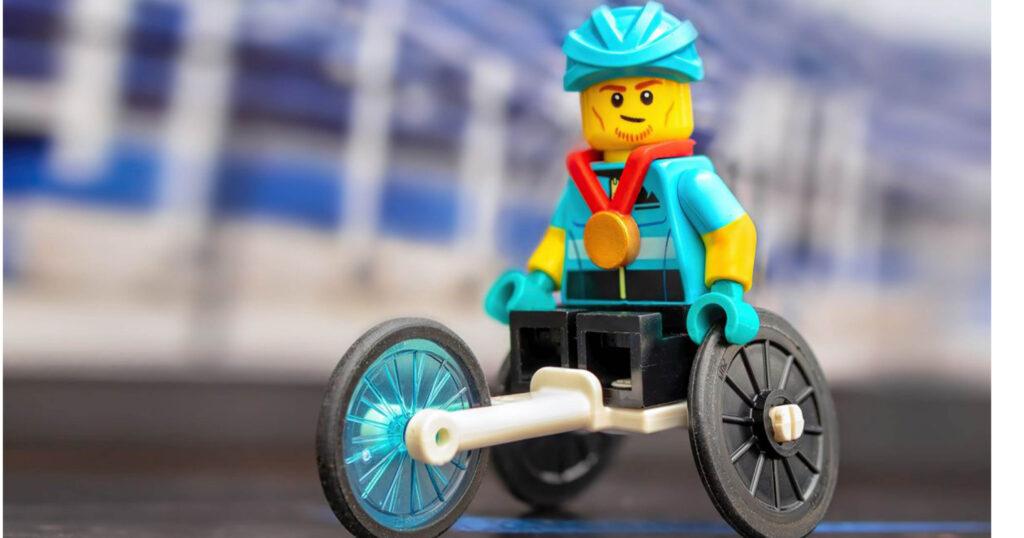
- People with disabilities require and desire cultural representation.
- Yet we are not accurately reflected in books, movies, and even in our toys.
- Considering our large market share, it’s smart business to include us.
Do people with disabilities need representation in our media and our culture?
The answer to that question is twofold: Yes, we require representation to be accepted and advance in American society. And, yes, we desire representation.
People with disabilities are the largest marginalized group in the United States — and we contain multitudes. The issue here is not whether we should be represented but how to adequately represent our community’s sheer diversity.
How disability is represented — or not represented — impacts all of us, including children before they can even read or write. Biases are formed at an incredibly early stage of development — that’s why products and cultural events geared toward children have become a battleground. Now consider this: We are over a quarter of the American population. Yet, only 3.4% of the main characters in all children’s literature have a disability. There also remains a long way to go with video games, as there aren’t many characters with disabilities. And when they have a disability, it usually furthers a harmful stereotype.
Momentum is on the side of inclusion
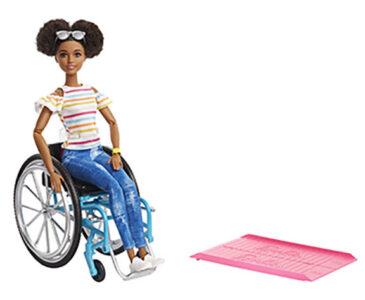
Some in the toy industry are interested in capturing young hearts and minds around disability.
Mattel introduced the wheelchair using Share-A-Smile Becky into its Barbie lineup in 1997 and has continued to produce dolls depicting disability with respect and thoughtfulness. Today few movies are being talked about more than the upcoming Barbie movie, and part of the tremendous buzz around it concerns the unveiling of a Barbie with a prosthetic.
Recently, Lego has done fabulous work, including figures representing a broad spectrum of disabilities and has met with a backlash from the usual places. It’s distressing that depictions of disability have become part of the skirmishes over inclusion and rights that have captured our media and the public square of social media.
It saddens me to see news anchors going to war against innocent and playful depictions of disability that can only help and not hurt. But it raises an important point for the rest of us.
To the companies sitting on the fence about whether and how to include our community, bear in mind what this will mean for your brand. Momentum is on the side of inclusion. Trends are turning in our favor because of our loyalty, our purchasing power, and the entire future of the market. Our collective disposable income as a community is $490 billion, and our discretionary income — what’s left after we pay our bills — is over $20 billion.
Putting our money where our values are
We all know America is becoming more diverse. But how we use our income is increasingly a matter of ideology, not just demography. Millennials and Gen Z consumers buy according to their values at an even higher rate than their predecessors. They want sustainable products offered by socially responsible companies whose marketing takes a stand against all “-isms.” So good luck hiring from these generations if your brand does not reflect their values.
Any company that stands in the way of progress can expect to fade away. This includes marketers or product managers who overlook the disability market or cannot speak authentically to us. And in this era, anyone engaging in outright bigotry will likely be drummed out of business.
Creating characters and hiring models to depict disability accurately is simply a smart business decision. Those that believe the contrary might need a crash course in consumer marketing.
I hope Corporate America continues to trend toward taking the high road and does not give in to fear. My message to you is to keep exploring our community’s highly untapped potential.
And bravo to the companies taking a stand and charting important territory with people with disabilities. You have seen into the future — and know that it is inclusive.
Chellie Hyre took the LEGO wheelchair racer photo at the top of the page.