
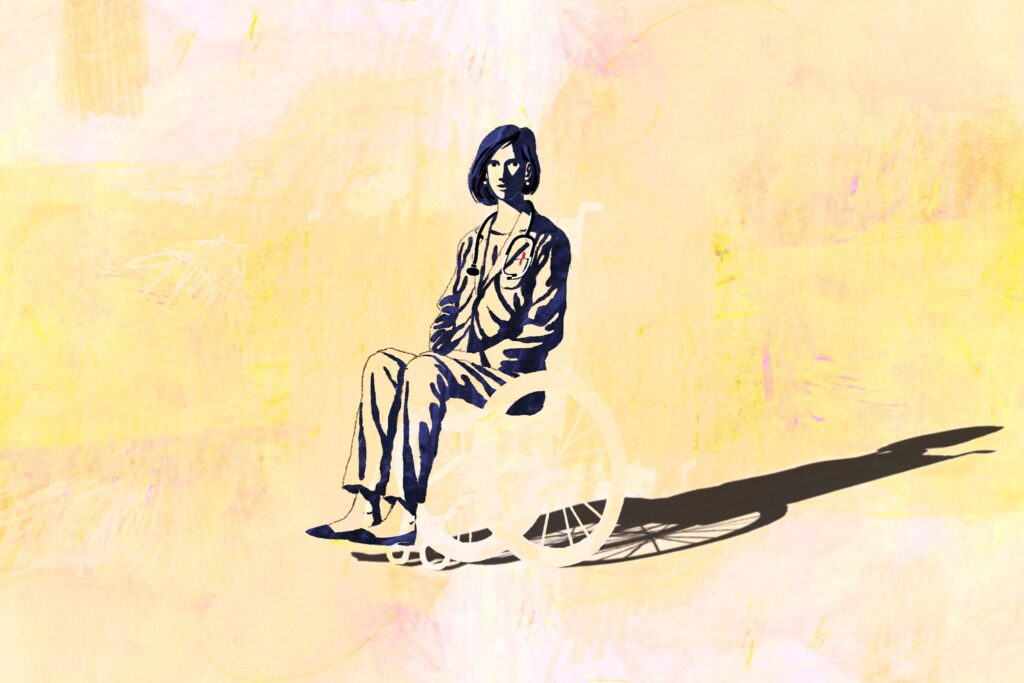
Cheri Blauwet has become accustomed to people’s shocked responses when they find what her career field is. Cheri is a doctor who practices rehabilitation and sports medicine. Cheri also uses a wheelchair for mobility.
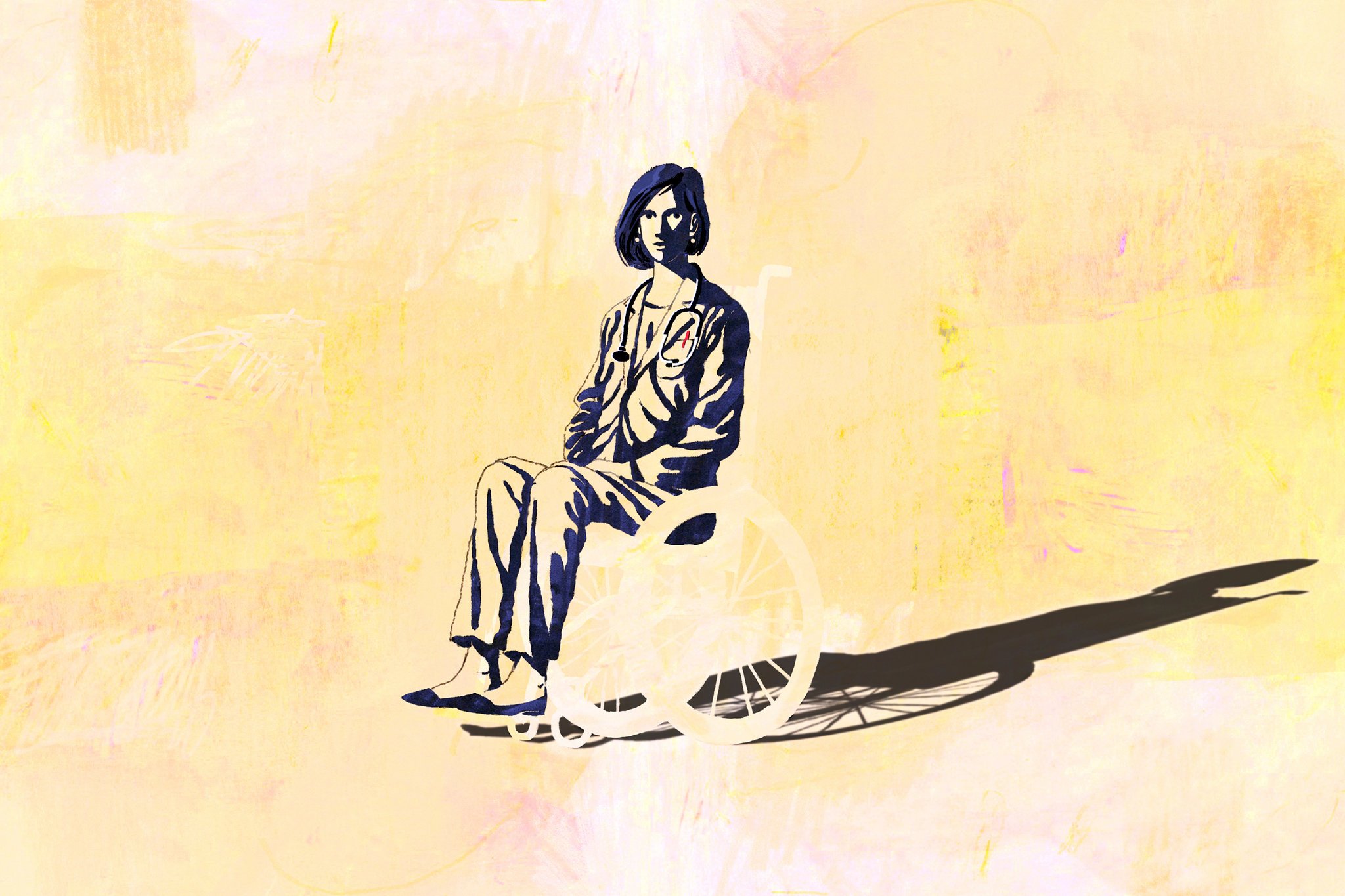
“In my busy outpatient clinical practice, I witness the spectrum of patients’ reactions when they find out that their doctor is, herself, disabled. Typically those first few seconds after entering an exam room — before the patient’s guard goes up — are the most informative.”
Cheri states that her patient’s reactions differ based on the generations one grew up in. She says, that her younger patients typically do not seem to react to her wheelchair at all. While her older patients seemed to be more confused or curious, and sometimes even dismayed by Cheri’s wheelchair. Cheri equates the two different reactions by stating that the younger generation has grown up in a more inclusive society that has brought awareness to the disability community. Her young patients are more used to seeing people in wheelchairs take on various professional roles. Cheri recalls some encounters with her older patients. Some of them would be hesitant to talk about their health concerns. She has received remarks like, “Well, doc, I feel bad complaining about this to you, when clearly your problems are bigger than mine.”
“Over the years, I’ve thought a lot about situations like these, and I do not believe they come so much from direct prejudice as from people’s lack of experience with doctors who are also wheelchair users.”
Cheri refers to a study which reveals that less than three percent of medical school trainees are people with disabilities. She says, “Most physicians with mobility disabilities will tell you that the problem is not that we lack the ability to do our job competently. As with many other educated, skilled professionals, we know how to choose a path that suits our talents and abilities. “
Cheri admits that the larger barrier for doctors who have disabilities is admission into medical school. She gives examples of her colleagues experiences during the admission process.
“As our peers are accepted into prestigious schools and academic positions, we sit on the sidelines, left to question whether the fault lies with us or the system. Many give up their aspirations of a career in medicine altogether, electing to pursue work more “traditionally suited” for people with disabilities.”
Cheri is thankful that as a member of the ‘ADA generation’ she was never subjected to this kind of prejudice. She completed her undergrad years at the University of Arizona and did everything she could to enhance her chances of getting into med school. She participated in wheelchair racing and represented the United States in three Paralympic games. In 2002, she was accepted into Stanford University School of Medicine. She feels that her athletic history may have made her seem more ‘able’.
Cheri wants individuals with disabilities to be empowered!
“People with disabilities often express fear or dissatisfaction with our healthcare system because they face poor access and discriminatory attitudes. This must change. Perhaps having more doctors with disabilities is one solution. As with any underrepresented group in medicine, professional diversity should reflect our population’s diversity. That simple change can bring awareness, empathy and a shared experience that ultimately makes all of us better.”