
President & CEO
United Spinal Association
COVID-19’s impact on the world will be felt for generations to come—and cannot be overstated. The pandemic has not just inflicted social and economic costs that will take some time to fully assess and recover from, but it also has upended a lot of our prevailing assumptions. Being a person who uses a wheelchair has strongly conditioned my experience of the pandemic, and not simply from the perspective of health and safety: I’ve also noticed a silver lining to the disruption it has caused.
The COVID-19 pandemic has issued a lasting challenge to the way we conceptualize the modern office.
In March of 2020, entire sectors of economy were compelled to seek solutions that would both keep employees safe and enable them to remain productive—and raised questions about the world of work that are being debated to this day in the press and among business leaders.
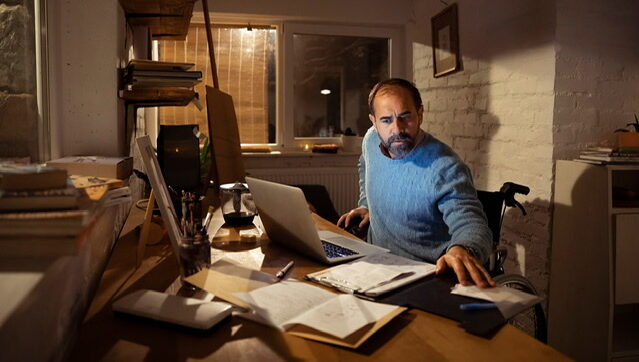
Overnight, remote work tools that may have once been a convenience for some employees became everyday necessities, replacing the entire office environment. A work-from-home approach that was once the cause of apprehension and skepticism became the norm, and in the process, businesses were confronted with the reality that remote work does not impact productivity as much as was once assumed. Moreover, for many people with disabilities, the normalization of work-from-home could be a critical step towards lasting equity on the job.
The remote work revolution that has enabled employees to stay safe during the worst of the pandemic is also the genesis of a revolution in workplace accommodation. We have to remember that the spacious and beautiful corporate campuses or avant-garde urban office towers that have become the object of nostalgia for workers with “pandemic fatigue” also pose a series of logistical or physical challenges to people with mobility disabilities. The everyday obstacles of finding accessible parking or restrooms or not being able to get your knees under the conference table have become obsolete.
For me, not having to sit in traffic on GA-400 for 90 minutes to get to work is a great personal bonus. However, the members of the disability community who rely on public transportation to commute are an even bigger beneficiary—especially those who have to navigate complex series of transfers that able-bodied people can take for granted. Both are ordeals that are completely eliminated when working from home. These extra 90 mins I get in the morning and the afternoon can now be devoted to my work, to my family, and to myself and my care—making me a happier and more productive employee.
Removing the transportation variable from the working equation not only makes us more productive but also opens our population up to an unprecedented multitude of job opportunities, because your physical location is no longer an issue. Remote work has literally broken down barriers from a geographic perspective and from the perspective of disability accommodation. Corporate America has access to a pool of brilliant talent drawn from the disability community like it never has before.
For workers with disabilities, there has never been a better time to “be yourself.” No experience of disability is quite the same, and home offices can be customized accordingly for convenience and comfort. Work from home affords those with pressing medical concerns during the day the privacy to attend to their needs without feeling the stigma or self-consciousness they might in a traditional office. The virtual environment also empowers workers with disabilities to have greater control over how they represent themselves and their disability to the world, whether it’s in a working meeting or a dream job interview.
As with everything, there are caveats—but disability advocates have remedies to these issues in mind. Unfortunately, the benefits of remote work can be out-of-reach when broadband technology is not readily available or accessible. Given that trend of remote working is here to stay, we need to make sure that both up-to-date hardware and internet access are always available for the entire disability community, so that both corporations and talent can leverage this unexpected silver lining of the pandemic, and no one is left underserved. Nonprofits and legislation can help close this gap, and corporations should think about the part they play, as well.
I have no doubt that the debate about the future of the office will continue for the duration of the pandemic—and beyond. The voice of workers with disabilities—who comprise 18% of the US population—should not be left out of these debates, nor should the solutions that employers with a commitment to disability inclusion have devised be forgotten once the pandemic finally ends.