
What comes to mind when you hear the word “therapy”? I would reckon that the general public pictures talk therapy and counseling. I want to be clear that talk therapy and counseling were critical for me advancing on my disability journey—but recreational therapy really helped me reach my destination.
What if I told you that dance was one of the things that helped turn my life around after injury?
When I was in rehabilitation, my recreational therapists diligently got to know my hobbies and likes and dislikes, and what was truly important to me. I shared with them that my wife and I love to dance, and that the fact that I would not be able to dance was hitting me extremely hard. I was devasted by the thought of not being able to dance with my daughters at their quinceneras.
Wrapped up in my rumination about dancing was a lot of unconscious feeling and thinking about my future. I felt my ability to connect with my family on that level slipping away, adding a new layer of grief and painful readjustment to contend with. My recreational therapists understood what was at stake—and gave me the tools to renew my sense of self and my future.
They helped me explore wheelchair dancing. Thanks to them, I dance with my wife when we party together, and danced with all three of my daughters at their quinceneras. The first time I hit the floor was a revelation.
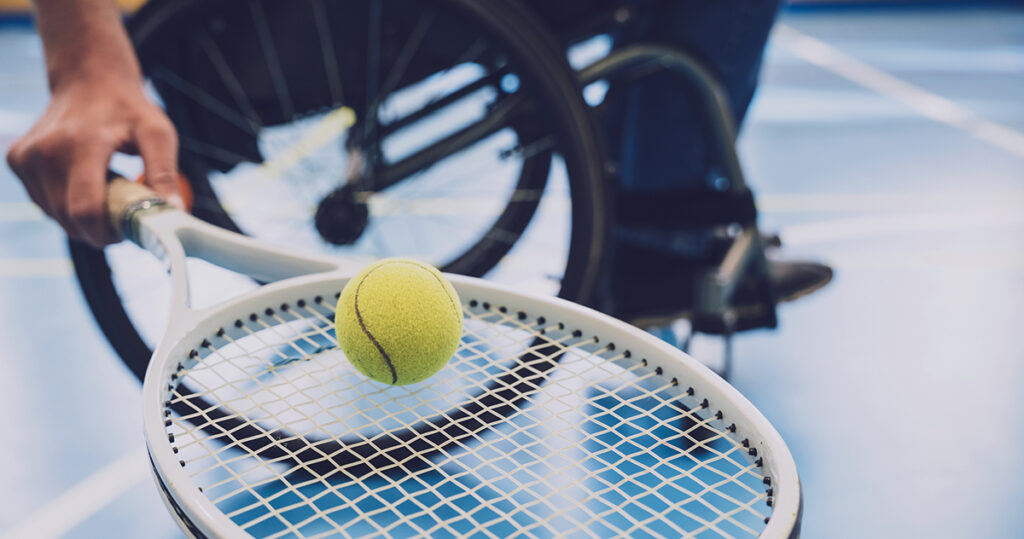
Recreational therapy also took me places I had never been. I never was a big sports guy growing up, even though now I enjoy the Atlanta Braves (especially now.). I couldn’t believe it when they got me into tennis, but it’s something for which they will always have my gratitude.
For people with disabilities, it has become increasingly important to bring recreational therapy into the conversation. I hope one day the word therapy can also conjure images of people in rehab or readjusting to community life by engaging in play and sport.
For many pwds, recreational therapy could be the missing piece to their emotional and psychological recovery after injury. How does recreational therapy fit into the puzzle of mental health treatment options?
Recreational therapy addresses unique social, physical and cognitive dimensions. It can help restore neurocognitive function. It can help reconcile alienation from one’s own body in a way that talk therapy cannot, by involving the participant in games and exercise—often with other people with disabilities, building camaraderie and community.
With recreational therapy, resocialization is not an object of discussion, a nice thing to have—recreational therapy is resocialization in action. Counseling can uncover the root causes of psychological and emotional problems, but oftentimes, we need additional tools to reintegrate into our communities and be the people we want to be among others in order to achieve mental health.
Not merely a tool to help someone “learn to live with a disability,” it can be the means for self-discovery and the impetus to begin life anew. Through recreational therapy, a person with a disability can learn that they are an artist, an athlete or a dancer. Sometimes instilling a new sense of purpose in an individual can be the biggest boon to mental health of them all.
My colleague Matt Castelluccio, who directs United Spinal’s Resource Center, is a long-time professional champion of recreational therapy—and a fellow beneficiary of it. It brought him out of what he called “a black hole of isolation and self-limitation” following injury. He reminisced to me recently about how his “biggest growth as an individual came from recreational therapy.”
According to Castelluccio, even though physical therapy and occupational therapy were invaluable, they contributed primarily to functionality, whereas for him, “recreational therapy was the catalyst for talking to people and asking them how they drive, how they form romantic partnerships after injury, and so forth. It was the informal interactions that resulted in psychosocial and interpersonal engagement even more than the organized aspect. This is why I invested so much in rec therapy after I became a professional.”
Our task is to make sure that recreational therapy is not seen as expendable by healthcare administrators and politicians. In an age of belt-tightening, that is no easy goal. The root problem is that recreational therapy is the first program to be cut, because it is not reimbursable. Another issue could be awareness of the content and purpose of recreational therapy—we need to bring recreational therapy into mainstream consciousness.
In 2017, after the introduction of The Access to Inpatient Rehabilitation Therapy Act, the American Therapeutic Recreation Association (ARTA) made a concerted attempt to force change to Medicare policy so that recreational therapy could count towards rehabilitation hours, and therefore be reimbursable. Obviously, this would be only the beginning, but the hope is that with such recognition and acceptance, recreational therapy could become reimbursable in other environments as well. However, even this political opening closed without any lasting gains.
We need recreational therapy to be supported, so it can break through the vicious cycle of obscurity and inadequate funding. Professionals can do only so much with what they currently have—no matter how ingenious they are. What these unsung recreational therapists accomplish with limited means is already remarkable—imagine what gains the disability community could make if it was accessible to all.
As Castelluccio told me, “At my old hospital, even with limited funding, we did a lot of group activities and adaptive sports. We did dice games and card games that would force people to use their hands and engage others. While we were doing activities, we would talk about recovery, acceptance and understanding. We would even invite their families. For me, wheelchair rugby was the greatest thing to aid my recovery. When I came out and was around other quads, and saw them doing transfers, travelling, I was like, what the heck am I doing? It opened up a whole new world to me.
“If the government and insurance companies could see this, it would make a huge difference. It’s not just a board game; it goes far beyond that. That is where true recovery occurs.”
Recreational therapists and sympathetic professionals cannot advocate for themselves and their vital practice alone. We in the disability community need to find ways to collaborate and campaign in coalition with them to legitimize the field in the eyes of those in power. Let’s add our creativity and power to theirs—creativity and power that recreational therapy can often help reveal and nurture.