Antimicrobial Innovation
Spinal cord injury can weaken the immune system, and urinary tract infections are a frequent concern for many wheelchair users, particularly those with neurogenic bladder. Developing new antibiotics is a key priority.

Too often, it isn’t. United Spinal Association works on both fronts: the physical and structural barriers that keep wheelchair users from getting basic care, and the knowledge, policy and systemic barriers that shape our health long after we make it through the door.
Wheelchair users have long-term, comprehensive health care needs. Many of us live with spinal cord injuries and disorders, multiple sclerosis, rare diseases and other conditions that bring secondary complications, from urinary tract infections and pressure injuries to spasticity and autonomic dysreflexia, on top of the routine care everyone needs.
That makes good care more important for us, and harder to find. Clinics, equipment and medical training were largely built around people who can stand, walk and transfer on their own, and the people providing our care often don’t understand our lives.
of physicians surveyed said people with significant disability have a worse quality of life than nondisabled people.
were very confident they could provide the same quality of care to patients with disability.
National survey of 714 practicing physicians. Lisa I. Iezzoni et al., “Physicians’ Perceptions of People With Disability and Their Health Care,” Health Affairs, February 2021.
Our community still struggles to get the fundamentals of health care. Something as basic as an exam table we can transfer onto, or a scale that can weigh us, is still missing from too many doctors’ offices.
Waiting rooms and clinical areas without room to maneuver a wheelchair. Exam tables that don’t lower to transfer height. Scales that can’t weigh a person who can’t stand. When there’s no way onto the table, too many of us are examined in our wheelchairs, or not examined at all.
A widespread lack of disability awareness among clinicians leads to misdiagnosis, lower standards of care and worse health outcomes. Secondary conditions get missed, and preventive care gets skipped.
Decisions about how drugs are developed, priced and covered land hardest on people with lifelong conditions. Pricing formulas that put a lower value on disabled lives, and opaque practices in the drug supply chain, can put the treatments we rely on out of reach.
The requirement comes from HHS’s updated Section 504 rule, which adopts the U.S. Access Board’s standards for accessible medical diagnostic equipment. Under the same rule, equipment those providers buy or lease after July 8, 2024, must be accessible until at least 10% of each type in use meets the standards, or 20% at facilities that specialize in conditions that affect mobility. Staff must be able to operate the equipment and help with transfers.
These requirements can change what a doctor’s appointment looks like for wheelchair users, but only if clinicians and practice managers know about them. We’re working to spread the word, and partners with deep relationships in the clinical community can help.
We also intend to make sure these protections aren’t rolled back. The 2024 rule has already been challenged in court: In September 2026, a federal judge vacated its community integration provisions in Texas v. Kennedy. The medical equipment requirements remain in effect. Read our coalition statement.
For patient advocacy and public affairs teams at health care and life sciences companies, the overlap with our community runs wider than any single diagnosis.
Through our community support programs, chapters, support groups, peer mentors and hospital partners, we’re in regular contact with people living with spinal cord injury, multiple sclerosis, rare diseases and other mobility disabilities.
Our community lives with long-term, comprehensive health care needs, often complicated by other diagnoses and secondary conditions.
Inaccessible clinical areas, waiting rooms and equipment, combined with a widespread lack of disability awareness among clinicians, lead to misdiagnosis, lower standards of care and worse health outcomes.
Wheelchair users are directly affected by how medicines are developed, priced and covered. These are the federal advocacy and regulatory priorities we’re working on to protect our members’ access to treatment.
Spinal cord injury can weaken the immune system, and urinary tract infections are a frequent concern for many wheelchair users, particularly those with neurogenic bladder. Developing new antibiotics is a key priority.
Many people in our community are immunocompromised. Access to vaccines must not be hindered, and the development of new vaccines must not be politicized.
We oppose most-favored-nation drug pricing. Some of the countries it draws prices from use quality-adjusted life years, or QALYs, to set prices, a metric that discriminates against people with disabilities.
Reform of pharmacy benefit managers, the middlemen between drugmakers, insurers and pharmacies, is long overdue. We support current efforts to achieve it.
We believe anti-obesity medications could be a game-changer for people with limited mobility.
We want to ensure access to existing drugs with promising indications for treating conditions that affect wheelchair users of all kinds.
People should keep access to, and choice of, the biologic and biosimilar therapies that work best for them, and policy choices should not curtail the development of new ones.
These are the therapeutic areas where our members’ health needs and the work of pharmaceutical and life sciences companies most often meet.
Traumatic injuries and nontraumatic conditions of the spinal cord.
Neurogenic bowel and bladder, urology and ostomy care.
Including multiple sclerosis and other conditions that affect mobility.
A sudden, potentially life-threatening spike in blood pressure that can affect people with injuries at T6 and above.
Involuntary muscle stiffness and spasms, common after spinal cord injury and with MS.
Including prevention and treatment of pressure injuries.
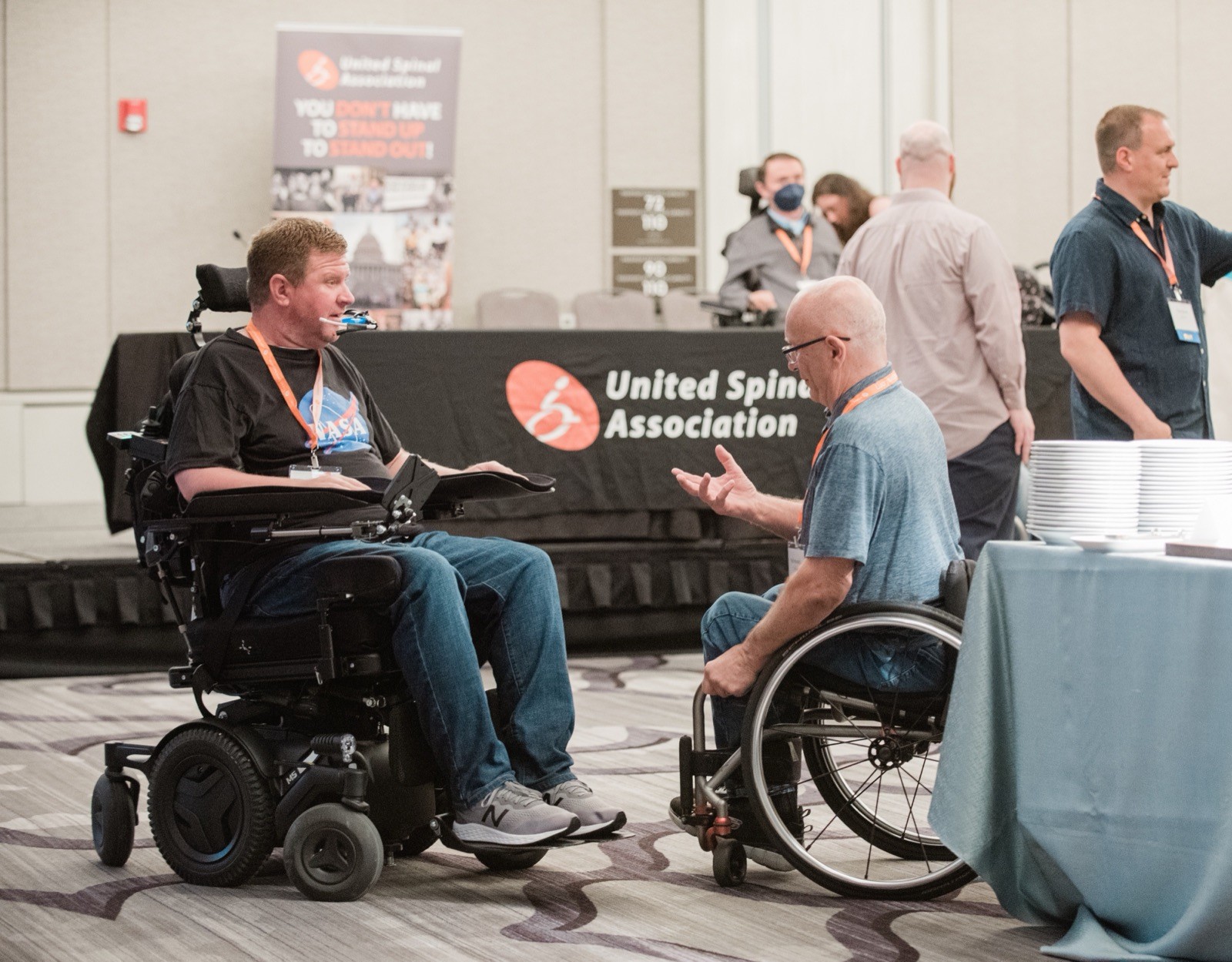
Our advocacy is powered by the people these policies affect most.
3,000 advocates in nearly every legislative district in the country, mobilized on local, state and federal health access and equity priorities.
Advocates and partners working together to shape and advance our health access agenda.
Comments and sign-on letters to the Food and Drug Administration, HHS, the Centers for Medicare & Medicaid Services, the National Institutes of Health and the Administration for Community Living.
Advocacy campaigns, resources, op-eds and blogs that put wheelchair users’ experiences in front of policymakers, providers and the public.
Health care, pharmaceutical and life sciences companies have a stake in a health care system that works for wheelchair users. Patient advocacy, public affairs and government affairs teams partner with United Spinal to:
Our “Access to Equitable Healthcare” toolkit for providers and people with disabilities was developed with sponsorship from Genentech, a member of the Roche Group.
We work alongside patient groups, providers and industry to make sure wheelchair users have a voice in national conversations about drug development, pricing and health system reform.
Health care gets more accessible when wheelchair users speak up. Here’s where to start.
Sign up to represent your district and hear from us when health access issues are on the line.
Join the networkHospitals and doctors’ offices that receive federal funding through HHS must now have an accessible exam table and scale. Ask for them at your next appointment. If they aren’t there, tell us.
Email our policy teamHelp set our health access agenda alongside other advocates.
Find a working groupSend a message to your members of Congress on the issues moving right now.
Visit the Action Center