
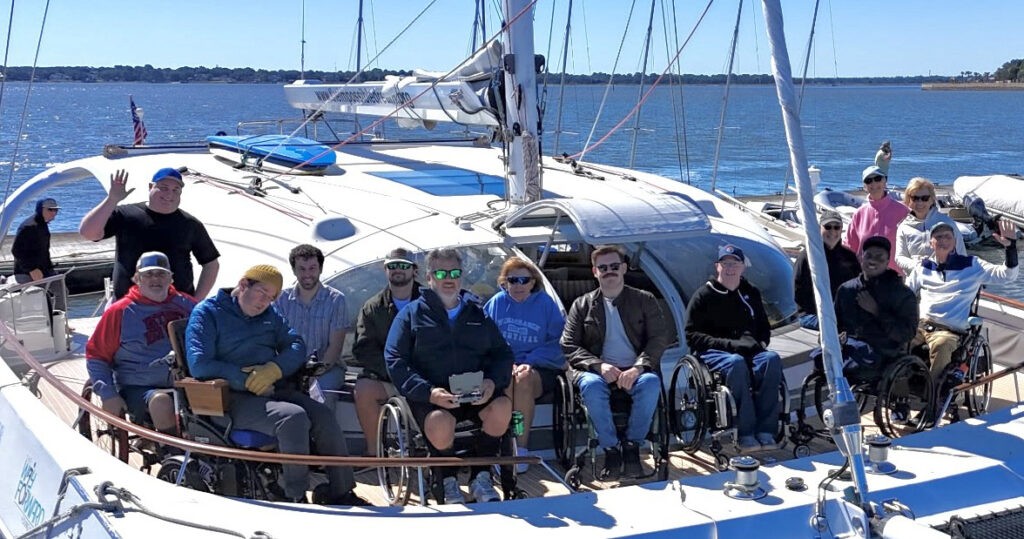
Rob Hazen is one of a handful of peer mentors who have participated in both virtual and in-person trainings through United Spinal Association. Hazen, a C6 quadriplegic, first took part in a virtual training in 2023 while living in Boston and then followed up with an in-person course in August 2025 in Charleston, South Carolina. He said getting a refresher led to many new takeaways.
“When you see a movie that you love, the second time you pick things out that you didn’t see the first time,” says Hazen. “I was able to go through the training with the context of having been a mentor. So the scenarios and information were not academic or theoretical. I had actually been playing with some of those tools.”
It allowed him to be a more active member of the class and share his firsthand experiences in role playing activities. In one scenario, he was the mentee who was going through a rough patch of depression. “I think all of us injured people at some time walk that edge of thinking, this isn’t for me. I don’t want this life. Constructing that scenario just made it very real and relatable to everybody in the room. How do you deal with someone who’s in that dark place?”
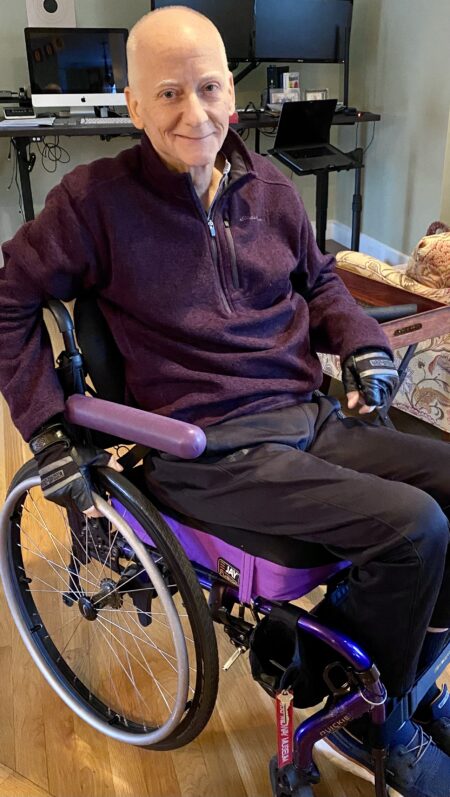
Hazen was paralyzed when he fell off a roof five years ago. He found out about United Spinal when he was going through rehab at Spaulding Hospital in Boston and tucked the info away for a few years as he was recovering from his injury and later throat cancer. Helping people through that dark place was Hazen’s goal when he eventually signed up for the initial peer mentor training through United Spinal’s Boston chapter.
“I’m a business alliance guy, so I’m familiar with talking to strangers and developing relationships. I was also in nursing school for two and a half years. I think that I was well poised to be a mentor because of my interest and because of my background,” says Hazen.
His skill set paired well with the training and helped him become an effective mentor. He met virtually with a mentee who lived in Vermont and was also a quadriplegic. The first order of business was to establish a relationship and trust. Then they started working on his goals.
“He was interested in understanding how he could carve a path to independence. One of the things that we worked on initially was making sure that he had a line of sight to the available resources in Vermont, specifically resources that would qualify him to drive,” says Hazen. Through using the concept of SMART (Specific, Measurable, Achievable, Relevant, and Time-bound) goals, they were able to take the steps needed to get him driving independently.
A few years later, Hazen moved to Charleston, SC, and decided to get involved with the local chapter down there. They were trying to revamp their peer mentor program, and he signed up for the training again, this time in person.
“The best kind of role play possible is when there’s some authenticity. And I think the class was really advantaged by seeing that this is the kind of impact and reach and touch that we can have with our mentees.”
United Spinal provides community and peer support for people with spinal cord injuries through the ups and downs of their journey. Learn more about our programs and support our mission.