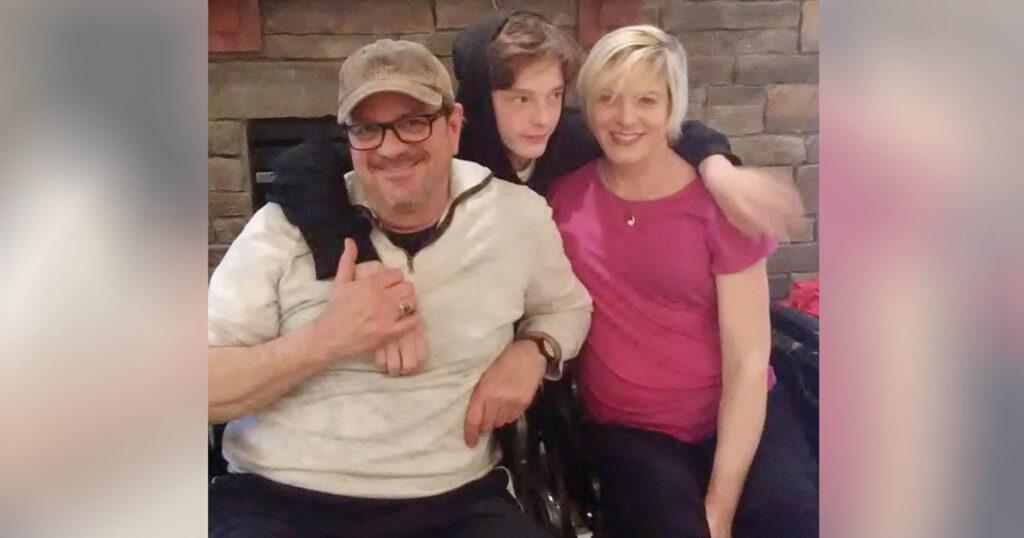
Regina Curry’s disability tale begins before her spinal cord injury.
For most people, acquiring a spinal cord injury is stressful. For Regina Curry, stress in her personal life led to her SCI.
“Before my disability, I’d been under prolonged stress for probably eight years,” she says. “My husband and I had separated, and I think [the stress at home and separation] spiked my blood pressure. It was around 200 systolic all the time for a while.”
She didn’t feel well with that dangerously high blood pressure, but physicians didn’t seem to care. “When I went to the doctors, they saw that I was thin, in really good shape, and looked super healthy,” she says. “And so, when I talked with them about things, they didn’t take much of it seriously. They told me to see a psychiatrist. And then my feet turned purple, and I couldn’t feel them anymore.”
Even with purple feet and clear circulation problems, Regina didn’t get the care she needed. Then, in 2018, a stroke in her lumbar spine sent her body into shock, and she needed CPR.
“I dropped dead in front of my family right around Thanksgiving five years ago,” she says. “I just dropped dead. After that, my whole life went away.”
The stroke in her spine left Regina with an L2 spinal cord injury. After a hospital stay that included time in the ICU, she tried moving to a not-quite-accessible apartment near her husband and kids. Unfortunately, that didn’t last long before more problems arose. “I lived there for three weeks and got an infection. And because finding wheelchair-accessible housing is tough, I returned to the hospital.”

Returning to the community
Regina’s return to the hospital sparked a series of return visits and housing problems, as often happens to people with fresh spinal cord injuries. She stayed in nursing homes with insufficient physical therapy and, in one case, bedbugs.
Even more crises popped up during the pandemic. She developed a cancerous tumor on one ovary while in a nursing home. For months, nursing home staff ignored her discomfort, lack of appetite and demands to see doctors. The tumor reached 7 pounds before it was finally removed.
The nursing home with bedbugs was low-quality but close to her children. It also left her with major health problems due to staff neglect. “I developed double pneumonia and MRSA, I think from UTI,” she says. While her daughter was missing, she passed out and required a full 30 minutes of resuscitation. “So many things happened [in the first few years after my accident], and it just kept coming and coming. It’s better right now, but it’s still not easy,” she says.
The last big blow came in 2021. Regina’s husband died at home of Covid, leaving her kids without a parent at home or even a place to live. After three years of living in nursing homes, she used that crisis as a spark to find a place for herself and her kids.
They moved to Morrisville, North Carolina, a suburb near Raleigh. “We’re in an apartment,” she says. “It’s a very expensive apartment because it was the only [accessible] one we could find. It’s close to Walmart, there are walking trails, it’s beautiful, and our neighbors are all super nice. Also, it’s safe. And I needed us to feel safe.”
Making plans for the future
Now that she is settled in, Regina wants to get back to work. She hopes to take advantage of the work-from-home revolution to balance her schedule with the back pain and headaches that pop up after about six hours in her wheelchair.
“I’m planning on getting my insurance license,” she says, shifting her career from her prior sales jobs. “I need to do something I believe in, but I also have to make money. Right now, I’m living on [my ex’s] Social Security, and our apartment’s really expensive. But I want to work. I mean, I really want to work.”
She also plans to buy a car with hand controls and return to physical therapy. She knows that having her own car will also help her reliably get to PT since public transit and paratransit are unreliable.
“I just refuse to give up,” she says. “I have faith in God. I know I’m going to get through it all, and I know that it’s just going to be a journey with peaks and valleys.” She’s already climbed her way out of plenty of valleys and is ready for more peaks.
Help from our Resource Center
Regina contacted United Spinal’s Resource Center & Help Desk for assistance securing better mobility equipment, specifically an iBot if possible. Also, she mentioned her desire to restart physical therapy. Our Resource Center tailors its response to each member’s individual situation.
Our Nurse Information Specialist Jane Wierbicky, RN, provided these referrals:
- This “Finding the Right Doctor” video by our partners, the Model Systems Knowledge Translation Center:
- Specific information about the iBot, including possible sources for funding.
- Available grants for people with disabilities, and the fundraising site, Help Hope Live.
- A direct link to Regina’s home state’s assistive tech program – each state has one.
- And, of course, an invitation to join United Spinal, which includes a free annual subscription to our membership magazine, New Mobility.
“There is so much information and resources here,” says Regina. “I wish I found United Spinal Association sooner.”
Five reflections for people with new spinal cord injuries or disabilities
Regina has advice for others going through difficult post-SCI times:
- Participate in life. “When I was at the nursing home, I would help some of the older people who couldn’t move their things. I would visit people, exercise, and go outside. It would have been easy to sink down into the pit [of depression]. But I fought to hold on to every piece of life that I could.
- Learn about your disability. “I focused my mind on different things [while in the nursing home]. I read a lot about my injury, therapies, tools like wheelchairs and stuff like that. I spent time learning as much as I could. I learned how to trade in the stock market and took some hacking courses. I had to keep myself going, even with limited mobility.”
- Take care of yourself. “Know when you need to rest. I check in with myself. If something needs to be done, I’ll push myself but usually will have to rest the next day.” Otherwise, she is finding a happy medium where she can work several hours one day and still be good for the next.
- Make yourself feel good. “Just doing something as simple as putting on makeup, even if I don’t leave the house, boosts my spirit. And it’s not for vanity’s sake so that I can be gorgeous. I hardly leave home, and I don’t really talk to people. But it’s for me. I like that time of looking myself in the face and deciding that I’m worth taking care of again.”
- Keep pushing. “It’s worth grabbing life again. I haven’t found joy yet. I don’t think I’m unhappy, but I’m not happy either. Still, I am ready to thrive and have joy again.”
And she’s working to make joy happen.
How to get involved with United Spinal
Find a virtual or in-person support group on United Spinal’s Peer Support Group page. Contact our Community Support team for more information about all United Spinal’s chapters and programs. Join us by signing up for a free membership. To support our mission, donate here.