
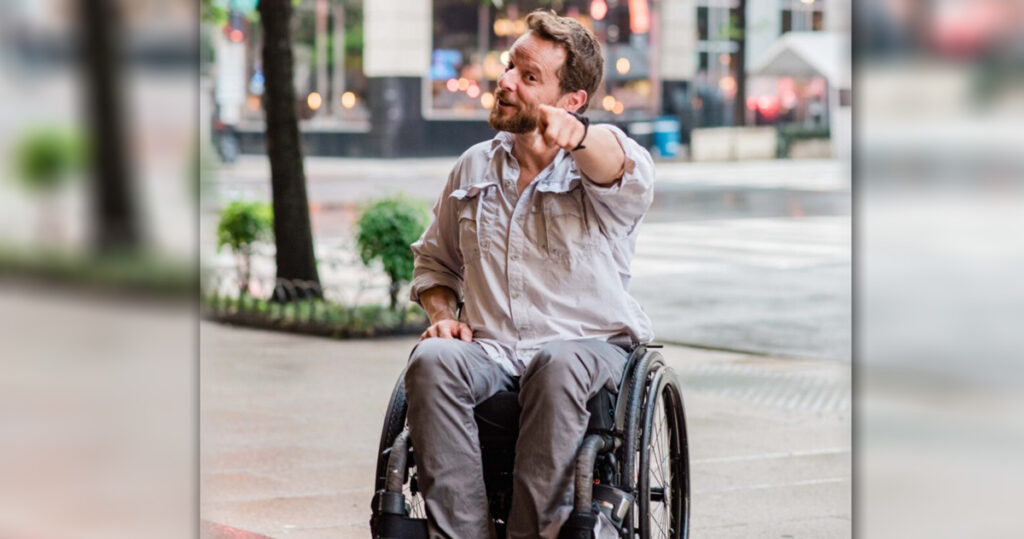
Acquiring a spinal cord injury is challenging. But you don’t have to go through it alone. United Spinal Association is here to provide information and support for you and your family.
“The recovery journey can be challenging, full of ups and downs. There is no such thing as a linear life,” says Matthew Castelluccio, United Spinal Association’s Director of Community Support and a wheelchair user for 20 years. “But you can always turn your setbacks into opportunities to grow. Things that seem impossible today become possible over time.”
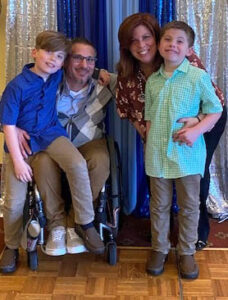
Here are resources to get you started. If you don’t find what you need, please contact our Community Supports team.
- Learn about spinal cord injury: Your spinal cord is a bundle of nerves that run through your spine. It relays messages from your brain to your body, allowing you to control your muscles. When it becomes damaged, those messages can become interrupted. This disrupts your ability to control voluntary movements of your body that correlate to the site of your injury. Your spinal cord also relays sensory information from your body to your brain. Post-injury, your sensation may be changed or absent. SCI can also impact autonomic function, such as blood pressure control and sweating.
- Secure quality rehabilitation: After your injury has been stabilized, you will need a quality rehabilitation program. Rehab is where you will learn how to care for your health, avoid complications and gain skills that allow you to return to your home and community. United Spinal Association’s hospital member, the MedStar National Rehabilitation Hospital, offers a comprehensive guide to obtaining quality rehab.
- Connect with a support group or peer mentor: Peer support is vital to many wheelchair users living successfully in their communities. United offers one-to-one peer mentoring, virtual and in-person support group meetings, and the lively United Spinal Association Spinal Cord Injury Support Group found on Facebook.
- Determine eligibility for Social Security disability benefits, Medicare or Medicaid: Start at benefits.gov to find government benefits or programs you may be eligible for, including Social Security disability benefits. Eligibility to Medicare and Medicaid are linked to Social Security benefits and may pay for such necessities as custom wheelchairs and personal assistance. The Administration for Community Living aids with identifying disability-related programs that may assist. Centers for Independent Living are another excellent source for information on what disability programs are available in your community.
- Identify appropriate wheelchairs and technology: You will need a prescription for a new wheelchair. Usually, some funding is available through private insurance or a government program like Medicare/Medicaid. Your wheelchair must be properly fit to your needs, preferably by a certified seating and mobility specialist at a seating clinic or at least with a qualified occupational therapist or physical therapist. Speak to your acute rehab team about setting this up. This app will guide you to the best type of manual wheelchair for your lifestyle. Shower chairs, smart apps and other technology are also vital to living independently. Here are helpful listings and reviews of wheelchairs and related products, and our Tech Access Initiative will connect you to the companies making technology such as smart apps accessible. Visit our membership publication, New Mobility, to keep informed of new wheelchairs and products.
- Find funding to make your home wheelchair accessible: You will likely need to make modifications to your home to be comfortable for a wheelchair user. The Home Modification Information Network provides a list of resources in your state. If you use Medicaid-funded Home and Community Based Services such as home health care, ask your service coordinator about home repairs and modifications eligibility. Veterans with service-related disabilities may be eligible for Specially Adapted Housing and Rebuilding Together helps homeowners with disabilities. Crowdfunding platforms like Help Hope Love could raise funds for expenses insurance won’t cover. Be aware that donations for individuals are not “charitable giving,” and there will be no tax benefit to the person donating. Find more grant opportunities here.
Hear United Spinal Association member Nick LiBassi share his SCI recovery story on the United On Wheels Podcast:
Please contact United Spinal Association’s Community Supports team for more information or assistance. Join our community by signing up for a free membership. To support our mission, donate here.