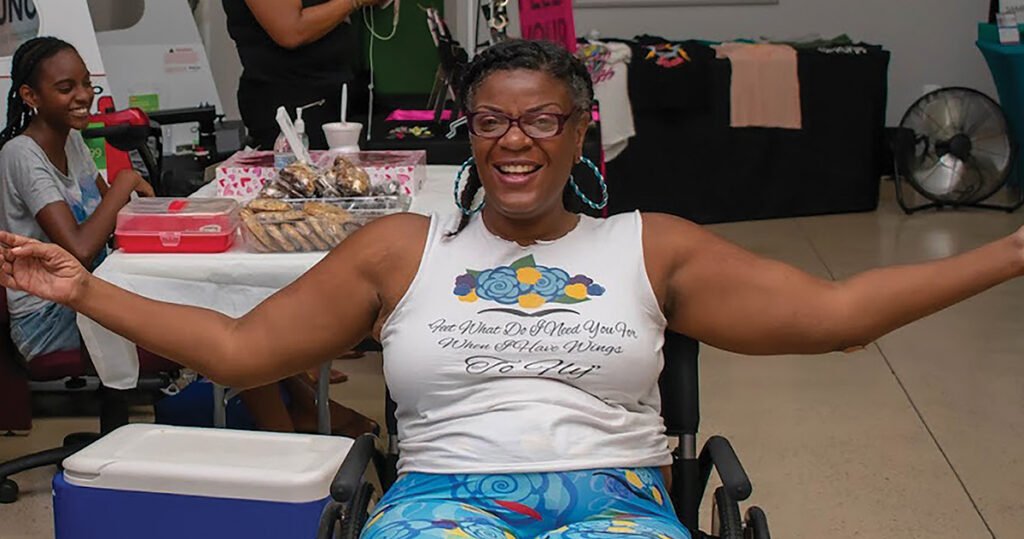
 Monique Stamps used her platform as one of the few wheelchair-using Zumba instructors to raise money to support women with spinal cord injuries. Then, when a car accident left her needing support, the Zumba community returned the favor.
Feeling the Zumba Love
After two pregnancies and 20 years as a wheelchair user, Monique Stamps, a 43-year-old C6-7 quadriplegic, had put on 300 pounds and didn’t feel like herself. Before her injury at 16 from a car accident, Stamps had always been a small, healthy woman. “Throughout both pregnancies, I didn’t eat the healthiest, to be honest — pizza, hot dogs, and I wasn’t big on veggies. I just ate what the babies and I craved,” she says.
Motivated to change, Stamps joined her local YMCA. While working at an adapted bench press machine, she heard some salsa music and saw about 50 women having fun.
“It sounded fun, so I poked my head in the door and saw a bunch of ladies in the class dancing and having a great time,” she says. “The instructor saw me in the back and motioned me to come on in and not be shy.” She had stumbled into a Zumba class.
Zumba was founded in the 1990s by Colombian aerobics instructor Beto Perez. It melds salsa, merengue, cumbia and reggaeton into a high-energy dance workout.
Although Stamps had danced before her injury, she was initially unsure how to respond, so she just started using her arms to repeat the gyrating motions the women were doing with their feet. She was hooked — so much so that she began attending class once a week, and soon after, twice a week. She didn’t even notice the pounds melting off because she was having so much fun.

“I fell in love with it,” she says. “At that point, I didn’t even really think about my weight. I was just having a good time. I didn’t feel judged in any way as the only person with a disability in the class. I was among the people and the music. I had a sense of freedom that I never had before, and I was instantly part of a family.”
Stamps got so swept up in what the Zumba community calls “Zumba Love” that in 2013, she became an instructor teaching Zumba Gold — a low impact, seated and half-speed version of Zumba for seniors and people with disabilities.
“In the future, I hope they will use instructors in wheelchairs to help train the trainers because I had to teach myself verbal cues like ‘Twist the lightbulb,’ ‘Jellyfish arms,’ or ‘Shimmy your shoulders,’” says Stamps. “The training is geared toward seated people who could move, rather than people paralyzed from traumatic injury.”
Later that year, at her first ZumbaCon, Stamps was randomly invited onstage by Perez himself. A video of them went viral. “I was terrified. All that attention was not my thing, but I got a ridiculous amount of Facebook friend requests out of it,” she says.
That following helped Stamps hold successful Zumbathons to raise money for the support group she founded — Women Embracing Abilities Now — to help mentor women and girls with SCIs.
The tables turned in December 2013, only a few months after she got her instructor license and met Perez when a car accident caused significant injuries to both her legs. The Zumba community helped Stamps get back on her wheels financially by raising $50,000.
“Zumbathons were going simultaneously in a few states. Plus, donations were collected all over the world, and the Zumba head office made a huge one. Without them, and already with an SCI, I don’t know what I would have done,” she says. “The Zumba community has given me so much that had I not felt those salsa rhythms and poked my head in that class, I don’t know where I’d be now.”
Women Embracing Abilities Now
 Monique Stamps explains the circumstances and events that inspired her to create the WEAN support group.
I was injured at 16, and being from a rural area, I didn’t know anyone with disabilities. It was especially hard being a young girl with a disability. I mean, it might be too much information, but I was like, ‘Oh god, what do I do if I get my period?’ I’m not saying men don’t have concerns and things, but it’s a lot different being a girl. I had to figure it out alone, so I went to college, majored in social work, and that’s what got my foot in the door at a Center for Independent Living. That’s when I started noticing the differences in the lifestyles between women and men. More often than men, women with disabilities are not encouraged to pursue higher education or encouraged to go back to work and are judged very harshly for having children. This is what I experienced, and I found other women were experiencing the same thing, so I decided to start a program to stop this crap.
Why did you join United Spinal?
It was a great way to connect with others with SCIs. I just wanted to be in the know as far as policy changes that affected all people with disabilities.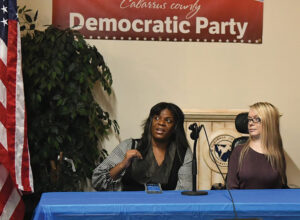
If you could change a piece of legislation, what would it be?
We have the ADA, but it’s not being enforced.
Can you recall a moment when you realized you could handle life with a disability?
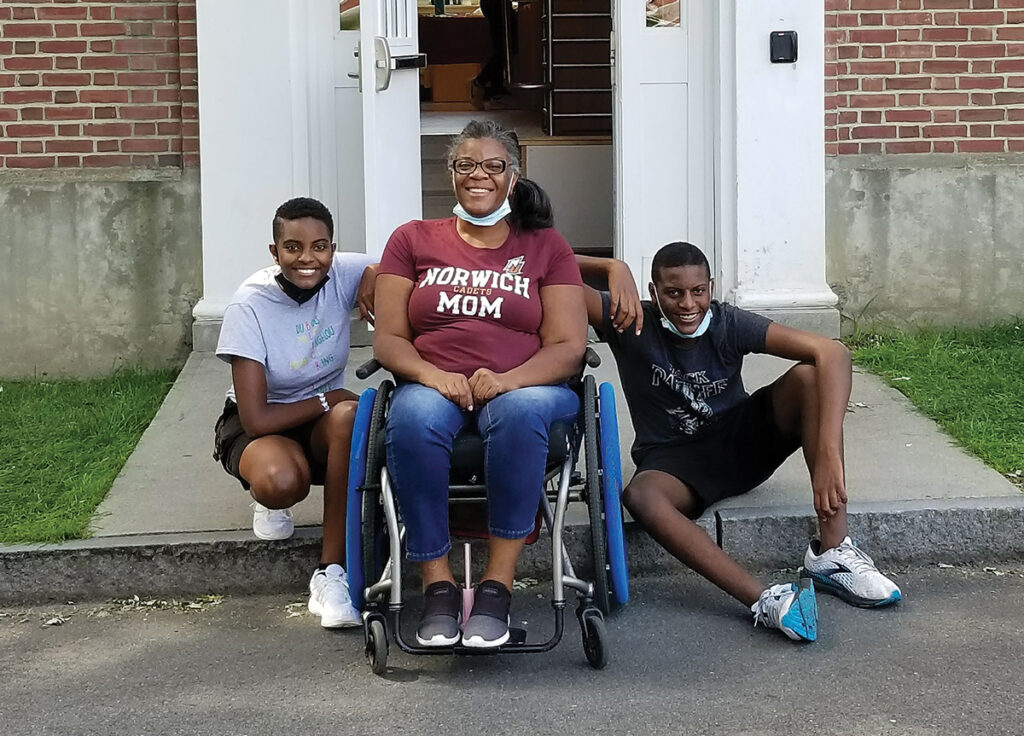
My second car accident. I could’ve easily called it, but at the end of the day, no matter what I’m going through, I’m still Mom.
When did you use humor to get through a situation?
When my aunt saw me pregnant and asked me, ‘How did you manage to spread your legs?’ All I could do was laugh at that.