
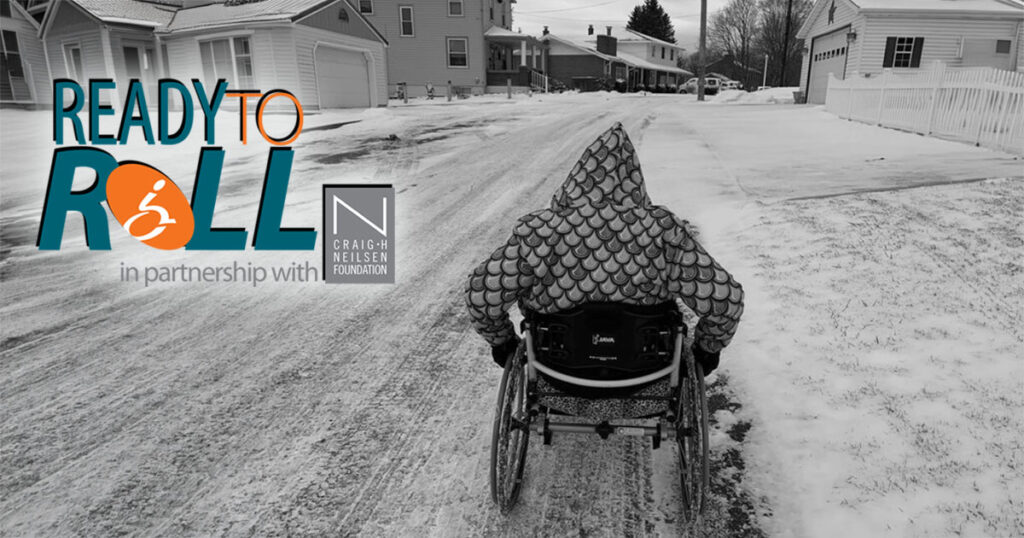
In January 2026, winter storm Fern brought unprecedented weather to Mississippi. The northern part of the state was hit the hardest, with heavy snow and ice that collapsed power lines and trees, prompting Governor Tate Reeves to declare a state of emergency.
Government assistance was limited, so people turned to local organizations for help. The Mississippi Chapter of United Spinal Association was on the frontlines providing direct support for people with disabilities, including many who lived in rural areas and had nowhere else to turn.
“When we were doing our intakes, we looked at the hierarchy of needs. Those on the bottom of the pyramid were disrupted. They lost access to power, medicine, food, and in some cases, shelter because their home was not safe for them to stay in when it was too cold, or they found out they had roof leaks they didn’t know about,” says Catherine Bishop, the director of the Mississippi chapter.
Through United Spinal’s Ready to Roll Disaster Relief program, she quickly secured $55,000 in funding and immediately began distributing it to community members in need. Bishop says the storm was especially difficult for people who rely on Social Security or live below the poverty line, without reserves to pay more for heat or for food delivery services.
The grants helped wheelchair users buy groceries and prescriptions and fill propane tanks to stay warm through the bitter cold. One family from Indianola had deteriorating windows held up by duct tape around the edges. “We were able to reimburse her so that it didn’t wreck her financially to have done that because she has a son with spinal cord injury and she’s also the only caregiver.”
Medicaid covers personal care attendants in Mississippi, but because most of the state is made up of rural communities, local support can be hard to find.
Some people were trapped in their homes because fallen trees were blocking ramps and sidewalks. “We found a yard company that was willing to give us a very discounted rate. We got five yards in the Oxford area completely cleared. We made the pathways safe and removed limbs from trees that were damaged excessively,” says Bishop.
In all, the chapter assisted around 50 people, giving grants of $200 for food and prescriptions, $1,000 for propane tanks and debris removal, and $4,000 for window replacement and generator purchases.
Seeing state and local government agencies refer people in need to the chapter was reaffirming. “They were saying, ‘Go to them, they’ll help faster than we can,” says Bishop. “It helped in a huge way.”