
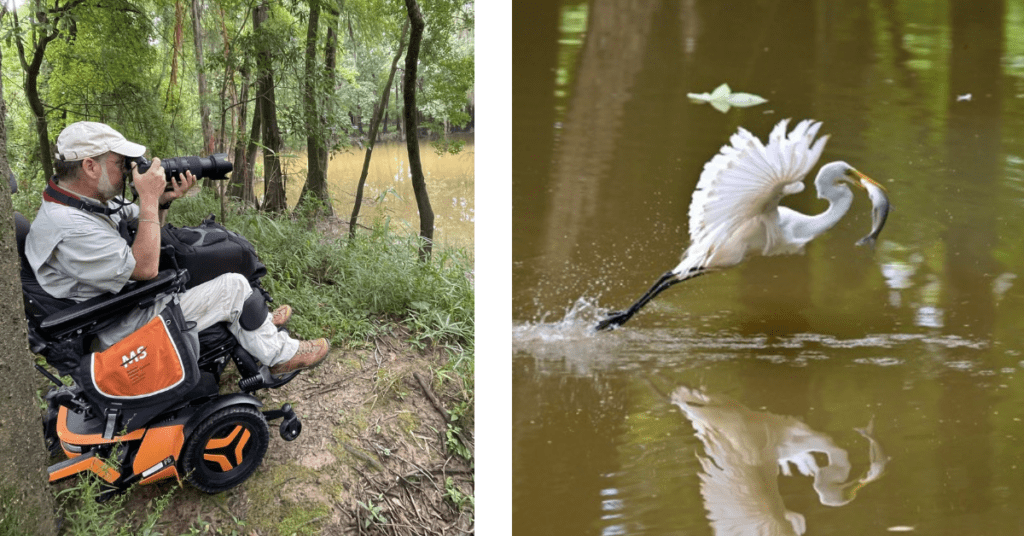
Photographer: Scott M. Crawford, Primary Progressive Multiple Sclerosis
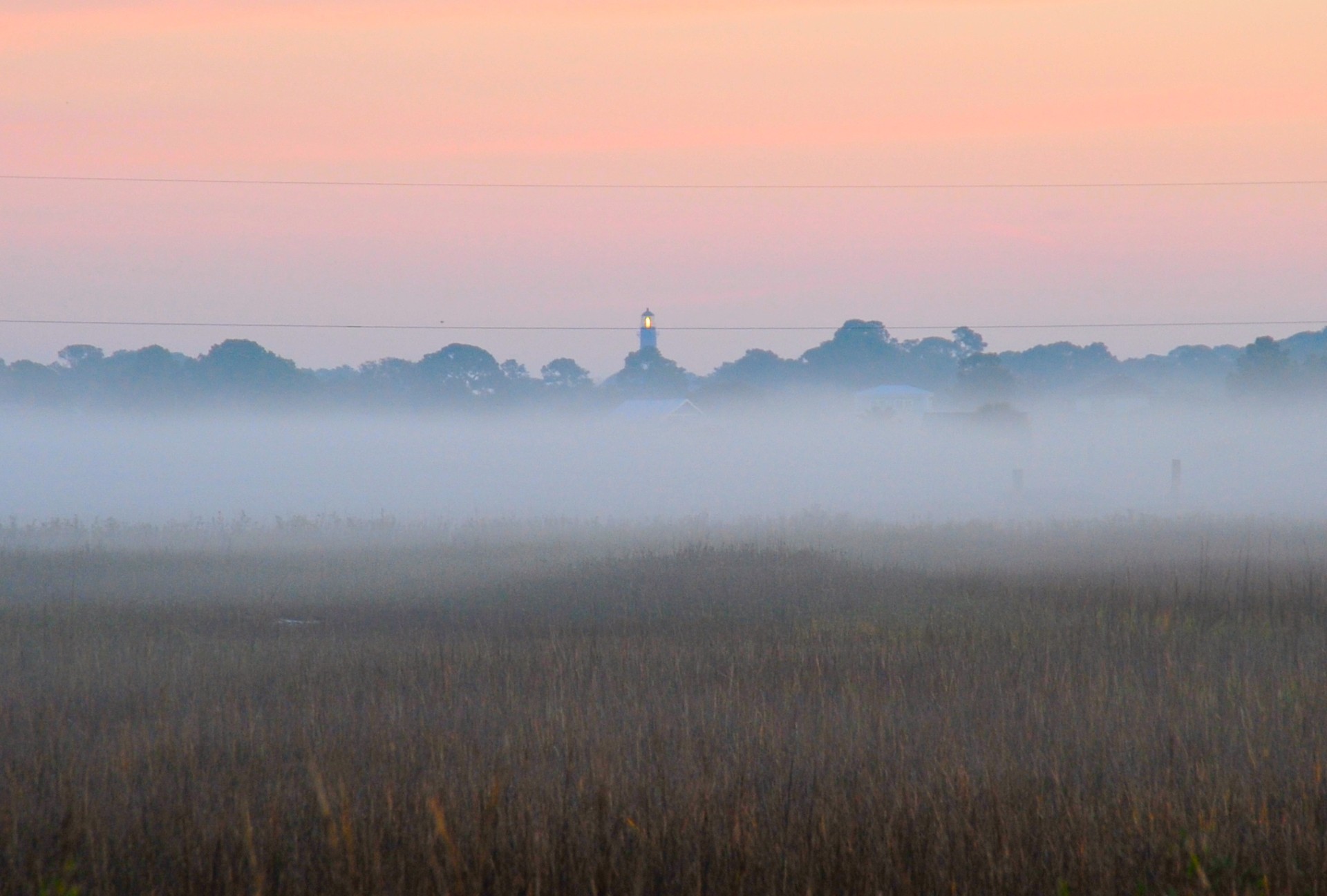
How I Got the Photo: I was in Savannah, Georgia, to participate in the Multiple Sclerosis Challenge Walk. One morning, I saw this view of the Tybee Island lighthouse from across a foggy bog just as the sun was rising. I try to bring my camera everywhere with me because you never know what opportunity may arise — some of my best photos were unplanned. This morning, I had a Nikon D700 with me. I propped my elbows on the arms of my wheelchair to assist with the camera weight and got the shot. Other days I use a monopod and tripod to stabilize the camera while I get the shot.
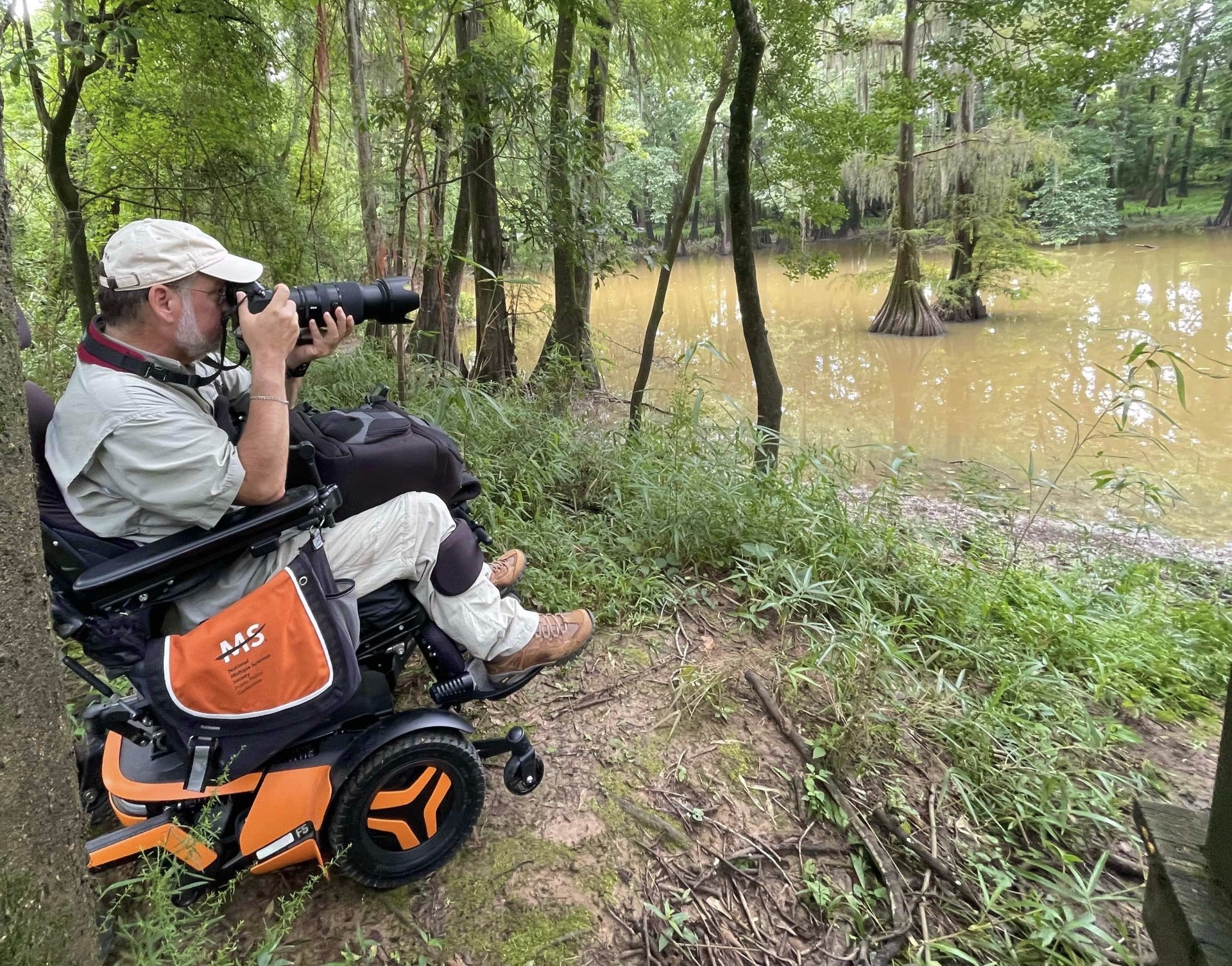 My History with Photography: I started in college, working for the school newspaper and managing their darkroom. Back then, we used black and white film and it would take all weekend to develop and print just a few photographs.
My Advice: Never say “no” to getting outside whenever you can. Bring your camera everywhere, because you never know what opportunity may arise. Some of my best photos were unplanned. I highly recommend cameras with GPS location mapping turned on, it helps to later know exactly where you were when the photo was taken.
Photographer: JP Bruce, Polio
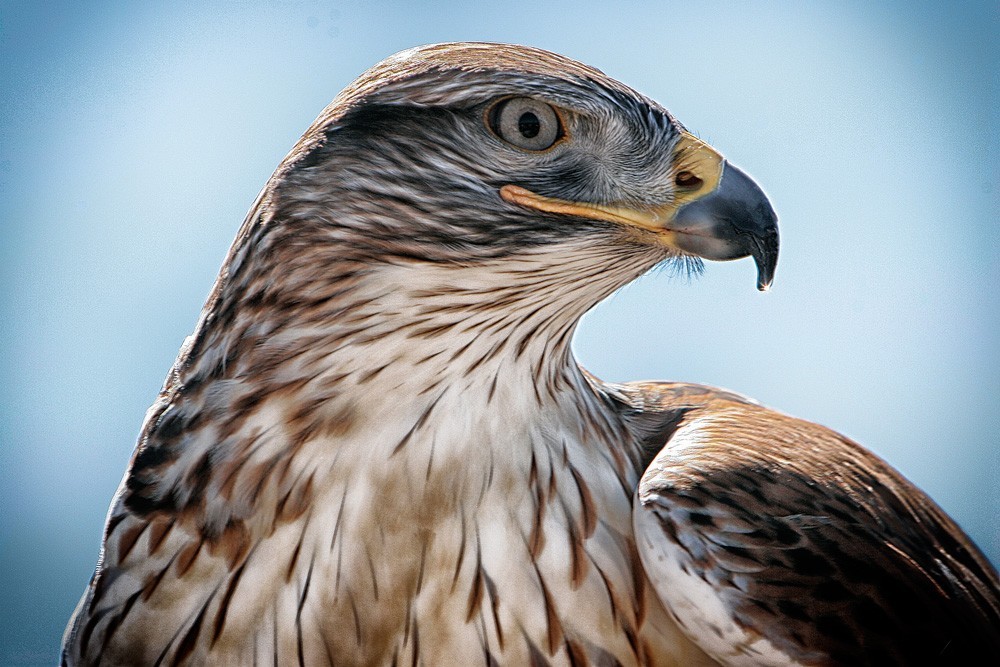

How I Got the Photo: This photo was taken at Arizona Sonora Desert Museum during the Raptor Free Flight program, where birds native to the region fly untethered. The handler stayed after the show so we could get closer images. I used a Canon digital SLR and a monopod for this image but have switched to OM System equipment. I feel that they are equal in quality but OM is considerably lighter so it’s easier to control.
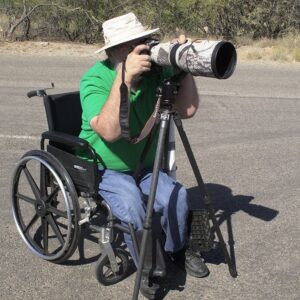
I recommend using a gimbal mount, they take the weight of the camera but allow full range of motion. You could mount the gimbal head to your wheelchair or tray. There are also a variety of door or window mounts. Bean bags are an inexpensive way to support the camera.
My History with Photography: I started back in the late ‘60s with film and lost interest for a while. I worked with computers, so in the 2000s when digital photography came out I combined the two and have been active since. Mainly my love of nature and wanting to share its beauty.
My Advice: Take your time, look for patterns, learn your subject and have fun. Remember, if you like it, it is a good photo. Hear more from his interview with KGUN9 Tucson.
Photographer: Leon Saeland, Quadriplegic
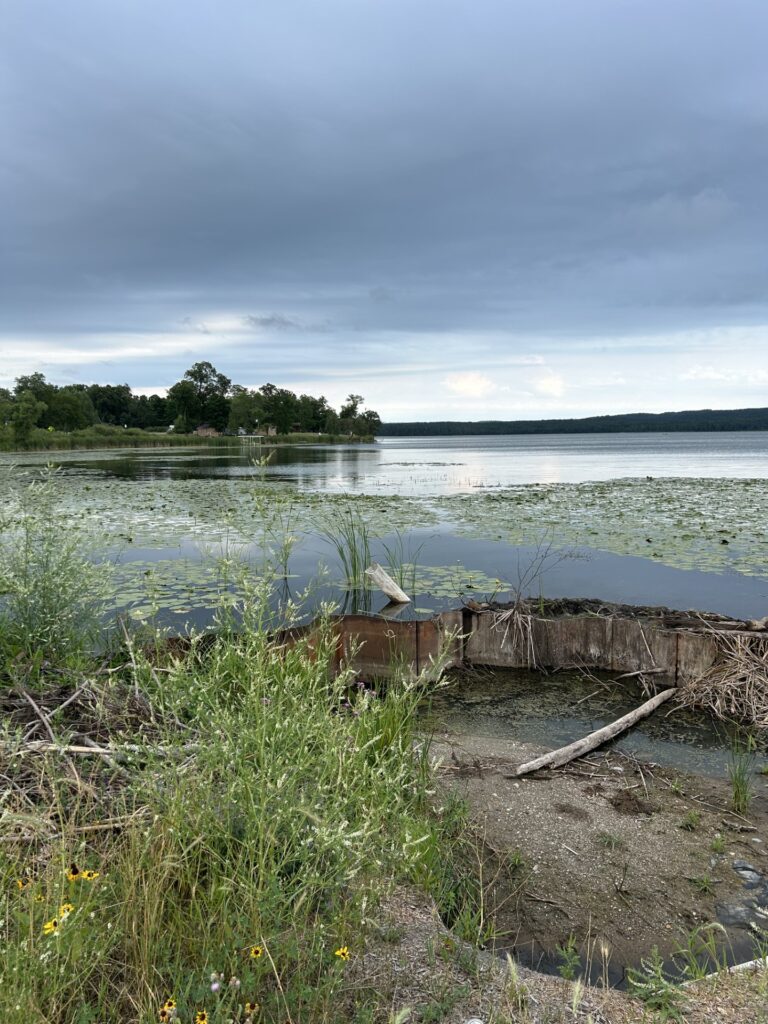
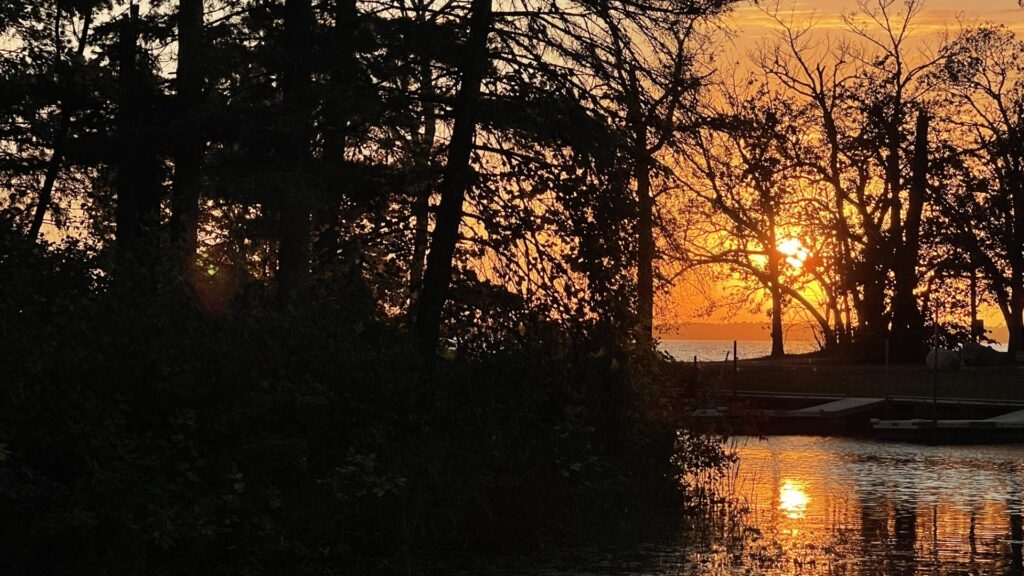
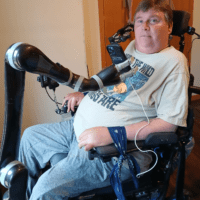
How I Got the Photo: This picture is of Roy Lake and Roy Lake River which I’ve lived by most of my life. I often take pictures of the same trees, leaves and flowers every year. I use my iPhone camera with a mouth stick and, or with, the voice control and accessibility features. I hold the phone with the Jaco Robot Arm. I operate the Robot Arm with the chin control that also operates my power wheelchair.
My History with Photography: My interest in photography comes from when I was a kid. I was fascinated with a camera and how it works, and the fact that a picture captures a moment in time.
My Advice: Have patience and keep looking for the perfect pictures. Taking pictures distracts my mind from my other complaints.
Photographer: Rebekah Thomas, Paraplegic
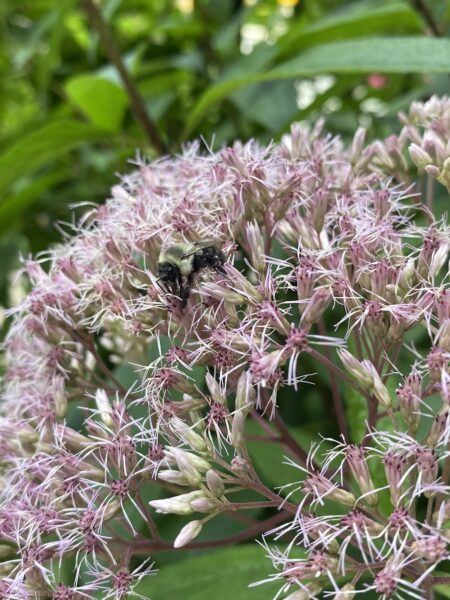 How I Got the Photo: One afternoon, while wheeling along the sidewalk near a park, I came across a flowering bush that had grown out into the path. As I gently moved it aside, I noticed bees feeding on the blooms right at my eye level. They didn’t seem to mind my presence, so I sat quietly, watching and waiting for the perfect shot.
That simple moment reminded me why I love photography: it helps me slow down and appreciate the beauty that exists when you pause to see the world from a different angle. I captured this photo with my old iPhone 11, using its built-in 12-megapixel wide-angle camera. It’s lightweight, accessible, and always with me.
My History with Photography: Photography allows me to share how I see the world, quite literally from where I roll! I’m drawn to capturing the quiet, everyday moments that bring peace, connection, and reflection. Each photo I take offers a glimpse into my own wheel life views – a perspective that reveals beauty in places others might overlook.
My Advice: Don’t be afraid to start. Experiment, practice, and learn through doing. Some of the best shots come when you stop worrying about perfection and simply focus on the moment in front of you.
Photographer: Annie Streit, Quadriplegic
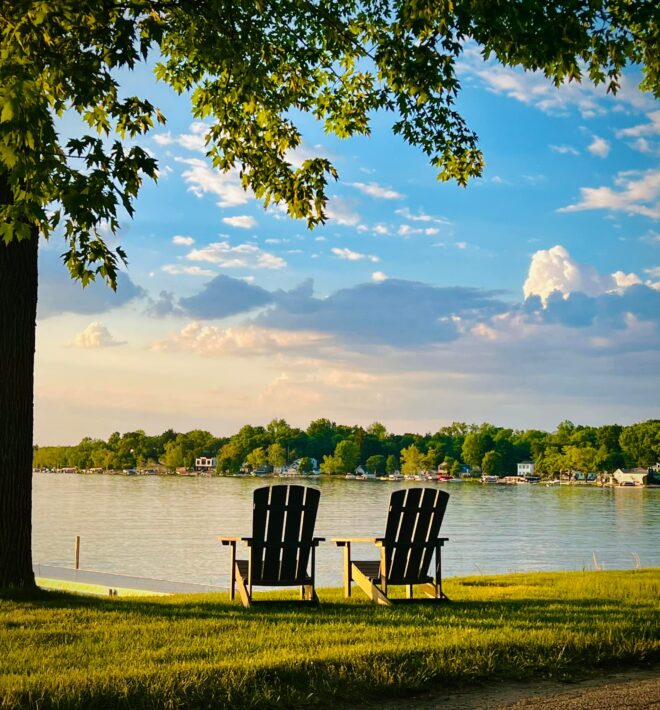
How I Got the Photo: I roll around the lake daily as long as the weather permits, and these chairs caught my eye. Even though there is nobody sitting in them, it still portrays the relaxing and beautiful views that this lake offers.
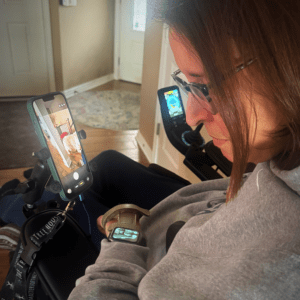
I used my iPhone 13 Pro Max and Apple watch camera remote. I use a RAM mount attached to my armrest to hold my phone. It is tightened enough so it does not move too much, but loose enough that I can adjust the angle by pushing it forward or pulling it towards me. I can also raise and lower my wheelchair and use the tilt option to change the angle of the camera.
My Apple watch is connected to my phone so I can use the camera remote option to see what my camera is pointed at, to control zooming in and out, and snapping the photo. I sometimes use voice control on my phone to help with taking photographs.
My History with Photography: I have always had a creative and artsy side prior to being a wheelchair user. That side of me is still very present despite my limited mobility from my spinal cord injury. I read this quote when I was first injured and it has stuck with me, “People don’t assume different personas when they become paralyzed; they have the same loves, the same sense of humor, and the same desires and expectations. The trick to adjustment is melding the old personality into a new lifestyle.” So, I have always had a love for photography and I just had to adapt how to approach it as a wheelchair user.
My Advice: Just have fun with it and when you find what setup works for you, practice really does help. My photos are not complete right after I take them. I use free photography editing apps to get the final product and image that I was going for. My view and perspective from a sitting position are completely different than someone who is standing, so I think that unique perspective is an advantage and can introduce people to my world.