
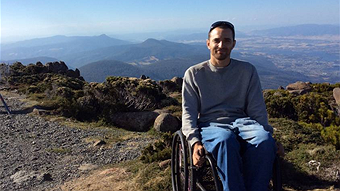
“Everyone has a story,” says Paul Mariager. Paul is a C5/C6 quadriplegic who states after watching a documentary about a person with a spinal cord injury he was left feeling that his determination was being questioned.
The documentary ended with the person with the SCI defiantly walking from his wheelchair, throwing his neck brace. Paul feels that this is an inaccurate portrayal of spinal cord injury.
“It makes out that walking is a panacea for happiness. It’s everything. It’s treated like an option, as though if you don’t recover you don’t have willpower. It’s unfair, it’s untrue and it’s dangerous. These kind of hero worship stories make out that you’re either a god, or you’re a quad.”
Paul wants the media to realize that everyone’s injury is different, including how they handle it. He goes on to explain that the person in the documentary had a dislocated spine rather than severed which means the outcomes are vastly different. He felt that the media left out that important detail.
“There was critical information not given, or not given correctly. Even if the correct information was presented, it still would’ve been a great story. It didn’t have to be presented the way it was, where people like myself take offence and take hurt. It adds to the frustration.”
Paul points out that he is happy for the person in the documentary and he congratulates him on all of his triumphs. However, Paul wishes that the media would not manipulate subjects to suit the story.
“The way I see spinal cord injury is that it’s part loss, part hardship, part change and part challenge. They’re things that everyone on earth goes through. It’s obvious I’m in a wheelchair, but that doesn’t mean I’m hard done by. Everyone has a story to tell. But how the story is told is important.”
Do you agree with Paul’s perspective? Share this story!