Madison Russell, 20, lives with juvenile arthritis and has wanted to make technology more inclusive and accessible since she was 14. When she started using a wheelchair in 2018, she didn’t think, why me? She thought, why not?
Making the Virtual World a Reality for Wheelchair Users
Making the virtual world a more accessible place has always been an interest for Madison Russell, even before she became a wheelchair user thanks to syringomyelia, a rare disease that causes cysts to form on the spinal cord. She thought she’d devote her life to dancing but quit at age 11 when her juvenile arthritis made dancing too dangerous.
After attending a summer camp for kids with juvenile arthritis, some who used wheelchairs, she became sensitive to how inaccessible and isolating the world could be. “I had friends who had to stay home all the time or couldn’t use a cell phone because their fingers were too damaged,” she says. “Seeing that is what initially gave me my interest in accessibility.”
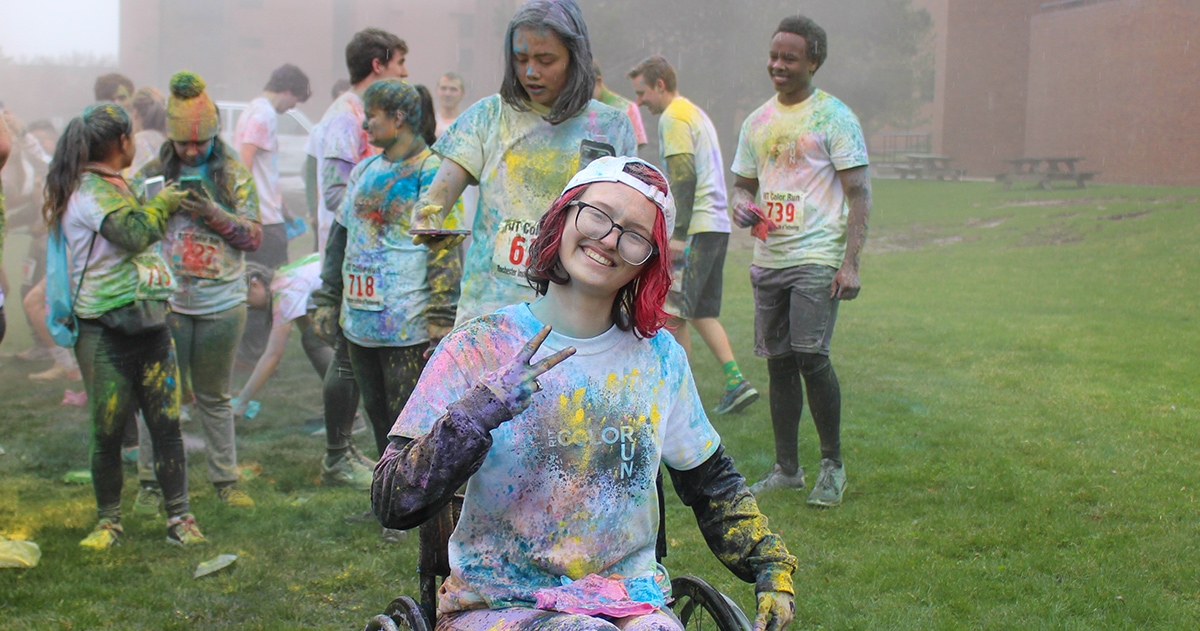
Her father was a software engineer, so she learned to type before she could write or speak and how to make websites when she was 9. She took a computer science class in high school and realized she had an aptitude for it. “I liked programming,” she says. “I was good at it and as I got older, I realized how many things you could do with it. One program can change so many lives.”
She knows this firsthand because in high school she created a pen pal app to help closeted teens connect with one another. The app didn’t come to market, but it resonated with her as a queer teen fearing she’d lose friends if she came out in her rural southern hometown of Hiram, Georgia.
It resonated with thousands more, too. It went viral, gained national media attention, and earned her a scholarship to The Rochester Institute of Technology’s first graduating class of the Human-Centered Computing Program, where she focuses on accessible and instructional technology.
She is currently interning at the Center for Accessibility and Inclusion Research at RIT, where she studies educational accommodation for graduate students with disabilities and ways to include wheelchair users in virtual reality gaming.
 “I had one roommate who I watched play Beat Saber in the living room. He was standing, turning around, and moving across the room using motion controllers,” she says. He asked Russell if she’d like a turn playing the popular VR rhythm game and she reminded him she couldn’t. That was the moment she realized game designers don’t think about wheelchair users when they design these games with VR technology. She hopes that her research integrating wheelchair users will open a whole new market for systems like Oculus and PlayStation VR.
“Growing up, I saw so much inequality — racism, sexism, homophobia and transphobia. My parents tried to shield me from that as much as they could, but it’s hard when you go to elementary school and you have to have the racism talk when you’re 8 because Obama got elected,” says Russell. “But I think technology plays a huge role in leveling the playing field by giving opportunities for inclusion and access where none may have existed before.”
The Universe Fell Into Place
Madison’s juvenile arthritis stopped her from dancing when she was 11. But when she began using a wheelchair in 2018, she used her new ride to reclaim movement.
“When I became a wheelchair user, I could dance again because I didn’t have to worry about my knees and my hips and the damage dancing did to them. I always say the universe made a mistake with giving me arthritis and making me quit dance and sports, so my wheelchair is the universe righting its mistake. It felt like the universe fell into place.
Dancing feels so freeing to me. I feel like I am in my body again. Being a wheelchair user, some-times I feel like I’m in a completely different body.
Dancing makes me feel like myself again.”
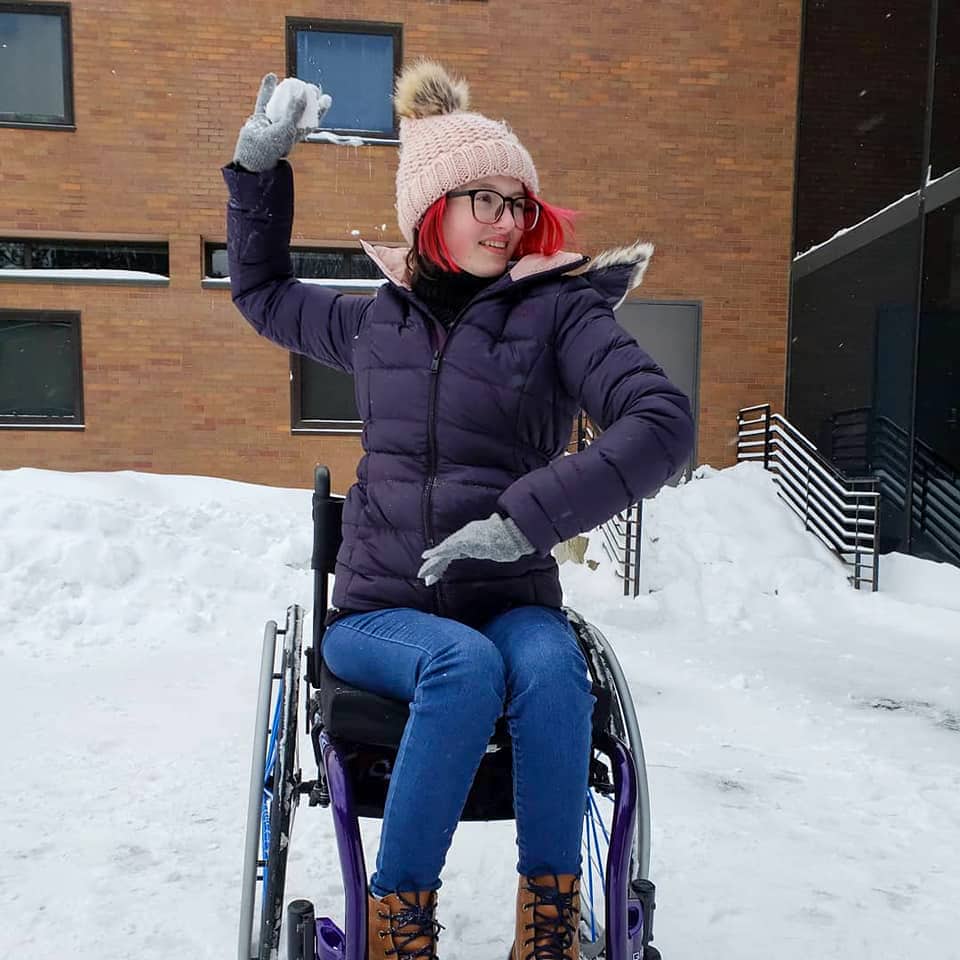 Can’t live without:
I just got an Apple Watch with wheelchair mode, so instead of counting steps, it counts pushes and changes the calorie count for wheelchair users.
What would tell your pre-diagnosis self?
It’s not the end of the world. Life looks great so far, and it’s not as bad as I thought it would be.
A popular misconception about Rochester Institute of Technology?
That because it’s home to the National Technical Institute for the Deaf, it’s also accessible to hearing people with other disabilities and actually cares about our needs.
Why I joined United Spinal:
My syringomyelia diagnosis was so out of left field. When I found United Spinal, I felt like I’d found an entirely new community I didn’t know existed.