

President & CEO
United Spinal Association
I want to wish a Happy New Year to our community and supporters.
I experienced many personal breakthroughs that inspired my work for disability justice this past year. Unfortunately, I also encountered ableism right up into the holidays, which reinforced why our work is meaningful.
At the end of the year, I ventured to the theater with a group of friends and acquaintances for a holiday performance. Well, the theater gave me precisely one seating option because I use a wheelchair. As a result, my friends sat in the accessible area so we could all be together — the theater’s ableist design made that choice for them.
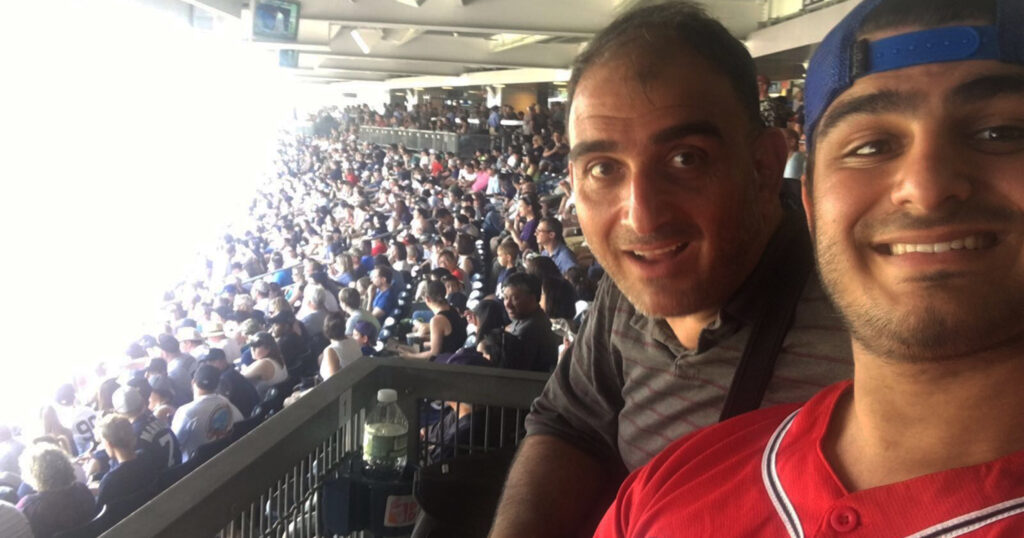
Incidents like these have disrupted not only formative events in my life but those of my family. My son endured many Braves games where he faced the awkward choice of sitting with his friends or his dad. I empathized with my son’s frustration. It’s no fun to be 12 and stuck in the middle of nowhere with your dad when all your friends and their dads have the best seats.
Inaccessible Spaces Show a Lack of Vision
The world’s most renowned firms continue to build ambitious, fully-modern venues and undertake multi-year renovations that simultaneously preserve and update historic buildings — many of which are subsidized by us taxpayers. And yet, creating inclusive spaces that are a pleasure to share with our friends and family remains an afterthought. Too many architects lack the vision to go beyond the minimum required by the Americans with Disabilities Act.
We can be the biggest fan, willing to pay what it takes to sit front row or in great group seating, and it won’t matter. Someone else has already chosen our seats for us.
We live in an era where ingenuity and innovation seem to bring any wondrous prototype imaginable into being. Buildings that appear to defy the laws of physics are regularly unveiled. Yet designing a theater or a stadium to give us the same choices as other patrons seems impossible.
All Spaces Should be Inclusive

We built magnificent cathedrals like the Duomo di Milan in the 1300s. We constructed the first suspension bridge to accommodate cattle in 1826. Yet, we can’t seem to build accessible, inclusive public spaces. When the $41 million Hunters Point Community Library opened In 2019, The New York Times called it a gem and “one of the finest buildings the city has built this century.” Yet it is being sued under the ADA because many of its acclaimed terraces and entire fiction section could only be reached by stairs, among other accessible design infractions.
So why do we struggle to build intuitively inclusive public spaces like the Hunters Point library could have been today? There are several reasons. One is the false claim that accessibility is too costly. Another is the invisibility of people with disabilities as end users. And then there is the misplaced belief that accessibility is incompatible with magnificence and beauty.
When The New York Times asked Steven Holl Architects Senior Partner Chris McVoy why his firm failed to make Hunters Point Library fully accessible, he said it was a “small wrinkle in an incredibly successful project.”
“To be honest, we hadn’t thought, ‘OK, we have to provide an exactly equivalent browsing experience,” said Holl. “But that doesn’t mean it’s a flaw in the design.” But any design that excludes people with disabilities is flawed.
No More Lazy Architecture
It does not matter how spectacular or groundbreaking a building is or how long construction takes. If universal design principles are not incorporated from the ground up, it is lazy architecture. Forward-thinking architects should demonstrate that they can achieve grandeur and make bold visual statements while designing inclusive spaces.
Designing spaces that everyone can fully use should be an intriguing challenge, not a dreary legal commitment. If anything, it will take the most avant-garde minds to truly integrate concert halls, stadiums, and theaters. For my family and me, the greatest architectural marvel of all would be a space that enables us to live our lives fully together. I believe this can be done without aesthetic or undue financial expense. It just requires architectural firms that want their work to be admired and used by everyone.