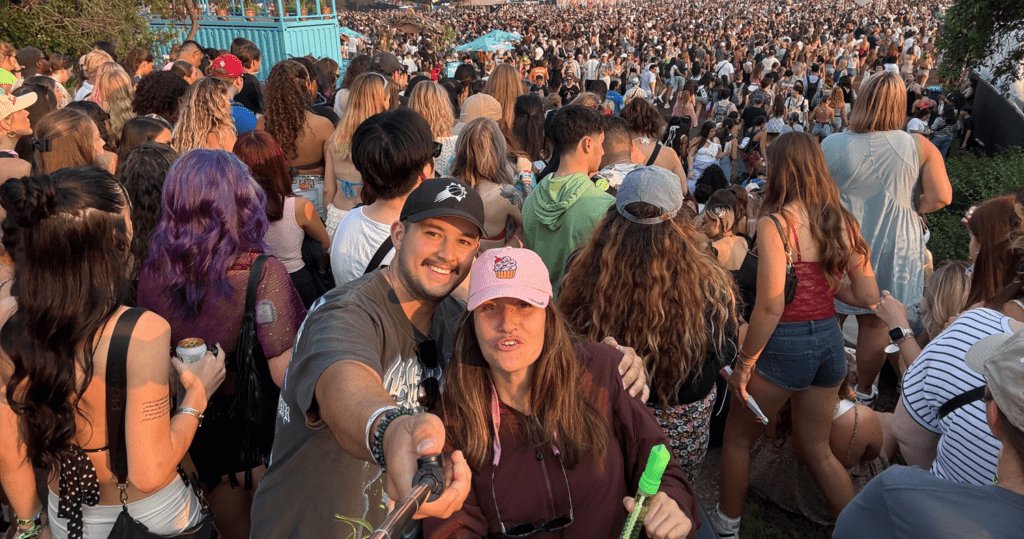
[Top photo: Amber Rangel enjoying the energy at Lollapalooza in Chicago’s Grant Park. Outdoor festivals and other public venues are required to provide wheelchair users with seating that offers a clear view of the stage.]
I bought ADA tickets for a concert at my local county fair only to show up and discover they’d put the wheelchair seats on an awkward sloped hill with terrible sight lines. They said it was the best they could do, but I have a hard time believing that. What are they required to do by the ADA? What can I do?
The ADA requires wheelchair spaces and companion seats that are properly aligned so that you can sit together shoulder to shoulder and enjoy a line-of-sight equivalent to what is offered to others. The actual language is kind of messy, but what it really means is you need to be able to see the action as well as anybody seated in that section — even if everyone stands and you can’t. Additionally, you must have an accessible route to the seat, and the ground under the seat needs to be flat.
To understand whether the venue you are attending is in violation and what your options are, you first need to figure out which part of the ADA covers the venue. Title II of the ADA covers state and local government entities, and Title III covers public accommodations. If the county fair is put on by the local government or takes place on state or local government property, it falls under Title II. If it’s run by a private provider, it falls under Title III.
The next thing to figure out is whether the facility is temporary or permanent. While the ADA Accessibility Standards are the same for permanent and temporary facilities, correcting barriers in a permanent facility is typically a more difficult and expensive process, and consequently, the owner may be more resistant to change. Try to find out when the facility was built or last updated. If the facility was constructed before the ADA, there may be some flexibility — however, it still must be accessible and usable for people with disabilities.
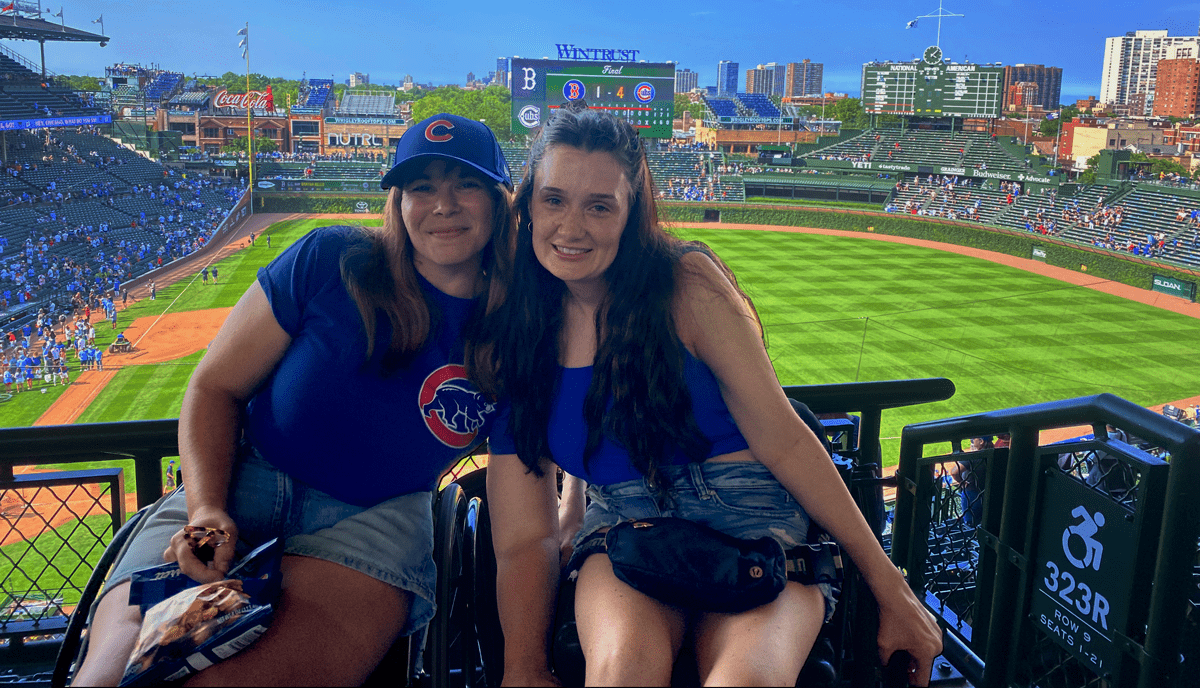
Once you’ve figured these things out, the next step is to document the violation and report it. With modern technology, documenting is easier than ever: take photos, record interviews with officials (ask permission) and take notes of names and observations. Showing good faith will help you whether you choose to pursue legal action or some other negotiated solution. You don’t have to be an expert on the ADA standards; you just need to succinctly describe why you believe you experienced disability discrimination.
Showing up to a concert to find sloped seating, no path to the bathroom or a view of people’s backs instead of the stage is all too common. It happens because accessibility is still treated as an afterthought by many venue designers and builders. Our Accessibility Services team is changing that. For decades, our accessibility experts have worked directly with architects, developers and builders to make access part of the design from day one, not a subpar retrofit.
Learn how United Spinal’s Accessibility Services team is building a more accessible world.
Title II has a built-in compliance infrastructure that requires governments to hire ADA Coordinators responsible for following up on complaints. Title III relies much more on individuals lodging complaints or filing lawsuits. Either way, first address your complaints with the people directly responsible for the venue’s accessibility. If you cannot resolve this on your own and you still want the matter resolved, it’s time to file a complaint.
The Department of Justice is supposed to be the primary enforcer of the ADA (except for transportation facilities and employment), but it has long been under-resourced. Many violation reporters have experienced long delays and received letters telling them that DOJ cannot pursue the case, but that they have the right to seek recourse through the courts without DOJ’s help. While some people will undoubtedly find a lawyer and go to court, reporting the issue to a state-level agency may lead to faster and more satisfying responses.
State and local governments cannot enforce the ADA, but they frequently have disability or human rights laws that parallel the ADA’s non-discrimination requirements. This Wikipedia site may be useful in finding your state agency. Explore your state website and make sure that the state law covers disability as a protected class and prohibits discrimination in public accommodations or state and local government programs and services, whichever is applicable to your situation. Ask them if there is any reason not to simultaneously file a complaint with DOJ as a back-up.