Finding ways to communicate with others after any disaster is an important aspect of emergency preparedness for the disability community. If cell phone services are not available, there are other options.
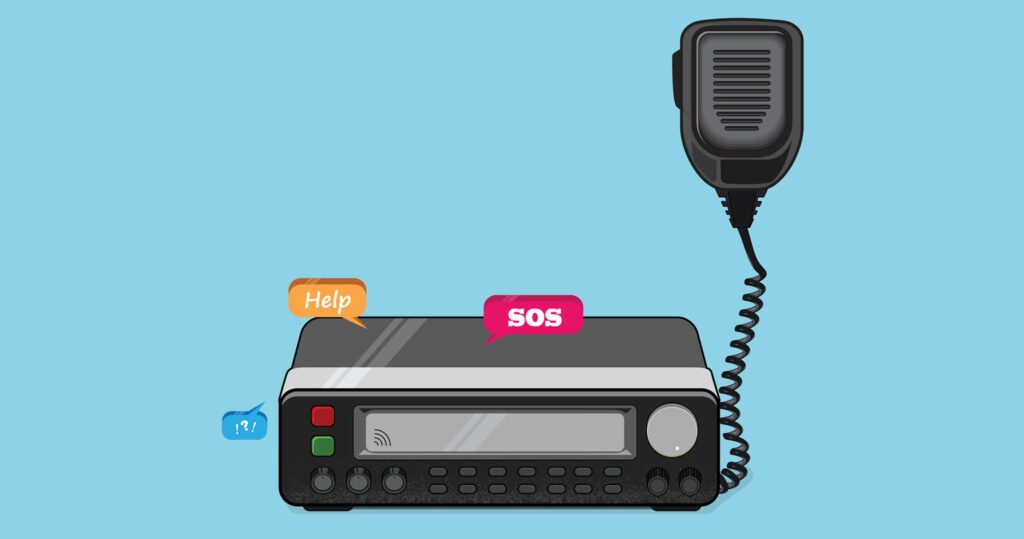
One of those options is amateur radio, which is also commonly known as ham radio. The Emergency Preparedness Working Group members who are licensed ham radio operators want to share their knowledge and expertise that can provide a critical lifeline during times of need!
What is Ham Radio?
Ham radio is often referred to as a hobby that provides the opportunity for people to connect and talk with others around the world without the need or use of internet or cell phones
Ham radio dates back to 1873 when James Clerk Maxwell presented his theory of the electromagnetic. Fast forward to 1896 when Guglielmo Marconi communicated over a distance of two miles without wires, and in 1901 he spanned the Atlantic with a radio device using high power and giant antennas.
View this post on Instagram
Amateurs were required to get a license and restricted to the single wavelength of 200 meters after Congress approved the Radio Act of 1912 in order to help curb interference. Through the years advancements of the Ham Radio continued, and in 1960 the first two-way contact to the Moon took place.
Amateur radio operators are also known as radio “amateur operators” or “hams”. The nickname “ham” dates back to the beginning of the 20th century and it was originally used as a derogatory term. Frustrated commercial operators would refer to the ham radio interference by amateurs calling them “hams.”
Amateurs, may have been unfamiliar with the real meaning of the term, picked it up and applied it to themselves. Now, the original meaning has completely disappeared.
Ham Radio During Disasters
Hurricanes Helene and Milton were powerful reminders that when conventional communications fail ham radio is there to provide access to lines of communication.
The ARRL was founded in 1914, and it is the largest organization of amateur radio operators in the United States. It is the primary source when it comes to what is going on in the world of ham radio, and it provides information on the various types of licenses.
Tim Vermande, a member of United Spinal Association’s Emergency Preparedness Working Group and a licensed ham radio operator since 2002, shared a list of various organizations centered around amateur radio.
- Courage Kenny Handiham Program– Amateur radio and assistive technology for people with disabilities
- Amateur Radio Emergency Service (ARES) – This group is made up of licensed amateurs who voluntarily registered their qualifications and equipment with their local ARES leadership to help with communications when disasters occur.
- Radio Amateur Civil Emergency Service (RACES) – A local government program created by FEMA and the Federal Communications Commission that links volunteers who are licensed radio amateurs certified by a civil defense agency that are able to use Amateur Radio frequencies to communicate during drills, exercises, and emergencies.
- Skywarn (Storm Spotters) – A program organized by the National Weather Service that is made up of thousands of volunteers who attend regular training and identify and report storm information in their communities.
- Community Emergency Response Team (CERT) – A FEMA sponsored program that offers a nationwide approach to training volunteers on how to respond to emergencies in their communities. Ham radios enable a CERT to communicate over much greater distances than standard radios.
In the aftermath of a disaster, hams play an extremely vital role in connecting victims of disasters to their friends and family. They create communication opportunities when cell towers are inoperable and internet access is not available. Ham radio operators also have the ability to provide information to emergency management officials and can direct resources where they are needed the most.
Working group member Richard Skaff has a ham radio in both his vehicle and home. During the aftermath of a storm there was not enough county staff to see where help was needed. Richard was able to drive around his area and use the ham radio in his van to connect with another ham that had a working telephone.
After this ham radio operator heard from Richard, he was able to call the local public works to come out and clear fallen trees.
“If you are going to think about using your ham radio for emergency purposes at your home or in a car you do have to make sure you have the battery backup, especially in your house,” says Richard. “If you are going to shelter in place, you must have a generator or battery backup system for your radio.”
In order to be more effective and prepared to work with emergency management officials, ham radio operators can take Federal Emergency Management Agency (FEMA) National Incident Management System (NIMS) and Incident Command System (ICS) courses. There is also the option of taking National Weather Service (SKYWARN) storm spotter training to help provide accurate weather reports and the Auxiliary Communications (AUXCOMM) training which helps integrate ham radio operators into the local emergency operations centers.
Ham Radio and the Disability Community
The Courage Kenny Handiham Program was established in 1967 in order to provide tools for people with disabilities to become licensed hams. By joining this program, members will also have the opportunity to learn new assistive technology that can help with the ham radio experience and become a part of a worldwide community of ham radio operators with disabilities.
The Handiham Program encourages all of its members with disabilities to give back by taking part in public service through local amateur radio clubs and volunteering to help others who would like to get involved. If this is of interest to you, there is an online membership application.
Getting Licensed
The first step in getting started with ham radio is to get an Amateur Radio license from the Federal Communications Commission (FCC). Technician, General, and Extra are the three types of licensing available. ARRL offers way to search for online exam sessions and in-person exam sessions in your area.
By joining ARRL you have access to books, news, technical support, information, special events, continuing education classes, and other helpful membership benefits. There are also study resources and exam practices for the disability community and testing accommodations are available.
This requires contacting the Volunteer Examiners (VEs) ahead of time. A VE Team that is suggested is parcradio.org because they have experience with testing for people with various disabilities and they also offer virtual testing for anyone in the United States.
There are options for practice exams that can be found online, and some of those options are listed below:
Some of the best opportunities to learn about ham radio involve talking with experienced operators and connecting with an Amateur Radio Club near you. The Courage Kenny Handiham Program offers a Handiham Radio Club.
After you obtain your license, the next step depends on what type of equipment and communication you would like to try out.
How About Equipment?
DX Engineering is a company that sells amateur radio equipment and supplies. They also help novice operators learn how to use ham radio equipment and set up remote transmitting sites to test technical skills.
Get Prepared for the Next Emergency with Ham Radio is a great introductory video that covers questions that should be answered when selecting a radio that meets your specific needs.
First, you will need to purchase a beginner-level transceiver. If you then become seriously interested there are various ways to buy more equipment. Ham Radio Outlet is a good place to start. Many times, you can find good quality used equipment to purchase through local clubs or radio enthusiast get-togethers.
View this post on Instagram
Connecting with local groups is also an excellent way to learn about ham radio and learn ham jargon that can be confusing for beginners. The most popular on-air event in the United States and Canada is the ARRL Field Day.
The ARRL Field Day takes place annually on the 4th full weekend in June. There are more than 40,000 hams that get together with their clubs, groups, or friends to operate their ham radios from remote locations. This event welcomes the public to learn about ham radio science, and it includes public service, emergency preparedness, community outreach, and technical skills. You can use the Field Day Locator to find a location near you.
Tim Vermande suggested looking for starter packs such as the amateur radio getting started combos for handheld, mobile, portable, and base station combos offered by DX Engineering. The QRZ Jumpstart Program offers a coupon code for ham radio operators in the United States that have been licensed for less than 6 months.
Modifying equipment may be required to fit your specific needs. Ham radio can be adapted for people with disabilities by using talking devices, sip and puff technology, and audio explanations. There are many videos that share information on adaptions, such as the Ham Radio Devices for Use With Arm or Hand Disabilities video on YouTube.
Before you get started, ask yourself: Why do you want to get into being an amateur radio operator? “It is a hobby, and you can take it to any level that you want,” says Andy Weyant, a licensed ham radio operator for 26 years
Resources
Online:
Social Media
Join United Spinal’s Emergency Preparedness Working Group to collaborate with advocates across the United States on emergency preparedness for the disability community.