
I was, and every other day probably still am, foolish.
I was fixed up on a date with a pretty girl who used a wheelchair for mobility.
I had no immediate experience with disability to that degree up to that point–which was my junior year in college about a month before turning 21.
My wife’s personal care attendant was dating one of my best friends from the dorm. They arranged the date.
I wasn’t sure how to open doors, plan a date at a place that had wheelchair accessible parking, entrance, dining, or restrooms.
I quickly fell in love. We married a few years later. Heidi Johnson-Wright (Americans with Disabilities Act expert, lifelong public servant, law school graduate, author) has put up with me for more than a third of a century.
Why am I still an idiot? Because I get frustrated, angry, impatient. There. I said it. Things I’d love my bio–as a husband, caregiver, award-winning writer–to exclude. I don’t need to come off as perfect, but I’d sure like to think I have modified my behavior to eradicate those times when I’m a caregiver in body–but not so much in mind–because my mind is in chaos and temper overload.
It has just about zero to do with my beautiful bride or her disability from juvenile rheumatoid arthritis, plus dozens of major surgeries–some botched, and some inducing joint pain and nerve damage.
I’m pretty sure it comes from expectations I put on myself. I’m a fairly rational guy, but when it comes to being a front-line caregiver for more than 35 years, I’m susceptible to magical thinking:
- If I plan a dream trip to death, nothing will go wrong – no airline breaking my wife’s wheelchair, no hotel booking us a room without a roll-in shower, no museum failing to repair its long out of service elevator.
- If I tell enough jokes, cook a perfect made from scratch breakfast – my wife will not be so stiff, sore, flat out in pain from waking till bed time.
- If I strategize enough (crossing the line into toxic territory of being parental instead of spousal) before an event, my Heidi will never suffer the horrible impacts of ableism—from a boss, bus driver, physician, or grocery store clerk.
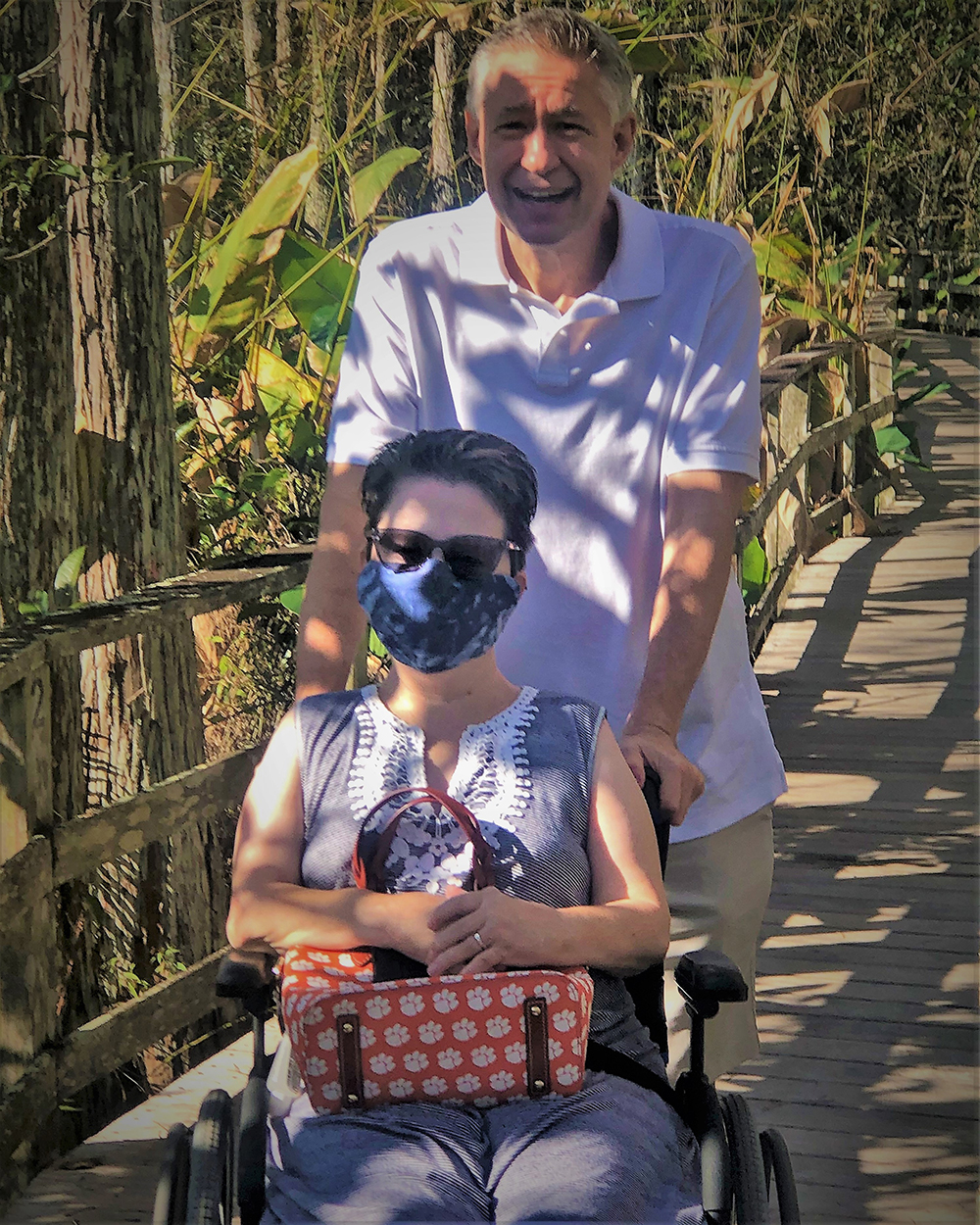
Yes, I try to do the thinking for a person that–by any of a dozen measures–is 10 times more bright, educated, resourceful and resilient than I’ll ever dream of being.
So that’s the big takeaway I have for families in which one spouse is a caregiver–if you are responsible for a good amount of your beloved’s bathing, dressing, house cleaning, light physical therapy and more–get super self-aware of the things you can and cannot control.
I think I put stress on myself to the point where if my wife is having a flare up, or is in a brain fog because she’s devoting all mental energy into mustering enough white noise to drown out gnawing pain – I start to almost (and quite foolishly) feel resentful when she is not appreciating my best efforts.
I also got good (I say with all irony) at fighting battles my wife has no desire to enter. I’m the hulking beast (used to weigh 310, now around 170) tossing chairs out of our path, leaving a raging note on the car blocking the access aisle of an accessible parking space, turning red faced while scolding a hotel manager for placing us in a room with the opposite of 21st century accessibility.
Can I still slide into all the wasted/negative energy of all confessed above? Yep. But I/we work on it.
As a storyteller, I’m in the advice business. Whether it’s an opinion piece or lengthy cover story, I share best practices for diversity, equity, and inclusion, as well as accessibility in planning, architecture, mobility and policy.
In my sixth decade, I’m learning to hit the pause button and take time to seek best practices and timely tips from the experts–to make me a better person. That’s why I am so heartened to be part of the United Spinal team that understands caregiving is a challenging, multifaceted, ever-evolving role. United Spinal supports caregivers with outstanding resources and support through its Resource Center, and their mission reflects the power of the #StrongWheeled community in transforming lives, including the lives of caregivers.
Thankfully, I married a very patient woman who appreciates my caregiving – even when I set the gold standard in how not to do it. My wife has helped me channel my quest to right wrongs, through the lens of disability advocacy. Heidi taught me how we are 100 times more capable as a team. We truly can make a positive impact and achieve our goals – when we put our best strengths together.
Heidi gave speeches on disability before she was old enough to drive. After law school and a year in public service in Ohio, she became and ADA expert for large city and county governments in greater Miami.
Because I worked at a newspaper and they knew my wife used a wheelchair for mobility, I was the go-to guy for ADA and related stories. That turned into our writing hundreds of travel by wheelchair stories for major newspapers.
In Miami, I worked as the policy advisor for the chair of the Miami City Commission, then in marketing of professional design services. This allowed me to merge my three professional loves: writing, architecture and advocacy.
Together, we have published thousands of articles and given dozens of speeches on the victories and pitfalls of town planning, urban design, transit, and mobility and architecture. We demonstrate what works and what doesn’t.
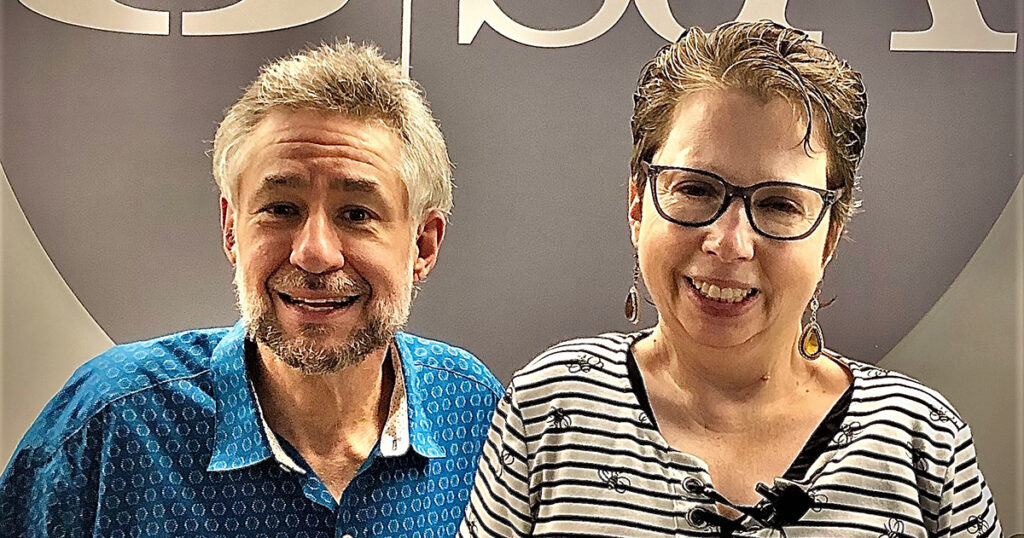
After teaming on these things for a quarter of a century, our dream came true in the form of a Universal Design course that we created from scratch. We are teaching it at the University of Miami School of Architecture (U-SoA).
The course was inspired by our research and stories on accessible public spaces, local government advocacy and dozens of travel stories exploring accessible buildings and places. We have contributed to New Mobility, United Spinal’s membership magazine for two decades.
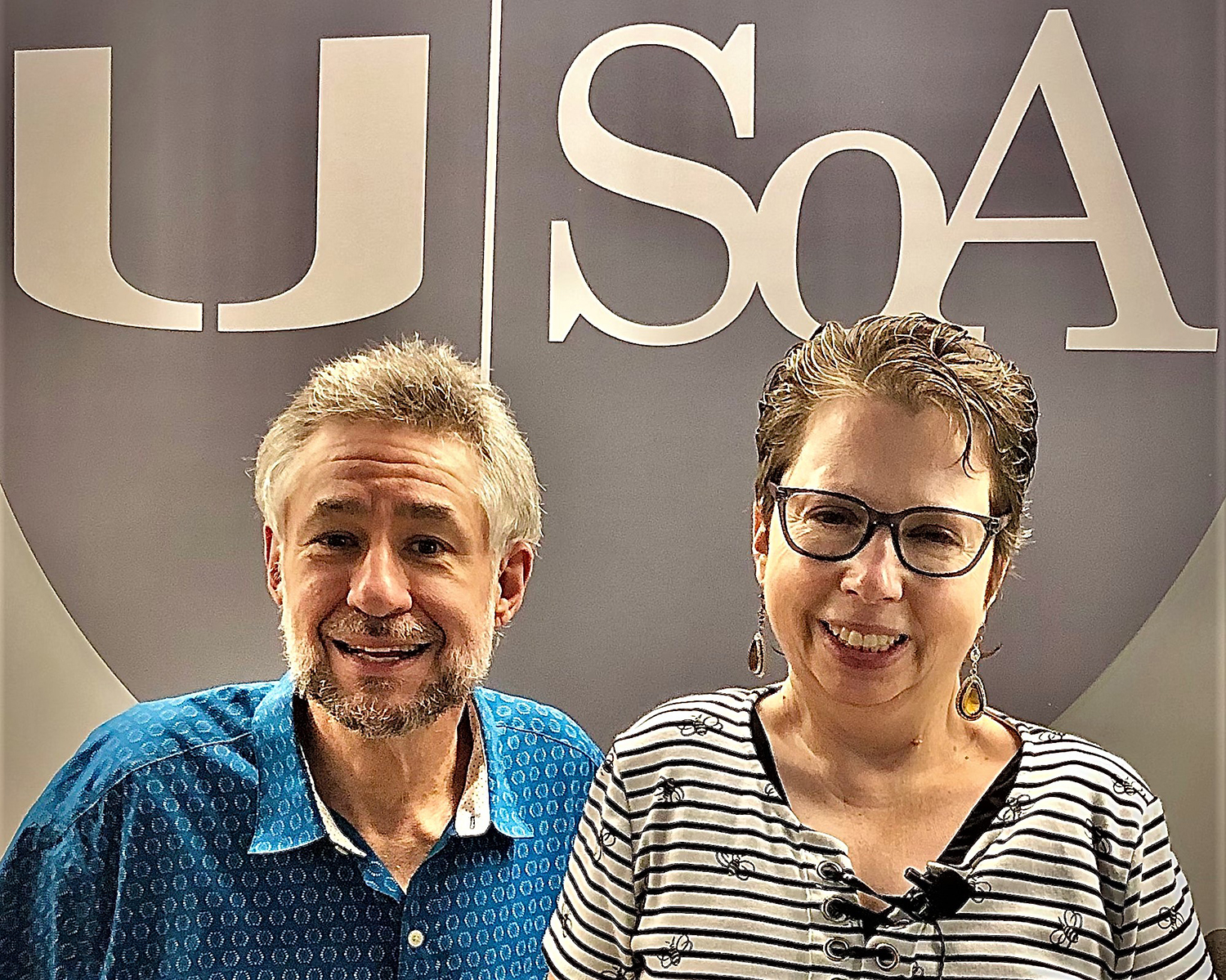
In addition to being a nationally-recognized architecture program, the UMSoA is the cradle of the New Urbanism approach that has guided thousands of planners. The Universal Design course examines inclusion for: residential, health care, hospitality, civic, mobility, park, wellness and town planning design.
The late architect and planner Ronald L. Mace, FAIA, founder of the Center for Universal Design at North Carolina State University, coined the term universal design. He defined it as “the design of products and environments to be usable by all people, to the greatest extent possible, without the need for adaptation or specialized design.”
“The course belongs to U-SoA’s long tradition of community building. It sustains its commitment to diversity and inclusion and ensures that U-SoA graduates are prepared for the evolving social and cultural landscape,” said Dean Rodolphe el-Khoury.
The full credit course is composed of graduate students and upper level undergraduate students. We are donating 100 percent of their pay to support further outreach and education about Universal Design on a global scale.
“For centuries, everything from a home entrance step to park benches has been designed for a 5-foot-10 able-bodied male, an approach that excludes the majority of people,” said Heidi. “Less than one percent of all housing in the U.S. is readily accessible to people who use wheelchairs. That’s why we must create architecture, planning and design usable by everyone to the greatest extent possible without adaptation or specialization.”