
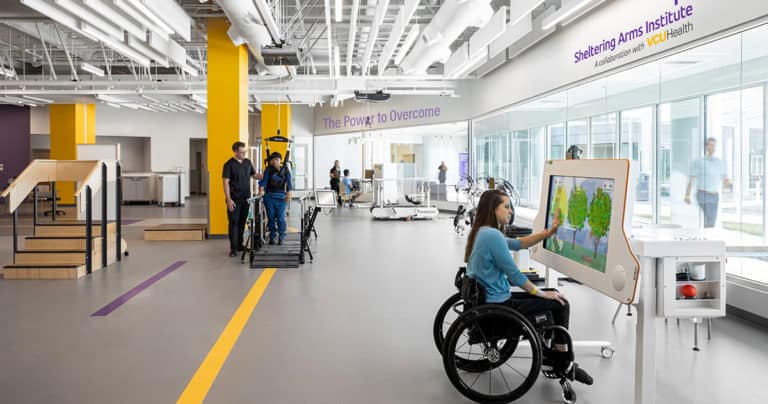
Once your spinal cord injury is medically stabilized, you should request a transfer to an acute rehabilitation program in a facility with a dedicated SCI program. Participating in SCI acute rehab will improve your quality of life, as you will learn skills to live independently.
In acute rehabilitation, you and your family become essential members of a team that includes doctors of physical medicine and rehabilitation, nursing, occupational and physical therapy, social work, psychology and recreation specialists. This team of SCI experts can provide a comprehensive, multidisciplinary, lifetime approach essential to your long-term care.
Choosing an SCI Acute Rehab Program
An SCI acute rehab program should be welcoming and inviting when you reach out to them. Ask yourself:
- Were staff members helpful when you requested information?
- If possible, request a tour of the facility to evaluate the campus accessibility, approachability of staff, cleanliness, and onsite rehabilitation equipment. This will help give you a sense of the overall atmosphere.
- Did you have an opportunity to speak with current program participants?
- Are family members encouraged to participate in rehabilitation programs? Can they access counseling and other social services? Are living arrangements available for them, including parking?
Assessing the Acute Rehab Program’s Quality
Here are some suggestions about how to probe a prospective rehab program’s quality even if you’re not yet knowledgeable about spinal cord injury or rehab:
- Since staff needs to treat people with SCI regularly to acquire and maintain expertise, ask how many people are admitted annually to the SCI program. Also, ask how the facility’s outcome measures compare with other facilities under consideration. Some outcome measures may include the number of people discharged to their homes, the number of rehospitalizations, and the achievement of functional goals.
- Inquire if the SCI program is accredited by the Commission on the Accreditation of Rehabilitation Facilities or the Joint Commission on Accreditation of Healthcare Organizations. Has the National Institute on Disability, Independent Living, and Rehabilitation Research designated it a Spinal Cord Injury Model Systems Center?
- Check that the treatment team will develop a rehabilitation plan with both short- and long-term goals. Ask if an experienced case manager will help you obtain medical payments and other public and private insurance benefits. Confirm which team member will coordinate treatment and be a liaison for staff and family members.
Importance of Peer Support
Connecting with people who have similar injuries and backgrounds will boost your rehab experience and enhance long-term recovery and quality of life.
- Is there a peer mentoring program, and does the facility offer peer support groups?
- If so, do the participants have similar levels and types of spinal cord injury, e.g., quadriplegia, paraplegia, incomplete and complete?
- Are there participants of your race, ethnicity, sexual orientation, and gender? Are there treatment specialists who speak your language?
Access to Specialties
Spinal cord injuries are complex, and no two are alike, so you must have access to appropriate specialists.
- Physiatry is the branch of medicine covering rehabilitation and physical medicine. Ask if a physiatrist directs the SCI program. If not, how long has the director led specialized SCI programs, and does the facility offer long-term outpatient physiatry services?
- Is there always a doctor available, 24/7? Are rehabilitation nursing and respiratory care always available? If there is a medical complication, can it be managed in the same facility, or will you be transferred elsewhere?
- Do the program’s regular nursing staff and specialists have specific training in treating SCI?
- Ask if these specialties are available at the facility or nearby medical centers: neurosurgery, neurology, urology, orthopedics, plastic surgery, neuropsychology, internal medicine, gynecology, speech pathology, podiatry, pulmonary medicine, general surgery and psychiatry.
- Will you receive treatment at least three hours a day by specialists such as occupational and physical therapists? After discharge, will you have outpatient access to comprehensive rehabilitation therapies such as physical, occupational, speech, and recreational therapy?
- Is driver education, wheelchair and seating specialists, chaplaincy, and therapeutic recreation available? What activities are planned for SCI program participants on weekends and evenings? Does the program offer community outings?
- Will you receive instruction about sexuality, bowel and bladder care, skincare and other essential self-care activities? Will you be offered practical training in personal care assistant management and hiring if you need personal care?
Discharge Planning
Your program should develop a formal discharge plan that includes:
- A referral to an appropriate physician and other medical specialists. If your SCI program is close to your home, inquire about regular follow-up visits with your SCI unit physician. Also, ask for periodic urological evaluations and equipment evaluations to be scheduled.
- A thorough vocational evaluation and referrals to a vocational rehabilitation program. Other referrals to community resources may include your local United Spinal Association chapter and Independent Living Center.
- A liaison assigned to provide follow-up services. Also, ask for educational self-care resources upon discharge.
- An independent living unit available for you and your family to practice self-care skills. If the facility does not have an independent living unit, ask if they encourage therapeutic day passes before discharge.
- A staff member to evaluate your home for modifications or arrange for this to be done by someone local.
United Spinal Association is committed to assisting people with SCI to find quality rehabilitation services. Please contact United Spinal Association’s Community Supports team for more information or assistance. Join our community by signing up for a free membership. To support our mission, donate here.