
Scott Chesney is a husband and father of two children. In December of 1985, he endured a rare stroke in his spinal cord which contributed to a Congenital Arterial-Venous Malformation (AVM) that left him a T7 paraplegic.
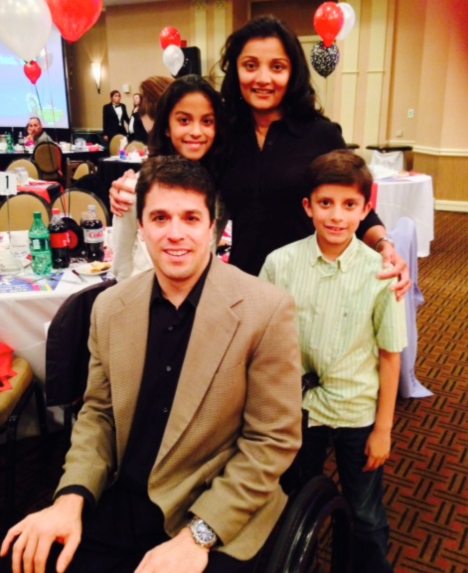
Scott met his wife, Pratiksha, at a Physical Therapy Association’s Convention in New Jersey, it was an instant connection. “I was tongue-tied up on stage as I saw this vision of beauty in the audience,” he said referring to the first time he saw Pratiksha. She felt it too. “I don’t know who that man is, but that is the man I am going to marry and spend the rest of my life with,” Pratiksha admitted. They married two years after that first meeting.
Pratiksha, having worked with people who sustained spinal cord injuries in her profession, understood the hardships of having their own children and wasn’t opposed to adoption if necessary.
“We planned for the best news and prepared for the other news.”
The couple had contacted various reproductive medical groups and had success with the Reproductive Medical Associates (RMA) in New Jersey. Scott’s doctor deemed his sperm healthy for conception. The husband and wife decided on In-vitro Fertilization route and were successful twice.
“Parenting with or without a disability is one of the most challenging jobs on earth, filled with sheer exhilaration and overwhelming frustration. Since my kids never knew me on my feet, there was never any kind of adjustment for them. They knew what I could do and what I could not do. They seemed to know this from a very early age.”
Scott recalls one memory of trying to lean over and pick up his daughter in the playpen while balancing himself with his arms hoisting himself up in his chair. Although a little wary, Scott spoke kindly to his daughter and they managed to complete the task together.
Women and men with spinal cord injuries can also become moms and dads. It’s important you seek proper treatment and implement a plan that works for you after consulting your specialists. Having a conversation with your partner is the first step. The next step is a connection with a rehabilitation physician who is sufficient for treating health concerns with SCI is crucial to ensure a good experience
Check out the original post!
Know someone living with an SCI who has baby favor? Share away!