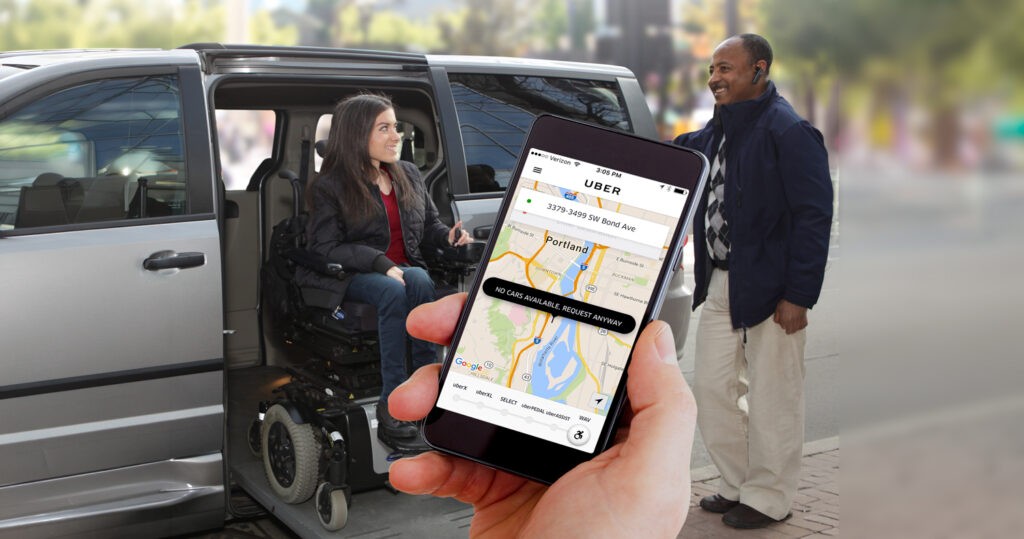
Picture this: You land at an airport, tired from travel, ready to go home. You open a rideshare app like everyone else around you. Cars appear on the screen, but none of them are accessible. Hours pass. Eventually, no one shows up at all.
That experience isn’t hypothetical. It’s reality for many wheelchair users.
United Spinal Association’s Accessible Transportation Working Group brings together wheelchair users from across the country who meet regularly to share experiences and coordinate advocacy efforts. The group works to advance equitable rideshare solutions, including expanding access to Wheelchair Accessible Vehicles, through coalitions, focus groups and state legislation.
One of the core goals of the Americans with Disabilities Act was to eliminate transportation barriers so people with disabilities could fully participate in everyday life. Yet more than 35 years later, the National Council on Disability reports that millions of people with disabilities still face significant disadvantages when it comes to accessible transportation.
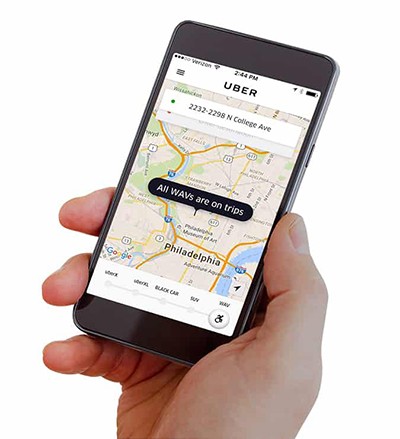 What is a WAV?
A WAV is a vehicle equipped with a ramp or lift that allows a wheelchair user to roll directly into the car. In theory, WAV rideshare options are meant to provide the same on-demand convenience that nondisabled riders take for granted. In reality, these options are limited to select cities, and many riders must rely on specialized transportation companies, if they are even available.
Uber and Lyft have become the preeminent transportation network companies, but because the ADA does not require TNCs to maintain a minimum number of WAVs, availability remains inconsistent at best, nonexistent at worst. It takes action at the state level to require TNCs to provide accessible services.
What’s the problem with WAV?
For many riders, the problem is more than inconvenience. It’s exclusion.
In rural and suburban areas, WAVs are often unavailable altogether. Even in major cities, riders report long wait times, canceled rides, or drivers who simply never arrive. “I waited five hours at the airport, and then they were a no-show,” says Linda Norah-Davis, a working group member from Texas. “It was not reliable.”
Others describe being denied rides outright sometimes because of service animals or encountering drivers who are untrained or uncomfortable operating ramps and securement systems. The cost of purchasing and maintaining accessible vehicles also discourages many drivers from participating.
Kelly Mack, an advocate and public affairs specialist with the Administration for Community Living, has seen how policy can make a difference.
“I think places that require a percentage of [rideshare to be] WAV service, like New York City, may be the answer. When you require it, it happens more often. London is another good example, where all vehicles have ramps and all drivers must be trained to use them.”
Technical barriers add another layer of frustration. Rideshare apps can be difficult or impossible to use with screen readers; vehicle listings are sometimes inaccurate; and riders often have no way to clearly communicate their mobility needs.
Why Expanded WAV Access Matters
When accessible rideshare works, it opens doors … literally and figuratively.
For Norah-Davis in Texas, accessible rideshare isn’t about convenience. When reliable accessible WAV options exist, her world would simply get bigger. As she puts it, “The benefit of expanding WAV access is that I would travel more!” With dependable transportation, traveling isn’t the only thing that changes. She could participate more fully in her community and live with greater independence, no longer forced to plan her life around transportation barriers.
In New York, Kaitlin Sommer points to the physical and financial burden of inaccessible transportation. Too often, “inaccessible vehicles force wheelchair users to disassemble their chairs just to fit into smaller cars, risking damage and added costs.” More WAV availability would mean not only greater access, but fewer repairs, less wear and tear, and more dignity getting from place to place.
For Arielle Rausin, also in New York, “the issue comes down to equity in transportation for people with disabilities.” Transportation is a basic part of daily life. Equitable access means people with disabilities are not treated as an afterthought. When accessible rideshare is available, it sends a clear message that everyone’s time, mobility and independence matter equally.
Julie Withers of Wisconsin says the lack of accessible transportation severely limits independence. “There is no on-demand accessible WAV service available in Milwaukee, Wisconsin. I spoke directly with 10 taxi companies who confirmed they do not have WAVs in their fleet.” Without reliable options, people with disabilities are often restricted to essential trips like medical appointments. Even the limited alternative Julie found requires significant planning: “Another company connected me to a subcompany, zTrip. With preapproval (you must fill in forms) you can get a ride to medical appointments for $40 plus $2.15 per mile, reserved 48 hours in advance.”
Kelly Mack, in Washington, D.C., looks at the bigger picture. Easier and more dependable accessible rideshare services would help change expectations. “As accessible ground transportation becomes more visible and normalized, it puts pressure on the entire industry, from taxis to autonomous vehicles, to finally meet their obligations and treat access as a requirement, and not an option.”
Know Your Rights and Plan
Making the best of an imperfect system…
Until access improves, riders often have to plan carefully and advocate for themselves.
Working group members suggest confirming availability during nights and weekends, double-checking costs, and allowing extra time. Rausin, United Spinal’s director of chapter and hospital network relations, encourages first-time users not to be afraid to speak up. “Rideshare is generally very safe as long as your chair is secured properly,” she says. “I know some people worry about being alone in a car, but I’ve never felt unsafe.”
Mack recommends always having a backup plan. “WAVs can take longer to arrive, and loading depends on the driver’s competence. I usually plan an alternative, like the bus, just in case. It’s better to have low expectations and be pleasantly surprised.”
When a WAV does not show up, or a driver denies service because of a disability it may be discrimination. You can file a complaint directly through Uber or Lyft and also report any incidents with the U.S. Department of Justice, state human rights commissions or disability advocacy organizations.
Accessible transportation is not a luxury. It is a civil right and until WAV rideshare truly meets that promise, these stories remind us of what is still at stake.
Join United Spinal’s Accessible Transportation Working Group
If you are interested in participating in United Spinal’s Accessible Transportation Working Group to collaborate with advocates across the United States on equitable access to existing and emerging technologies that drive the transportation and travel industries, please fill out the online form at unitedspinal.org/working-groups/.
Resources
- Ground Transportation for People with Mobility Disabilities 2025: Challenges and Progress, NCD
- Uber and Lyft WAV Problems and Limitations, WheelchairTraveling.com
- Make rideshare inclusive and equitable for wheelchair users, United Spinal Association
- United Spinal Association Applauds New York City Council’s Cap on Uber, New Mobility