President & CEO
United Spinal Association
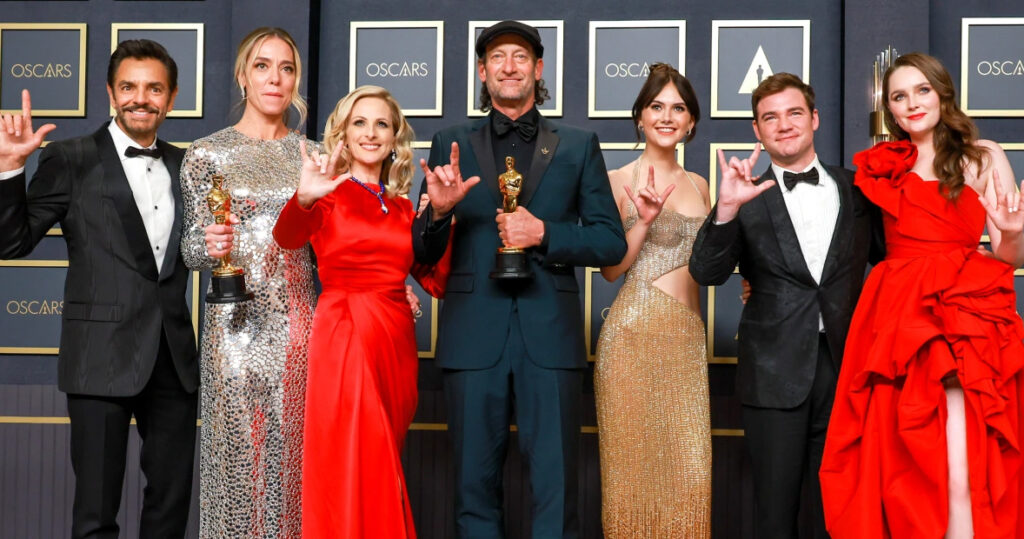
Consider this: It’s been 90 years since Franklin Delano Roosevelt became the first president who used a wheelchair. But it took until 2022 for a film that centered actors with disabilities, representing themselves and their experiences, to win Best Picture at the Academy Awards.
Even with the triumph of CODA at the 2022 Oscars, actors with disabilities remain largely unrepresented in the top flight of American performing arts. According to a 2018 study by the Ruderman Family Foundation, only 22% of all characters with disabilities on television were portrayed by someone possessing that disability.
It’s not that our stories are missing from the American mainstream. It’s not even that they are unpopular. It’s that we are not given the opportunity to bring them to life ourselves.
Many films about the experiences of people with disabilities have been rewarded with the highest honors in American cinema—while members of the disability community have looked on with mixed emotions from the outside.
It’s not that I haven’t found myself admiring actors without disabilities who are able to use their considerable gifts to tap into our experiences convincingly and artfully. It’s that I would like to experience equality for my community across all kinds of institutions. And what institution is more influential in shaping Americans’ opinions and mores than Hollywood?
Today, it is unacceptable for actors to pantomime characters of a different race. It recalls the ugliness and brutality of minstrel shows and blackface, and intolerable inequality and legacy of slavery that structured the segregated society that those backward practices reflected. However, this is not the case for the disability community, which raises political questions about why actors are allowed to “pass” as some groups and not as others.
Recall the uproar when Jared Leto was cast as a transgender woman in the film Dallas Buyers Club, a role that went on to win him an Academy Award. Members of the LGBTQ community put the question strongly to producers about why a trans woman was not cast in the role. Do people look back on Oscar-winning performances by Daniel Day Lewis in My Left Foot, Dustin Hoffman in Rain Man or Eddie Redmayne in The Theory of Everything with the same perspective? Was there a similar backlash to Patrick Stewart being cast as Professor X?
The rampant exclusion of people with disabilities from the labor market doesn’t end with service or office jobs. It extends to every avenue of cultural production, as well. I am encouraged that in the past year, thanks to the Ruderman Family Foundation, major studios like Paramount and NBCUniversal have formally agreed to audition an increasing number of people with disabilities for roles. However, that is far from enough.
Actors with disabilities—not to mention directors, screenwriters, and others passionate about film and tv production—need to receive equal treatment from the moment they discover their calling, not speak of the extra effort that will be necessary to close existing gaps. High school drama clubs, schools for the performing arts, local theaters, writing workshops, and independent film festivals are just as implicated in this process as the heights of the Academy. Structural problems are not fixed from the top down but the ground up.
The entertainment industry is hugely profitable and powerful—and it is within the reach of studios and producers to help us make a change. Scholarships need to be allocated, and projects must be funded to get our community to the casting chair. Where necessary, admissions criteria for film schools should be examined. Talent needs to be cultivated even before careers begin for the disability community to take the stage in living rooms and cinemas across America and around the world and tell the world who we really are.
However, we also should not be depicted as if disability were the sum of who we are, or if we are just a tool to meet a sterile and contrived diversity quota. That doesn’t make for good art, nor does it do justice to our experiences. Ultimately, the final frontier for equality for people with disabilities in the performing arts will arrive when disability is just one attribute among many for the roles we play—much like it is in real life.
Film and TV have a huge role to play in normalizing disability and facilitating the further integration of people with disabilities by depicting us as integrated—smashing backwards stereotypes of people with disabilities as locked in their rooms or trapped in institutions, and instead portraying the complexities of life in the community.
As Tatiana Lee remarked in a recent feature by New Mobility on the career of actress Lolo Spencer, “It’s rare that you see disabled women of color of TV, and the fact that her character isn’t based around her disability and is breaking the traditional norms of what disability representation is, is just huge.”
So, authentic representation won’t just take resources: it will take rethinking time-worn tropes in cinema and television. It will require taking risks in casting and writing. It will not only take increased participation of people with disabilities in all aspects of the creative process, but real allyship on both sides of the camera. Together, we can flip the script on disability.