
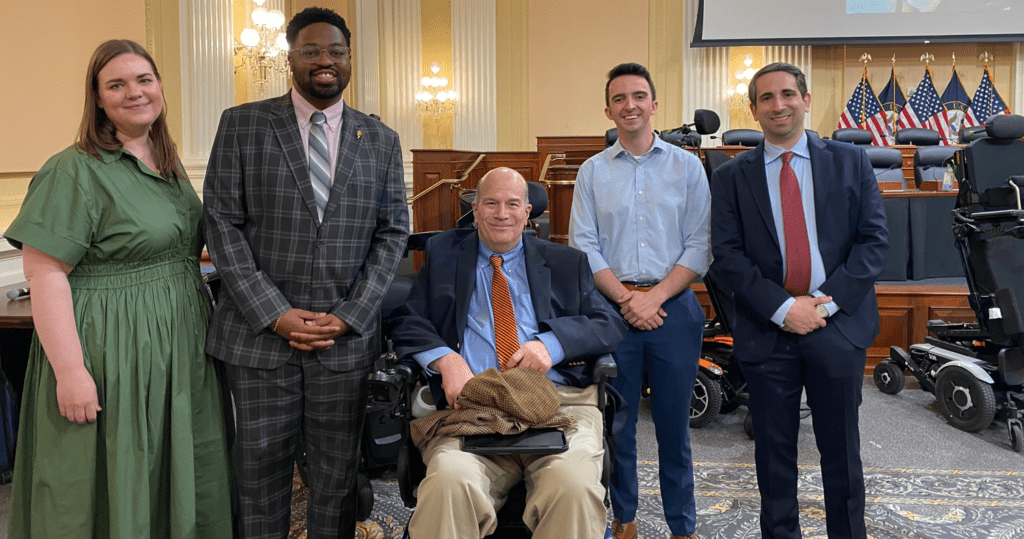
Pictured above: United Spinal’s Kent Keyser, center and Steve Lieberman, right, with members of Rep. Pressley’s team.
Congresswoman Ayanna Pressley (D-MA) introduced the Facilitating Access to Service and Timely (FAST) Repairs for Wheelchairs Act, a bill that would end the need for prior authorization of wheelchair repairs for individuals on Medicare Advantage plans. Prior authorization is already prohibited under traditional Medicare and advocates hope this bill will influence private insurers to take this step.
“I’m proud to introduce the FAST Repairs for Wheelchairs Act, legislation to solve for repair delays that diminish the quality of life for wheelchair users across the country,” said Rep. Pressley. “When a wheelchair breaks down, daily life is disrupted. My FAST Repairs for Wheelchairs Act would streamline wheelchair repair services and remove the undue burden caused by unnecessary barriers in Medicare Advantage plans. I’m grateful to my constituents and our disability justice advocates for informing this vital legislation.”
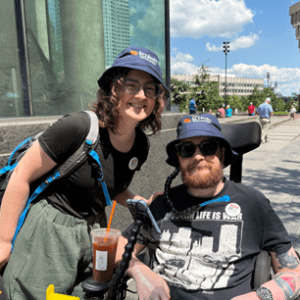
Vita Brown and Pam Daly, members of SCIboston and United Spinal Association’s Grassroots Advocacy Network, were instrumental in getting this bill in motion.
Daly has been a wheelchair user for 54 years and got involved with the National Spinal Cord Injury Association before it merged with United Spinal. Brown’s partner, Will, acquired a C3 spinal cord injury in a car accident five years ago and she is his caregiver. She got involved with support groups at SCIboston, a chapter of United Spinal, and made connections with people going through similar challenges. She fell into advocacy to channel her feelings of frustration into something more productive and serves as the advocacy coordinator at the organization.
The Problem with Pre-Authorization
Daly and Brown were both inspired to advocate for reform by their personal experiences jumping through the many hoops it takes to get wheelchairs repaired. Medicare Advantage recipients need prior authorization by a doctor for all wheelchair repairs, adding unnecessary — and potentially dangerous — barriers to timely repairs.
“I have been through a lot of wheelchair breakdowns and a lot of angst trying to get them fixed,” says Daly. “99 percent of us have permanent injuries. And yet every year we have to go before them and say, yes, I’m still paralyzed.”
“My partner was trying to get a repair done and those prior authorizations were being sent to his provider’s office to a fax number that no longer worked,” says Brown. “You have a wheelchair already. You use this wheelchair. You should be able to get it repaired when it breaks down. It’s ridiculous that people have to prove that they’re still disabled to get repairs.”
Bringing this Issue to Congress
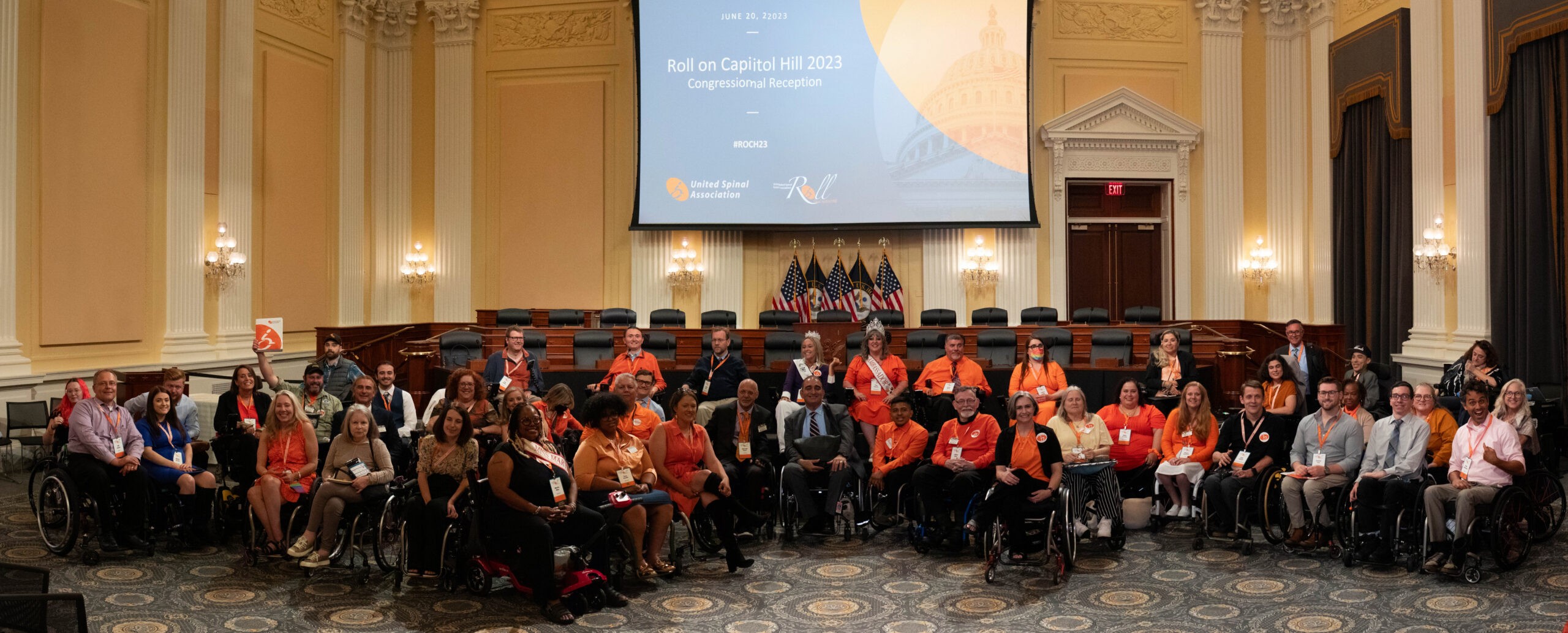
Representative Pressley’s team heard about the issues around wheelchair repair meeting with wheelchair users at United Spinal’s signature event, Roll on Capitol Hill.
“Apparently, many of us have told enough good stories to her aides that they relayed those stories back to her and she heard them. And thanks to her, she’s going to try to do something about it,” says Daly.
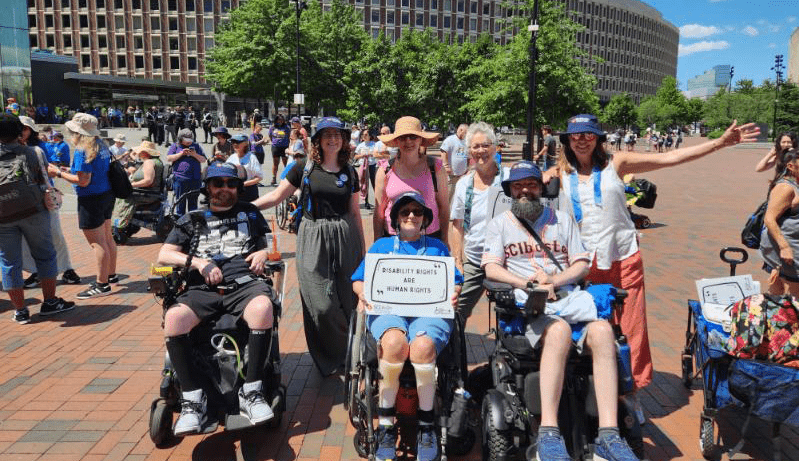
The Power of Advocacy
Change is slow and can feel like two steps forward, one step back. But once in a while, you’ll strike a win like Daly and Brown.
“We spend so much time advocating and basically hitting brick walls and being loud and advocating for ourselves and those people around us. I think the lesson that I’m taking away from it is that you never know when what you share is going to be heard,” says Brown.
|
This June, United Spinal Association’s Roll on Capitol Hill goes virtual: engaging more than 160 advocates at a moment when the stakes couldn’t be higher. Your donation makes that possible. |