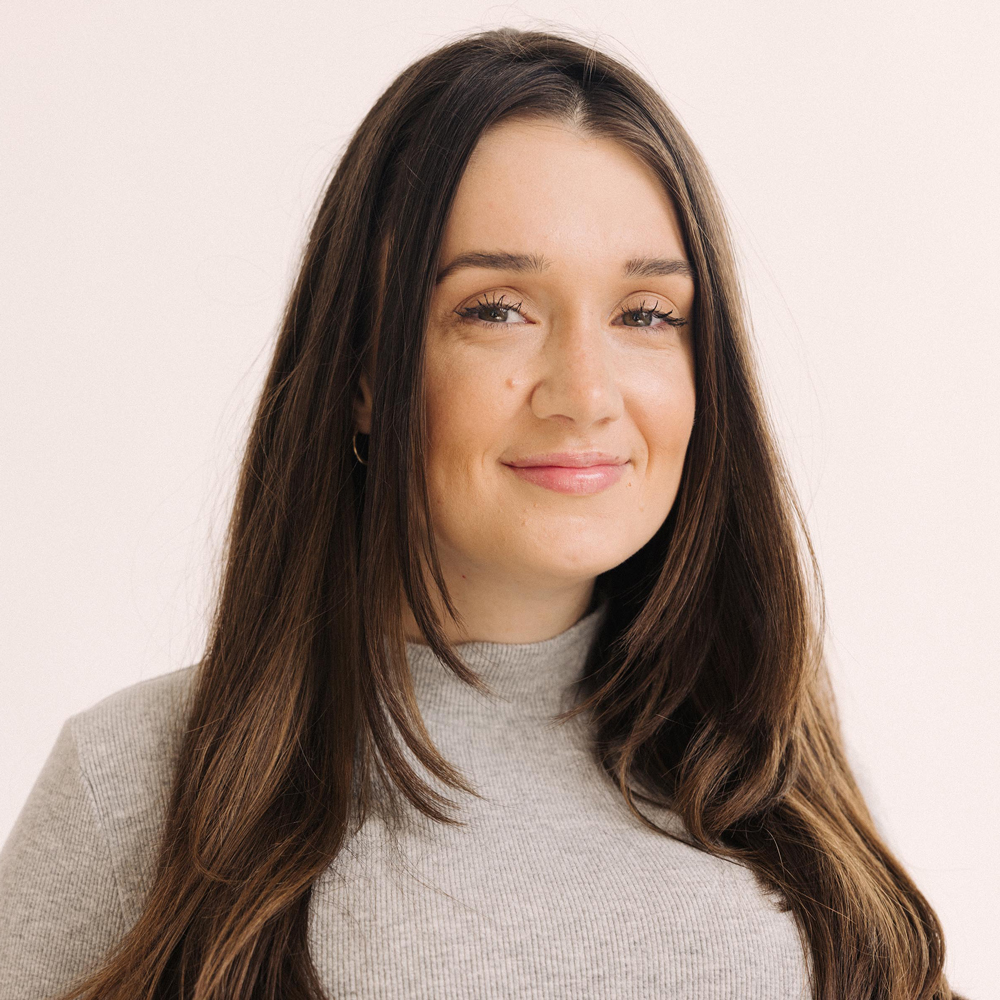
The benefits of technology impact all individuals with disabilities by breaking down barriers to independence in unprecedented ways. In recognition of Global Accessibility Awareness Day, we invite you to learn from our members about the adaptive tech they rely on and the way it enhances their daily lives.
Cristina Cortez: Expressing herself with tech
“Technology is crucial in the way I move, in the way I work, in the way I express myself, and in the way I write,” says Cristina Cortez, a powerchair user with cerebral palsy. “If it wasn’t for adaptive technology, I wouldn’t be where I am now, having graduated with a bachelor’s and a master’s in creative writing.”
Cristina uses four apps: Kurzweil 3000, a reading tool that highlights the words as you read them and gives auditory feedback. Co:Writer has word prediction, translation supports and speech recognition properties that she has been using for over 20 years. She also uses Dragon NaturallySpeaking, which transcribes your spoken words into text and TextExpander, which allows you to type preset messages.
Lance Pounds: All technology is assistive
“For me, all technology is assistive. We have many different options for keyboards and mice, which are arguably the most important tools people use in their daily lives. For many years, I searched in vain for a keyboard that would not be too tough on my hands. Since I have Cerebral Palsy, my hands cramp up, and at a certain point of my day, I have to stop typing,” says Lance Pounds, a member of our Tech Access Group.
“I bought tens of mice and keyboards, each one with the hope that it could increase the hours I could work in a day. I finally found the Microsoft Compact designer mouse and keyboard, dramatically reducing my hand and finger pain throughout the day.”
Lance is also an avid athlete and uses an electric-assist recumbent trike that allows him to cruise alongside other mountain bikers with ease.
Josh Basile: Adaptive tech equals independence
“With my mind and voice, I can control my phone, computer, and home on my own without asking for help,” says Josh Basile, a high-level quadriplegic and power wheelchair user. “With a simple voice command, I can control my lights, fans, thermostats, TVs, elevator, bed and devices when playing with my kids.”
He recently became one of the first users of the MouthPad, a tongue-controlled retainer that pairs with your phone and computer.
“Instead of using my voice to initiate dozens of individual clicks, I can now use my tongue. Because of the MouthPad, I am now playing more independently with my kids, flipping pages during bedtime stories and when the kids are sleeping I can control my phone with my tongue without waking them up.”
“United Spinal is a uniting force bringing together the community and tech companies to the same table to make sure we are on this journey together,” says Josh, who serves on our board. “Tech companies need to incorporate what they learn from disability communities from the beginning of product development, rather than as an afterthought.”
Leah Campbell: Technology needs to work together
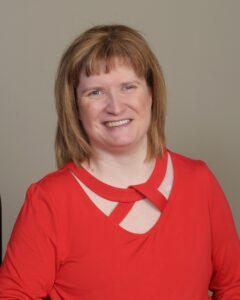 “The single piece of tech I have been most excited about recently is J-Say,” says Leah Campbell, who is paralyzed and visually impaired. “It is the software program that bridges the gap between the screenreader, JAWS, and Dragon NaturallySpeaking and much more. It makes it possible for me to operate my computer with my voice and get auditory feedback of what is on the screen.” She recently started meeting with the designer Brian Hartgen to receive advanced training and influence the software design directly.
“Alt text descriptions are essential to giving people who are blind the same information that sighted people get. Voice control is crucial for people with upper mobility impairments to be able to access technology hands-free,” she says. “Developers need to ensure these adaptive technologies work together for those of us living with multiple disabilities.”
Rhonel Cinous: Using tech at home and on the moon
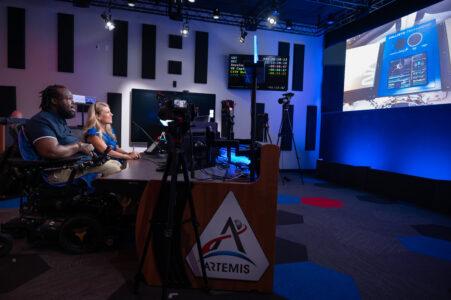 “Being able to access and control my environment removes some pressure from my caregivers and allows me to establish a safer and more comfortable environment that I can access at the touch of a button or at the sound of my voice,” says Rhonel Cinous.
Rhonel has recently been excited about finding new was to use the Amazon Echo Show 8. He was given the device from Amazon while he was part of the virtual crew for Nasa’s Artemis 1 Mission. “By using Alexa and creating custom voice commands or time-based routines, I can control my lights, AC, fan, security cameras and much more.”
Angie Hulsebus: Learning from others in TAG
 “Thank goodness for all the different types and variations of technology! It makes me more independent, gives me freedom, and honestly, helps me keep my sanity as it allows me to be by myself for several hours a day,” says Angie Hulsebus, a quadriplegic and United Spinal Iowa President. She also has a hearing impairment.
“I love learning from others in the Tech Access Group,” says Angie. “Having a C5 spinal cord injury with no hand dexterity and being a mom of a nine month old, I’ll gladly try anything that increases my efficiency of time and productivity!”
Recently she’s been using a bone conduction headset. It connects to a phone and computer through bluetooth like other ear buds but it does not go inside your ear. It sits outside of your ears allowing to you hear more of what’s going on around you.
Brooke Ellison: Striving for better access
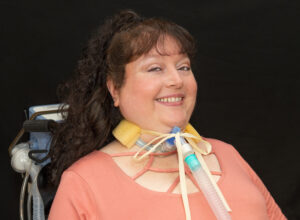 “Looking back on the past 33 years, I know that where I am today could only be achieved with the assistance of technology. This includes returning to school as a child, entering and graduating from college, running for public office, starting a nonprofit organization and serving as a professor,” says Brooke Ellison, United Spinal’s former VP of Tech Access. Brooke passed away earlier this year but her contributions to accessible technology continue to have an impact.
“My independence and productivity have been directly related to the technology I have been able to incorporate into my life. However, there are many other technologies that, if made accessible, could change my life even more significantly. Now is the time to make up for missteps in the past and create a firm grounding from which to create a fully accessible and inclusive future.”
For more #GAAD coverage, read Five Ways You Can Promote Global Accessibility Awareness Day and Digital Inclusion and Technology Accessibility are Fundamental Human Rights. Learn more about United Spinal’s Tech Access Initiative. Join our Tech Access Connection Facebook Group and our monthly Tech Talk event. Join us by signing up for a free membership. To support our mission, donate here.