
Japan is a highly eclectic country with a good mix of cultural sites and modern attractions. Planning an accessible day jam-packed with activities in Japan is easy because it is common to find attractions clustered together.
Tips for Traveling Around Japan
Train stations in Japan usually provide maps of the area you are visiting. In addition, look out for maps near the train stations or places of interests as they usually include a “You Are Here” arrow that can be extremely useful in navigating your way!
Another great tip for visiting various attractions is to inquire about discounted tickets for people with disabilities. Many places of interests in Japan offer such tickets or even free entry for wheelchair users. Besides that, don’t forget to pick up a map of the property as it will show you where the accessible amenities are and help you plan out an accessible route around the attraction.
Religious/Spiritual Attractions
With an abundance of temples, shrines, and pagodas, it is no wonder why visitors are drawn towards Japan’s rich historical landscape.
“At the biggest attractions a fee [is] common but every temple and shrine I visited gave some kind of a disabled discount.”
The landmarks located on top of or alongside hills are usually the most scenic and beautiful. However, they are not easily accessed via public transport, and most visitors walk up the hills. Therefore, it is recommended to hire a taxi with a handicapped license plate/sticker, as some shrines and temples have a restricted road for registered handicapped vehicles to use.
Additionally, while there are shrines and temples with smooth walkways, most of them have walkways that are made of pebbles instead.
Some accessible temples to visit in Nara include the Todaiji Temple and the Hōryū-ji Temple. The Todaiji Temple is greatly wheelchair accessible and offers discounts for people with disabilities. There are ramps in the temple and wheelchair users can navigate around the perimeter of the temple for different views. Access to the large incense burner is also available where visitors can be blessed by healing powers. However, there are stairs that prevent easy access to the center courtyard.
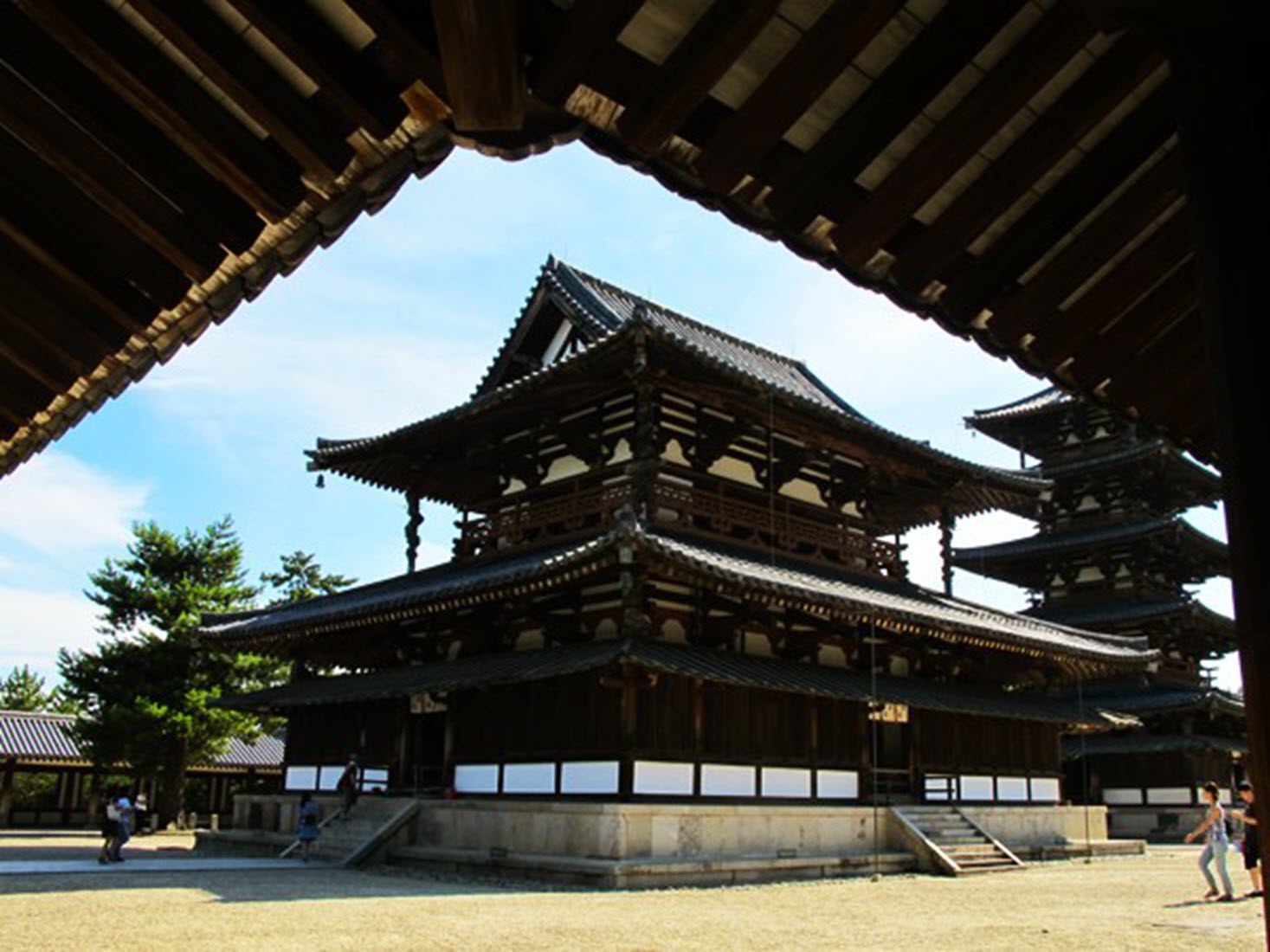
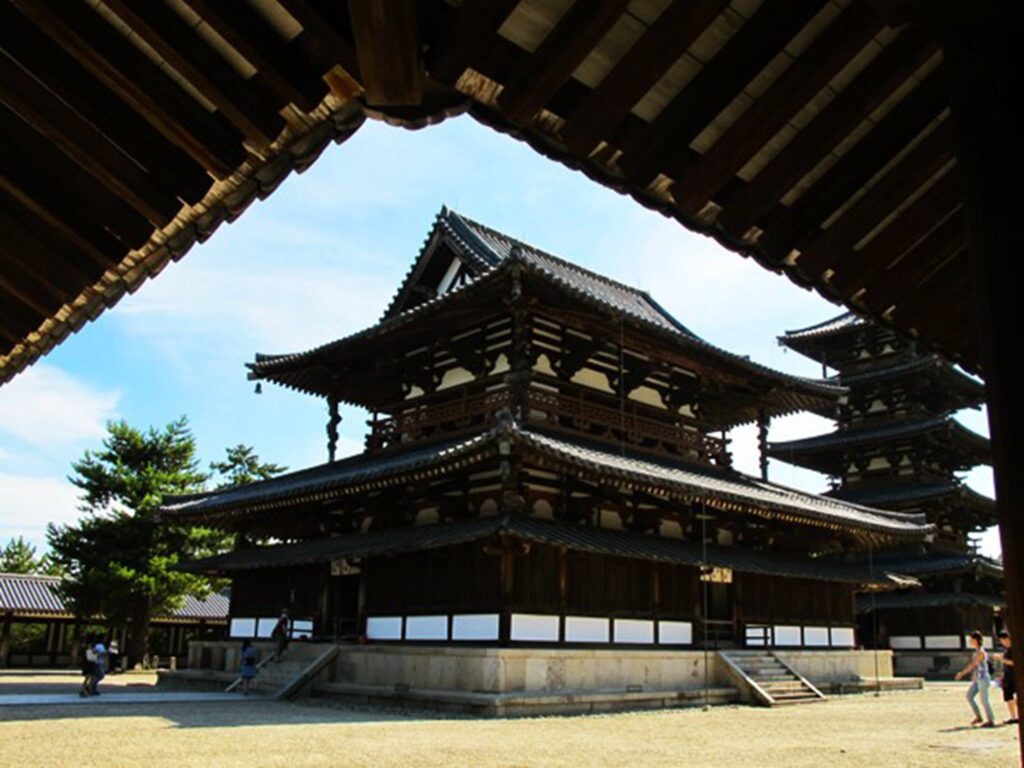
The Hōryū-ji Temple is another temple in Nara that contains accessible features. It contains a world-famous five-story pagoda and other valuable artifacts. The grounds are wide and smooth, and there are ramps located all around the temple. Accessible washrooms can also be found there. With the exception of the pagoda, many sites around the temple are accessible, including a museum of displayed artifacts. Discounted tickets are also available at this temple.
There are also accessible temples and shrines in Kyoto, some of which include the Kiyomizu-dera Temple, and the Rokuon-ji Temple and Kinkaku-ji. The Kiyomizu-dera Temple is a UNESCO World Heritage Site that boasts a scenic, panoramic view. The temple itself is also a grand sight. Next to the temple is another attraction known as the Jishu Shrine, but there is a stone staircase that prevents easy accessibility.
There are ramps throughout the temple and an accessible washroom. Wheelchair users also receive discounted tickets. However, it is recommended to get to the temple via a wheelchair accessible taxi as the temple is located atop a hill.
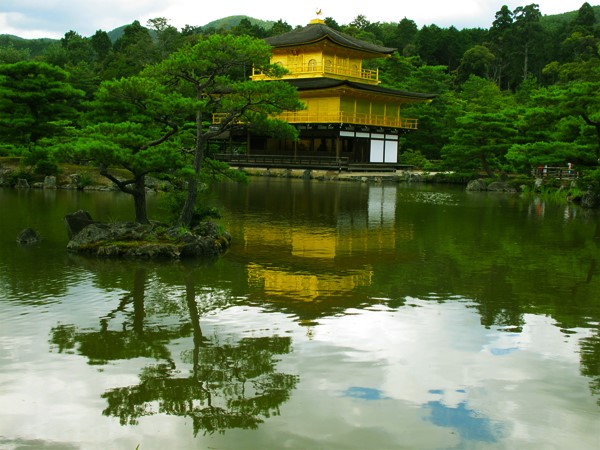
The Rokuon-ji Temple and Kinkaku-ji also make up another UNESCO World Heritage Site. Wheelchair users will receive discounted tickets. Although the temple is not wheelchair accessible, “it is still worth seeing the beautifully crafted gold building (Kinkaku-ji) that rests peacefully on a pond surrounded by a garden.”
Museums
Japan is also home to a variety of museums, most of them located near public transportation.
“Usually museums have coin operated lockers if you want to store anything, wheelchair accessible restrooms and wheelchairs for rent.”
The Tokyo Metropolitan Museum of Photography is one such museum with many accessibility features. Wheelchairs are available to borrow for free, and the exhibition galleries on different levels are all accessible by elevator.
The Nezu Museum in Tokyo, which specializes in Japan and Asian art, also has exhibitions accessible by elevator. However, the garden pathway is made out of weathered stone, and might be narrow in some areas, “so caution should be exercised.” Other museums like the EDO-Tokyo Museum and the Museum of Yebisu Beer offer either free or paid guided tours as well.
Gardens and Parks
Gardens in Japan “all vary in size, access and price.” The outermost pathway in gardens and parks are usually level and smooth. However, some interior trails can contain paved walkways or even incorporate pebbles into the design which might be quite inaccessible.
“The pebble path may limit how far you can explore, in which you should discuss at the ticket counter to reduce your rate.”
Two of the most popular parks in Japan are the Bamboo Forest in Kyoto and Nara Park. The Bamboo Forest has a smooth pathway that gradually becomes steeper.
Similarly, visitors have to pass through a fairly large hill on the way to Nara Park from JR Station. However, the park itself has a flat ground with some gradually-inclined areas. Nara Park is filled with attractions, one of the most popular being Sika Deer which roam around the park. The Nara Park is also near other historical sites like the Todaiji Temple and Kasuga Taisha Shrine. You can also get to the Nara National Museum which is wheelchair accessible. Wheelchairs are available for rent, and there are ramps and elevators to the exhibition areas
Activities
Besides these cultural sites, Japan also offers up an array of activities for family fun. The Universal Studio Japan in Osaka and Disneyland Japan in Tokyo are largely accessible. These properties are made up of paved pathways and have elevators and accessible restrooms onsite. While some of the rides may be inaccessible, there is still plenty to see and shop at these destinations!
Other attractions with accessible features like the Tokyo Sea Life Park, the EPSON Aqua Stadium, and the Nijo Castle, are also great options to visit while in Japan.
All in all, there are many accessible attractions located all around Japan, which is sure to keep your holiday jam-packed with action and excitement!
Share this post with your friends to start planning for your holiday to Japan now!