
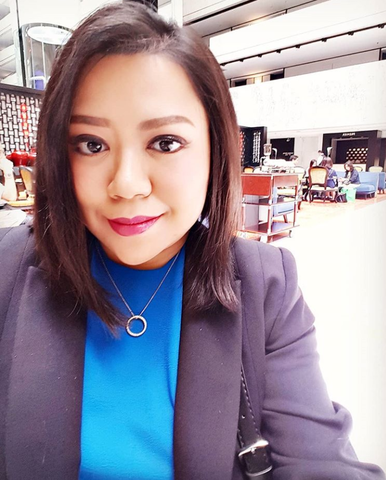
 When Nur Fariza, 30, met her current partner, she had just arrived at her workplace at a hotel and looking for a way to negotiate a steep slope with her wheelchair. That morning, a bellman at his first day of work went to the end of the driveway and offered his help. He pushed Fariza up the slope and asked her, “Are you a staff or a guest?”
“I liked him from the first meeting. There were other bellmen [that day] but they just stood around and didn’t help me. Not that I expected them to, but a bit of compassion, you know?” she said.
Fariza soon realized that the dynamics in her current relationship were the reverse of previous ones. One of the first things her partner said to her was, “Thank you for wanting to get to know me.”
“I was like, ‘No, thank you for wanting to get to know me.’ When he found out about my educational background, he said, ‘You are so highly educated. Why would you want to get to know someone like me?’ We [people with disabilities] are often seen as being pitiful and having to be self-deprecating. He was doing the reverse: asking questions that I would usually ask.”
In her other relationships – including professional ones – Fariza found that she was often expected to be grateful for the littlest things. “Dah bagus lah aku nak ngan kau [It’s good enough that I want to date you]. That kind of mentality. That feeling of entitlement, that they are doing you a favour. It should be mutual.” She realizes that this attitude is not only undesirable but also emotionally abusive.
“Some employers I’ve had are also like that. They say, ‘I am giving you this job, I am giving you this opportunity, you should be grateful.’ But if there are some things of concern, they should still be addressed. What do you mean I should just accept it and be quiet about it?”
Taking care of her mental health is a point of concern for Fariza. It is a part of her that she is open about with her current partner. She advises, “In order to make the relationship work, be open and share about yourself. He’s like that with me also, he’s very open with me. He shared with me about his past: he was part of a gang and all that. I feel like he’s a very honest person and I should be the same.”
As a wheelchair user with osteogenesis imperfecta (OI) or brittle bone syndrome, Fariza also communicates openly about her capabilities. “I told him there are certain things that I cannot do. Either you assist me or let me take my time to do them. He said, ‘It’s okay, but as long as I can help you, I will help you.’ He’s that kind of person.”
“He sees me as a person first. That’s what I appreciate most. If only more people were like that.”
