
“After a spinal cord injury, the nerves in the skin may not send messages to the brain to let you know that your skin is in trouble,” writes the Shepherd Center. The Shepherd Center provides the following information on how to maintain healthy skin as a person with a spinal cord injury. The topics discussed are the anatomy and physiology of the skin, how to perform skin checks, weight shifts, and padding and positioning.
Skin – The Anatomy And Physiology
The Shepherd Center states the skin has two layers. “The outer layer, called the epidermis, serves to protect the body from infections and germs. The second layer is called the dermis. It contains blood vessels, nerves, hair roots, fat cells and sweat glands that keep the skin alive and healthy. Under the dermis is a fatty cushion which lies on top of the muscle and bone.”
The skin has many jobs such as:
- It helps protect to protect the body from germs and the harmful rays of the sun.
- It also helps to control body temperature. (For example, you get goosebumps when you’re cold and sweat when you’re hot Sweating also removes waste products from the skin.)
- It helps a person feel sensations like hot, cold, pressure, and/or pain.
After an SCI, the skin will continue to protect the body, but there will be some changes because there may be limited or absent feeling in certain areas. The skin may not be able to tell a person if pain is present or if an injury to a limb has happened. Limited or absent body movement can also affect the skin because it decreases blood flow to the skin making the skin less healthy and more opted to break down causing a sore. “Skin sores can develop due to pressure, friction, moisture, burns or even accidents,” says the Shepherd Center. Sores can easily become infected and healing can be difficult. It is important to stay proactive when caring for your skin and perform the techniques listed below.
Skin Checks
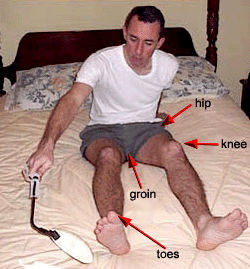
It is very important to check your skin daily for any unusual marks that way any problems can be caught early before they become serious. The Shepherd Center advises paying close attention to the bony areas of the body, checking those areas at least twice a day. They advise performing skin checks in the morning and in the evening. If there is a known problem such as a cut, bruise or burn, etc, that area should be checked hourly.
To perform a skin check the Shepherd Center suggests using a handheld mirror and holding it or having someone else hold it for you. Be sure to look at the front and back of your body, side to side, from head to toe. Look for redness, swelling, bruises, cuts, burns, scabs, rashes, blisters, shiny or discolored spots. Check your skin by feeling over bony areas for swelling, raised, warm or hardened areas. The Shepherd Center says to make sure to check your skin more frequently if you are lying or sitting down for long periods of time. Always check skin immediately after a fall or accident affecting any area with decreased feeling. Contact your doctor concerning any problem areas.
For more detailed information on skin checks visit the Shepherd Center’s original post by clicking here.
Weight Shifts
The Shepherd Center writes, “Weight shifts are important because they allow you to relieve the pressure points on your body while in the wheelchair or sitting on other surfaces (bed, etc). By relieving the pressure over your sitting areas, you keep the skin over your sitting bones (ischia) healthy and prevent pressure sores from occurring.” It is best to shift your weight every thirty minutes and should last a full sixty seconds to relieve pressure properly. Depending on your type of injury and/or skin condition your therapist may advise you to do weight shifts more or less frequently.
Types of Weight Shifts
Tilting weight shifts relieve pressure on both sitting bones at the same time. This weight shift requires a lying down position. Tilt your wheelchair back and have your leg rests raised up. This position may require help from another person, depending on the type of wheelchair you use and your own strength and ability to move. This type of weight shift should be done for a full sixty seconds.

Push-up weight shifts (decompression) relieve pressure on both sitting bones at one time. However to perform an accurate version of the shift one must have enough strength in your upper body to push down on the armrests or tires of the wheelchair and lift your buttocks completely off the chair seat. This type of weight shift should be done for a full sixty seconds.
The forward lean weight shift relieves pressure from both sitting bones at one time. The Shepherd Center describes how to perform this stretch by saying, “Lean forward as though you are looking at your feet, making sure to clear your buttocks off the seat of the chair. This will properly relieve the pressure. It is helpful to scoot all the way back in the chair first before leaning over.” Be sure not to tip over by leaning too far forward!
Some people with an SCI have the ability to stand. The standing weight shift relieves pressure on the whole sitting area at one time. When standing make sure the brakes of your wheelchair are locked and there is a solid structure for you to hold on to. It is recommended to have another person there to assist you in case you need support.
For more detailed information on weight shifting visit the Shepherd Center’s original post by clicking here.
Padding And Positioning
“When resting in bed, it is important to be properly positioned in order to protect the skin, muscles and joints. Proper padding and positioning can promote range of motion, comfort and rest, as well as keep the skin from developing sores,” says the Shepherd Center. There are various positions one can lay in while in bed.

When laying on your back it is important to support your head with a pillow. You may want to put a put a foam pad under your heels so they do not touch the bed surface. You could also put a foam pad under the area of the body where you sit, this technique is known as bridging. Keep in mind where your feet are placed as you do not want them hanging off the footboard of the bed.
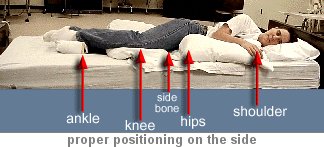
For resting on your side it is also important to support your head with a pillow. You may also choose to place a pillow behind your back for support. To support your legs, place a pillow lengthwise between them. Do not let the knees or ankles touch each other while on the side. Place a pillow underneath the top arm if necessary. You can place a foam pad between the ankles and between the bed and the ankle. Use the bridging technique if necessary and put a foam bad above and below the hip to protect the bony area. “When on the side, the shoulder blade and arm should be moved forward by grabbing the shoulder blade and sliding it forward and out from underneath the person. Move the arm away from the body as you do this. Doing this promotes a more comfortable position for a person who cannot move his/her arm out of the way,” states the Shepherd Center. Remember to keep the feet from leaning on the footboard.
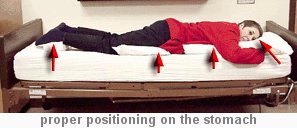
Resting on the stomach (proning) straightens the hips and helps to prevent tightness in the hips and knees. However, this position may not be tolerable for some people, especially those with breathing problems. It is important to support your head with a pillow while in this position. You will probably want to turn your neck from side to side during the night to prevent stiffness the next morning. To keep the pressure off your hips, you can place two or more pillows underneath your chest and thighs. You can keep pressure off the tops of your feet by putting foam pads or pillows underneath them.
For more detailed information on positioning and padding visit the Shepherd Center’s original post by clicking here.
Be sure to share this educational post with someone who is newly injured!