
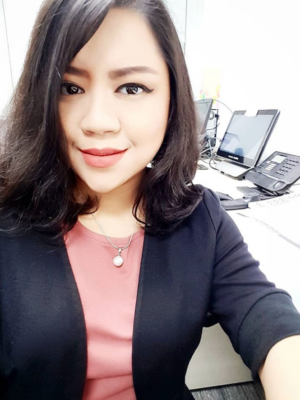
 Finding a first job is always a challenge, and usually more so for people with disabilities (PWDs). When Nur Fariza, 30, applied for her first part-time job, her physical disability was something that the interviewer simply could not ignore. “He saw me and said, ‘Oh you’re on a wheelchair?’ I said, ‘I thought the job is to answer phones.’”
Fariza eventually did get that part-time job. However, such questions have been a predictable part of job interviews ever since.
“[The] first question [is always], ‘How are you going to travel to work?’ Even with years of experience, people still ask that. Even though I have good references from previous managers. They have this preconceived idea of what you are before getting to know you. That’s hard to break through.”
Armed with a degree in design communication and a diploma in law, Fariza has had to deal with the stereotypes of both visible and invisible disabilities. Born with osteogenesis imperfecta (OI) or brittle bone syndrome, Fariza uses a wheelchair most of the time, including at her workplace. She currently works as a communications and reservations agent in a hotel, where she also guides a team. She also sees a therapist regularly to manage her depression and anxiety.
“Training people is not new for me. But [now] I have more power to inform or guide. People depend on me, instead of me depending on them.” However, one of her biggest challenges is that despite her position, people have difficulty seeing her as an “authoritative figure”.
“I shared this with my therapist. He said, ‘When people see someone with a disability, they see someone with less power than them. The fact that you are in a higher position than them, they just don’t know how to cope with that. They think, ‘What am I doing with my life? Why is she supervising me?’” As a woman of minority ethnicity in Singapore, Fariza believes that being Malay, with the associated stereotypes for being uneducated or lazy, is partly a reason for people not taking her seriously. “Woman, disabled, Malay. You Malay? Why are you on top of me? How come you can get that high?” she says.
Although Fariza completed a diploma in legal studies, she was also diagnosed with borderline personality disorder a few years ago. She has been undergoing regular treatment and is no longer considered “high-risk”. “My therapist says I’m alright. I can hold a job, have a relationship, [I’m] high functioning. We may still have bad days, but we’ve got to try.”
“Depression [and other mental illnesses] are considered ‘unsound mind’ in law, as certified by medical practitioners. When I was studying law, we learned about the requirements for a lawyer early in the course. I was always arguing against the label of ‘unsound mind’.”
Fariza has some advice for future employers of PWDs. “Ask yourself, if someone were to ask me this question, would I be offended? Is it relevant to the job I’m applying for? I believe education is important. Of course, it takes a long time, but people are talking more about disability, and employment for PWDs.”
Fariza jokes, “Everyone needs a job. Our hospital bills don’t come for free!”
