
Able South Carolina provides informational videos discussing topics related to people with disabilities. Kimberly Tissot is a parent with a disability, who hosts a discussion with four other parents with disabilities. The group provides insight into their lives as parents with disabilities and what others should know about parenting with a disability.
Kimberly introduces the video by posing the questions – why do many people with disabilities experience resistance when trying to start a family? What can be done to change that mindset?
“People with disabilities continue to face significant legal, medical, and family resistance to their decision to start a family.”
Kimberly states that it is important that you understand the laws concerning people with disabilities before you form or express an opinion about the topic of parenting with a disability. People with disabilities have the rights to become parents. This includes people with the following disabilities: physical, visual, intellectual, developmental, hearing, psychiatric, etc.
As a person with a disability, one has the right to:
- Receive reproductive assistance.
- Become foster parents.
- Adopt a child.
Laws That Support Parents With Disabilities
Kimberly discusses the laws that support the rights of people with disabilities:
- Rehabilitation Act of 1973, Section 504 prohibits discrimination by federal agencies.
- Americans with Disabilities Act, Title II prohibits discrimination by public entities.
- Americans with Disabilities Act, Title III prohibits denial of goods or services. (This includes services related to parenting, adoption, child welfare and more.)
“In the United States alone, there are currently about 4.1 million parents with disabilities.”
Parenting With A Disability
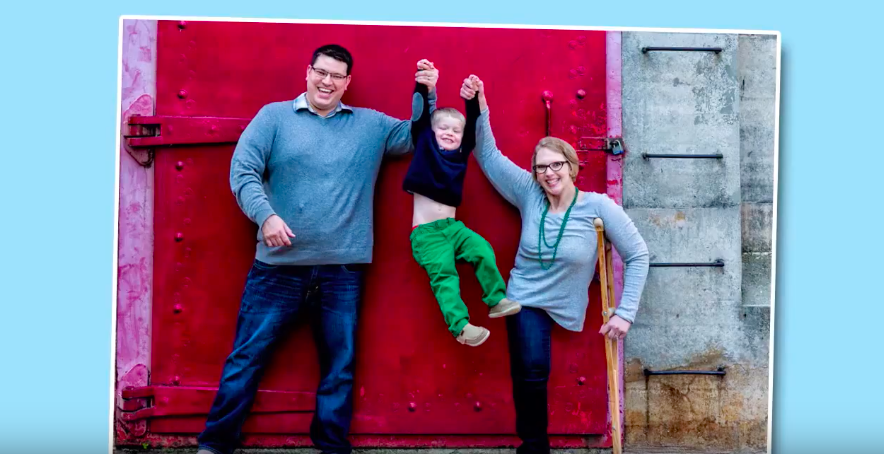
“No person parents the same way, and that is completely understood and acceptable,” says Kimberly. She states that parents with disabilities can adapt by using modified equipment, modified communication, or other effective methods.
“Parents with disabilities are no less capable of loving and raising a child than anyone else. Happy, healthy, well-adjusted families are the norm, not the exception.”
After Kimberly provides information about parenting and disability, four different parents give advice on parenting with a disability.

“If being a parent is what you want to do, know that it will be okay,” says Nikki Stamps, a mother with a spinal cord injury. Nikki advises to know your rights as a parent, and to believe in yourself and do not let anyone question your abilities. Do not be afraid to ask for help. Nikki states that there are a lot of resources out there that can provide support. The main theme in the advice given by the parents was to not let your disability define your parenting skills. Sherry Williams, a mother who is deaf says, ”Deaf parents are capable of being good parents. It’s just like anyone else.”
“Your disability should never be a question as to why or should you be a parent. To me, that was never a concern. Having a limitation or disability should not prevent you from wanting to be a parent. If you want to be a parent, be a parent. You can be a parent just as good as anyone else out there can be,” says Cindy Popenhagen, a mother with low vision.
“Believe in yourself that you can do it. Anything is possible,” states Jeff Bazer, a father with a visual impairment. He advises to surround yourself with positive people.
“Discrimination against parents with disabilities is simply unacceptable, unfounded, and against the law,” states Kimberly. Everyone deserves the right to become a parent. Kimberly reminds us to know the law, open your mind, and embrace the possibilities.
Check out the full video!
Share this post to inform others!