
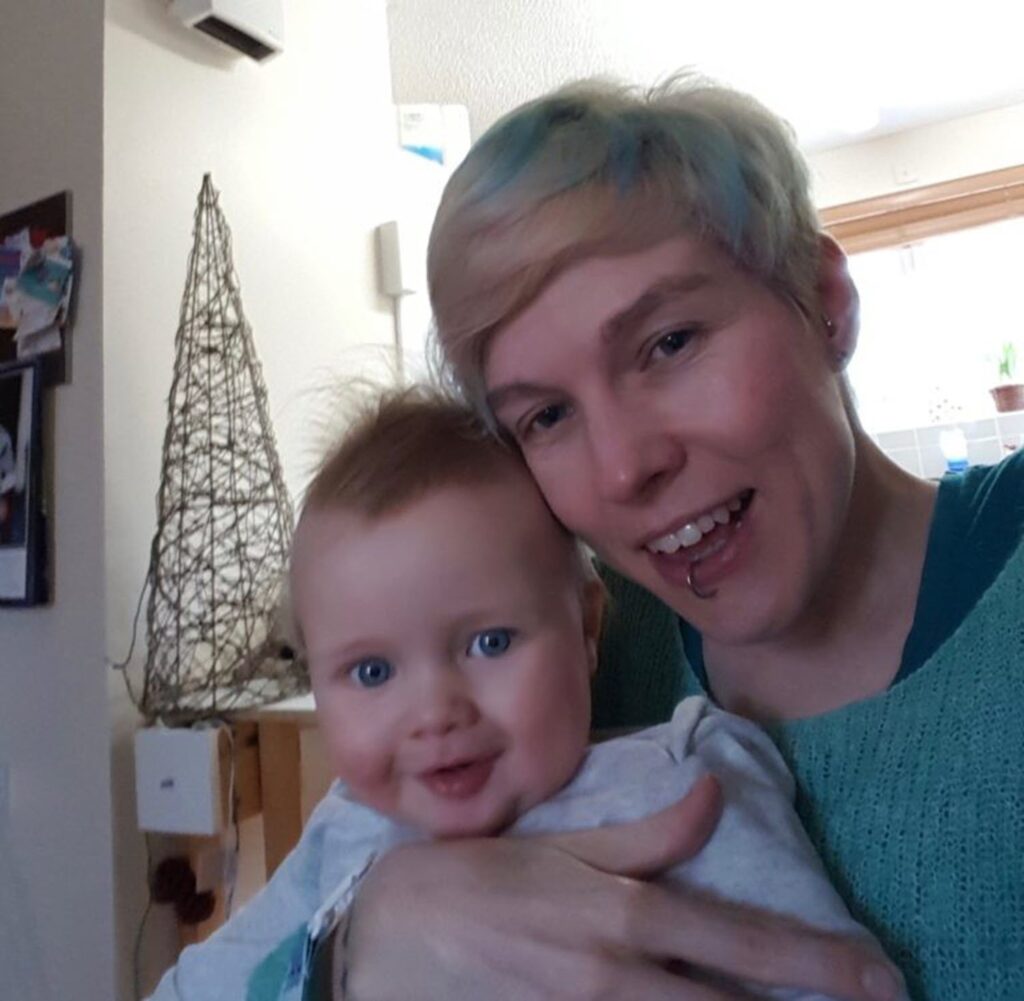
Georgia, a wheelchair-user with spinal muscular atrophy (SMA) type 2, has a family of four. Her youngest son, Lio, is just 10 months’ old, and Georgia has been observing how Lio will navigate around disability as he grows up.
Growing up Healthy
With different carers and family members constantly visiting Georgia’s household, she notices that Lio may be exposed to a variety of germs. Yet, this can in turn help strengthen Lio’s immune system. Furthermore, the family’s diligence in hygiene practices, such as hand washing, is also a great preventive measure towards spreading germs.
Great Sociability
Engaging with different groups of people can also build Lio’s social skills. Lio receives many opportunities to interact with both family friends and strangers. Georgia hopes that these various experiences will enable Lio to become more outgoing and approachable.
“Hopefully seeing me accept help from friends and strangers will enable him to see that people can be very helpful and not to be afraid of asking for help when he needs it.”
Likewise, having lots of people in his life also means that he will have a wide support network, “an extended family of sorts,” says Georgia. The team of carers who assist Georgia with everyday independent living can also provide Lio with extra care and attention. They can also offer “a different view of the world for Lio to learn about.”
Acceptance and Patience
As Lio grows up around disability, Georgia believes that Lio will see that “differences are normal.” Similarly, she hopes that he will come to accept people from different backgrounds as he is constantly surrounded by various family friends and carers.
“I also believe that growing up with us as parents will teach Lio a lot of patience.”
Georgia hopes that Lio will come to understand that certain actions the family do will take more time, such as transferring or loading/unloading extra equipment. “There will be times he has to wait, times he has to understand that I can’t do certain things with him and times when I just don’t have the energy,” she says.
Adapting to Challenges
Georgia also recognizes the challenges of disabled parenting, one of them being Lio’s potential over-attachment towards the carers. With different carers coming to assist, Georgia, her husband, and Lio’s grandparents have to ensure that his routine remains constant “so as to raise him to be adaptable but stable.”
Similarly, having carers around can disrupt the family’s privacy or distract Lio from his routine. Therefore, to ensure that Lio forms a strong bond with the family, Georgia limits the number of shifts by each carer.
Another challenge Georgia observes is the lack of access in public spaces. There have been a couple of incidences when Georgia has encountered inaccessible locations, causing Lio to miss out on certain activities like swimming or sensory group. She is afraid that these feelings of disappointment she experiences will eventually manifest in Lio in the future.
“I like to think access has moved on since I was a child, and that Lio would never have to experience the disappointment of turning up to a venue which has no wheelchair access.”
Growing up around disability, Lio will certainly develop both a healthy body and a healthy mind. Besides that, Georgia hopes that the fruits of her parenting will educate the general public, allowing them to understand that “parenting with a disability as no different from standard parenting.”