
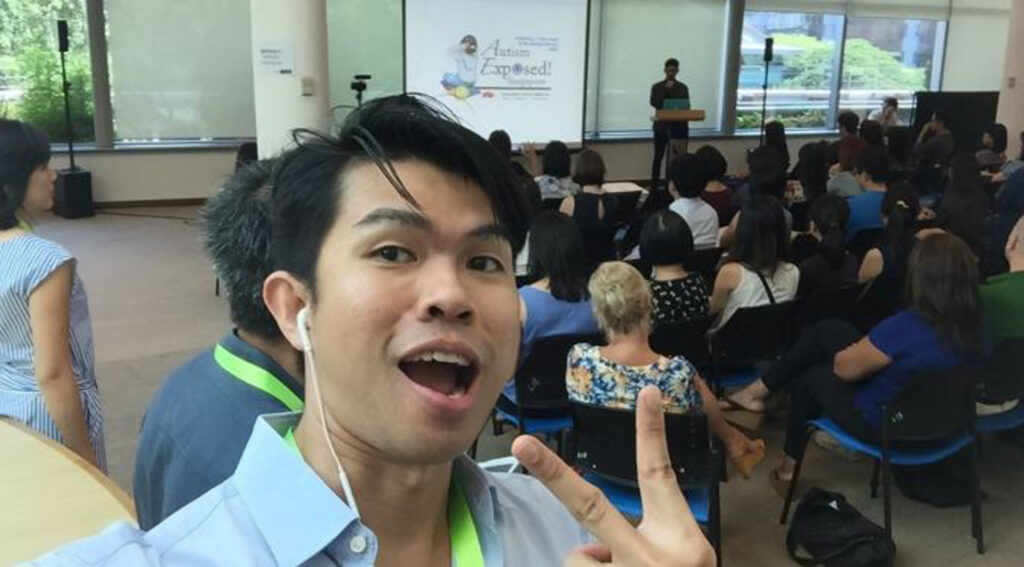
Occupational therapist and life coach Sid Hamid knows what it was like to not fit in with his peers, as a kid. “There was one thing that made me stand out differently, in a bad way,” he said.
Families of children with disabilities and special needs face a double burden in Singapore: trying to figure out what is best for their child’s unique needs, and on top of that dealing with the social stigma of a child that appears to not be performing as well as other able-bodied or neurotypical children.
“It can be a huge struggle every day for [these] families. They’re stressed out [trying to find] how to actually make the best decisions. They [become] dependent on solutions from professionals rather than look for solutions that might be more receptive for their own family and for their own lifestyles. They end up having a hard time trying to see the person with disabilities as a child.”
Motivated by his own childhood experiences, Sid sought to study occupational therapy (OT) and has been honing his craft as a OT practitioner and life coach for just over 10 years now. He is currently developing his “very young social enterprise” called Oxytoseen Pte Ltd, that aims to empower families to nurture persons with disabilities and special needs.
Sid, who experienced emotional dysregulation as a child, went through the confusion and isolation of not knowing what it was that made him different from other kids. “I cry very easily. I was bullied because of that. Nobody really understood why it is I can’t stop how I feel, and how I express it,” he explained, adding that it motivates him to help kids with disabilities today be seen for their strengths and not only their limitations. “Despite performing in school, doing well in competitions and things like that, the negative impact was really great on me.”
As an occupational therapist, what Sid does best is to understand how people with disabilities can be independent and function independently in a role that is meaningful to them in their daily lives. In this sense, Sid sees “occupation” as encompassing not only ways to dress and feed oneself, but also dynamic interpersonal relationships with others. For children in particular, Sid finds it important to empower them to be able to play and cooperate with other children, whether in school, team sports or at the playground.
“Fundamentally we help a person with a disability function meaningfully and successfully.”
Working with families of both children and young adults with disabilities – who hear of and engage him mostly through word-of-mouth – Sid sees his role as a facilitator. “I make sure that the dynamics of the relationship between child and parent, and [larger] family dynamics, to make sure they all work well together.”
“After that, we bring them out to the community and find ways for them to access resources that match lifestyle routines. I coach on how to make it work for them so that they can continue to work and create results.”
For Sid, his coaching philosophy is simple. “I like to humanise experiences,” he said.
“My coaching, my therapy, with the child and family is so that they can focus less time on solving [problems]. Go on and travel, go and make time together and have fun together.”
This article is a part of our #AbleFamilies campaign in Singapore. Stay tuned for real life stories, advice and experiences from people who believe in and represent the potential of all kids. By now empowering the thousands of kids with disabilities in Singapore and supporting their parents and caregivers, we strengthen the next generation of citizens to promote a more inclusive Singapore.
