
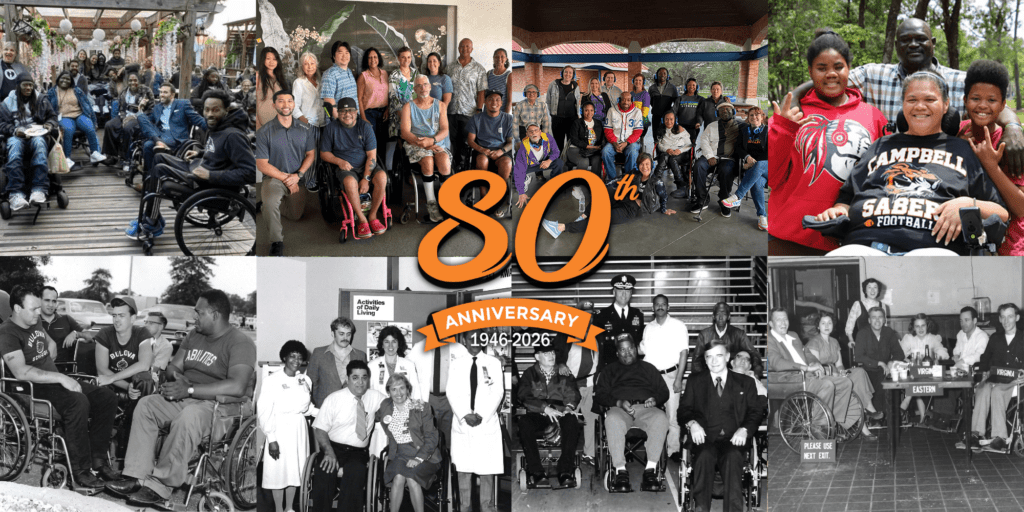
In 1946, a group of wheelchair users rolled into Grand Central Terminal in New York City to gather signatures in support of the nation’s first accessible housing legislation. They were veterans paralyzed in WWII, and when they returned home, they saw a society that simply wasn’t built for people with spinal cord injuries to survive long-term. That we could live independent, productive lives didn’t even register for most people.
“There was no way of coping with society as society was then constituted, said Robert Moss, a member of that first group of signature gatherers. “There were no programs for survival, there were no care programs, there was certainly no such thing as elimination of architectural barriers — there was no legislation for it. The needs were tremendous.”
That group — which would become Eastern Paralyzed Veterans Association, the predecessor of United Spinal — saw tremendous need and started finding solutions. It’s that same spirit that continues to drive United Spinal 80 years later.
Here’s a look at four ways we’ve evolved in recent years to continue meeting the moment.
Turning Webinars into Real World Impact
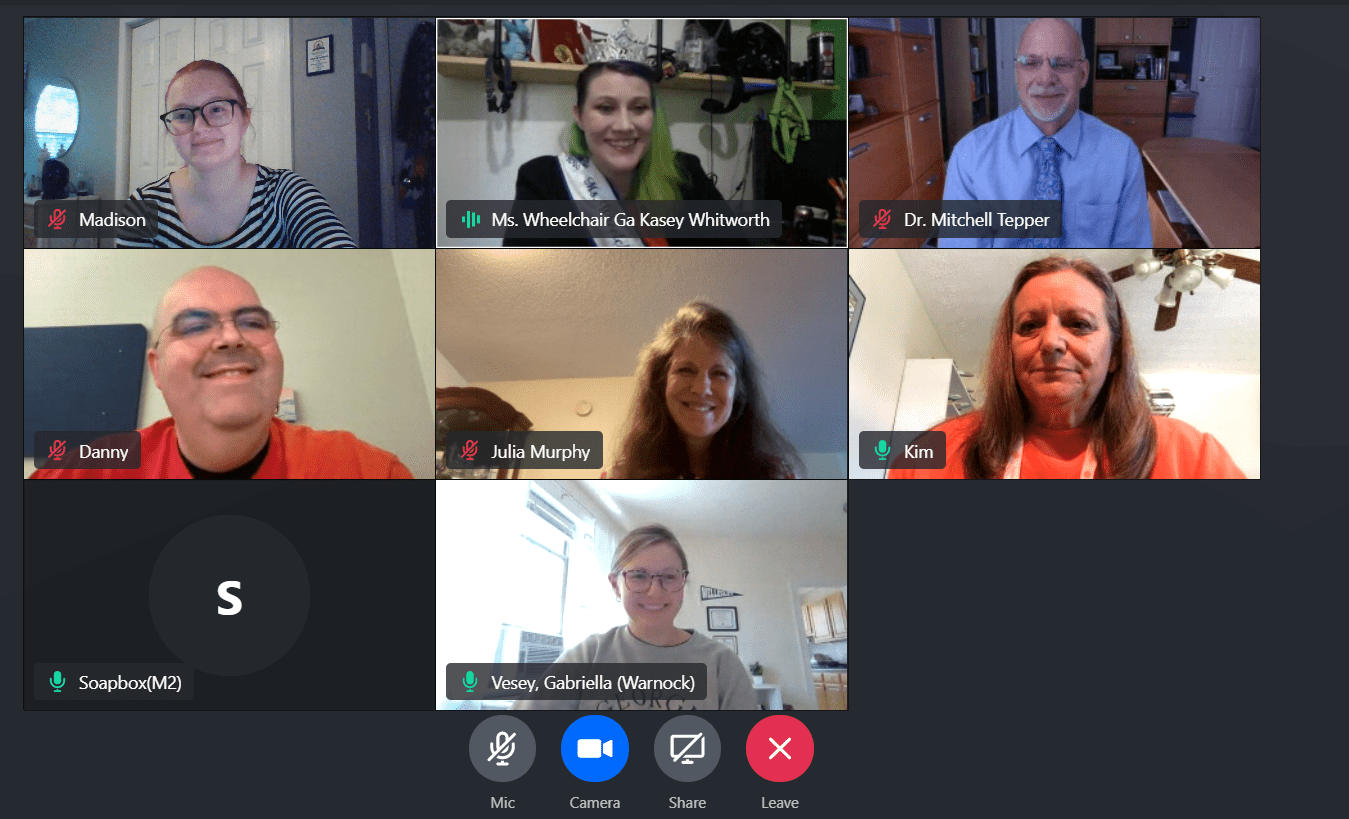
In the early 2010’s, webinars were such a new technology that our then membership magazine, Life in Action, had to explain what they were, “think ‘web’ + ‘seminar.’” Still, in January 2012, United Spinal saw the potential and brought together a diverse pool of members from across the country for an online discussion about threats to Medicaid — the organization’s first webinar.
Those web trainings built the foundation for the diverse online programming United Spinal currently offers. You can see it in our peer mentorship and support group programs, which offer both virtual and in-person options to meet members where they are. And in our signature Roll on Capitol Hill advocacy events, which alternate virtual meetings with congressional members one year and in-person meetings the next. This year we’ll bring 100+ members into more than 150 virtual congressional meetings to advocate for policies that serve our community.
Giving Peer Mentors Training to Change Lives
Whether it’s showing someone a new way to do something, working through the complex emotions that come with life with a disability or simply making sense of the new reality after an injury, peer mentoring can play an essential role in helping people get back to living full lives after disability strikes. When Lindsey Elliott hosted United Spinal’s first peer mentor training session in November 2013 she hoped the session would be the first of many.
Fast forward 13 years and Elliott has hosted countless sessions all over the country, training over 850 mentors and inspiring countless others to become mentors. “The demand exceeded my wildest expectations,” says Elliott, who now serves as United Spinal’s senior director of community and peer support. “Getting to meet and work with so many of our passionate members and then seeing the huge impact they have has been one of the greatest highlights of my tenure.” Elliott continues to host trainings and educate the next wave of mentors.
Small Backpacks Make a Big Difference
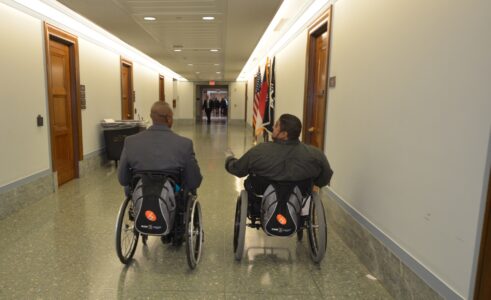
Connecting with newly injured individuals to share the resources available to them has always been difficult. Not everyone is ready to soak up new information when they leave rehab and return home, and even if they are, there are hundreds of other things going on that can make focusing difficult.
United Spinal’s membership services division launched the New Beginning backpacks in 2011 to try and meet newly injured people when and where they were. Delivered personally by chapter representatives or rehab professionals, the stylish wheelchair backpacks came filled with useful information, tools and a water bottle. The backpacks showed that United Spinal was there for them and gave people about to leave rehab the resources to connect on their terms, when they were ready. The backpacks were also a boon for chapters, allowing them to build strong relationships with new members. Thousands of backpacks have been distributed and with rehab stays continuing to shrink, the role the backpacks fill is more important than ever.
New Mobility Evolves With The Times
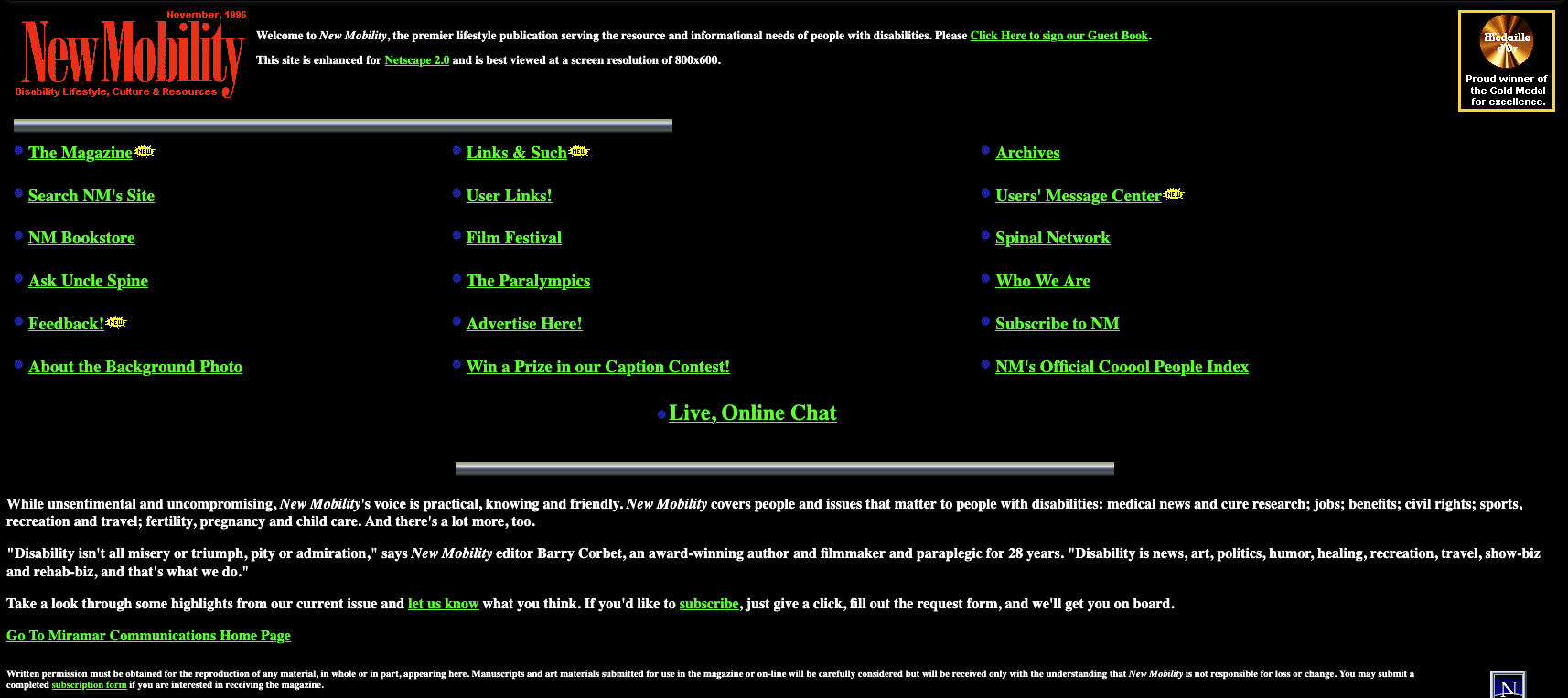
No publication survives 30+ years in the tumultuous media landscape without evolving, and you need look no further than United Spinal’s membership publication, New Mobility, for a case study in how it’s done. What began in 1989 as a spinoff of a successful SCI resource guide, has since gone through almost every conceivable print schedule and subscription model, all without sacrificing what made it the most trusted publication of active wheelchair users: authentic reporting and valuable content, written by and for wheelchair users.
The monthly and bimonthly print schedule ceased at the end of 2024, but thanks to an outpouring of reader demand and a successful fundraiser, we have returned to print for two special issues and are working to re-establish a regular schedule. A monthly health and wellness newsletter and a revitalized YouTube channel are the latest additions to the New Mobility portfolio, joining our vibrant social media communities and website.
For a full history of how United Spinal has helped to change disability in America, read Josie Byzek’s excellent New Mobility feature, “How We Became United Spinal Association,” and check out the timeline below.