
Cuts to Medicaid are a real possibility. We need to act now. We need Congress to know that people with disabilities depend on Medicaid as a lifeline for health care, personal care and independence to work and pay taxes. The following stories prove it.
Sawyer S. — Washington
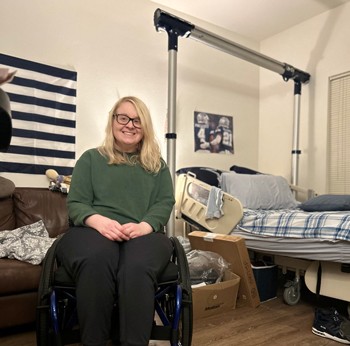 At the age of 19, I became a quadriplegic with limited hand function and movement below the waist. I also have hydrocephalus, a condition that requires two shunts in my brain to drain excess fluid from my ventricles. Since there is no cure for hydrocephalus, these shunts are my only treatment option.
Managing my disability necessitates ongoing care from rehabilitation doctors, neurosurgeons, ophthalmologists, and caregivers who assist me with daily tasks. When I became paralyzed, I was covered under my parents’ insurance, but it only paid for 80% of the cost of my wheelchair and did not cover caregiving services.
I quickly realized that in order to regain my independence, I would need caregiving services. Medicaid provided that essential support, enabling me to move away for school and receive assistance with dressing, bathing, transferring, and meal preparation. Without it, I would not have been able to live independently, attend medical appointments, or pursue my education.
Support our Advocacy Impact Fund
Ashley V. — Louisiana
Every time Medicaid and home and community-based services are threatened, I think about what life was like before I had them. The fear, the exhaustion, the impossible choices. These programs are not luxuries. They are what allow people like me and my mother to have a say in our own lives, to work, to contribute, to exist with dignity.
I fight for these services because I know firsthand what it means to have them—and what it would mean to lose them.
Marlene H. — Michigan
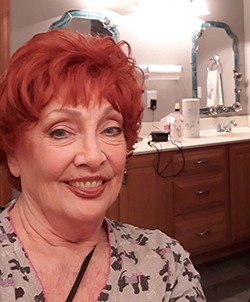 I’ve been a paraplegic since 2010 and am 77 yrs old. In 2023 I sold my home to move into an assisted living facility. When I came here I couldn’t get myself from my bed to my wheelchair. After a year there I decided I would never be able to challenge myself if I didn’t try an independent living situation.
I have had numerous challenges, but I am overcoming most of them. Now, I can walk the hall of my apartment with a walker and I am alone at night. My savings is almost gone and that means letting go of my caregiver that comes five days a week.
That scares me! Because I have no family to help me. It would certainly make life easier if I could count on additional help from Medicaid.
Tinetra A. — California
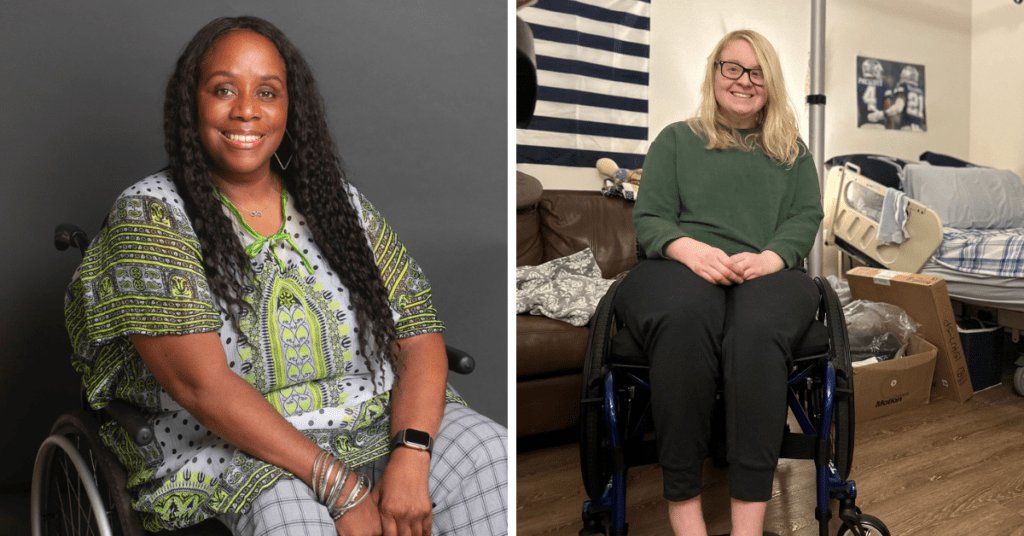
 I came down with a rare autoimmune disease called Neuromylitis in 2010 that attacks the spinal cord, the nervous system and the optic nerve. If Medicaid is cut it will affect my health as far as seeing the doctors I need and the medications that are crucial to my health and prevent a relapse.
Thomas W. — Massachusetts
I am a quadriplegic. This vital program allows me to stay in the community and live in my own home. Because of the PCA program, I was able to go to college, earn a degree in business, and work in the federal government for 28 years. Now I am 60 years old and require more PCA services than before.
If I were incarcerated in a nursing home that is short-staffed, I would lose my independence and freedom. I would be relegated to subacute care and standards that question my safety. Being able to remain in my house allows me to be active in the community, being much more productive and able to pay taxes.
I am very worried that the Congress will unwittingly cut this most important program. Please keep the PCA services!