
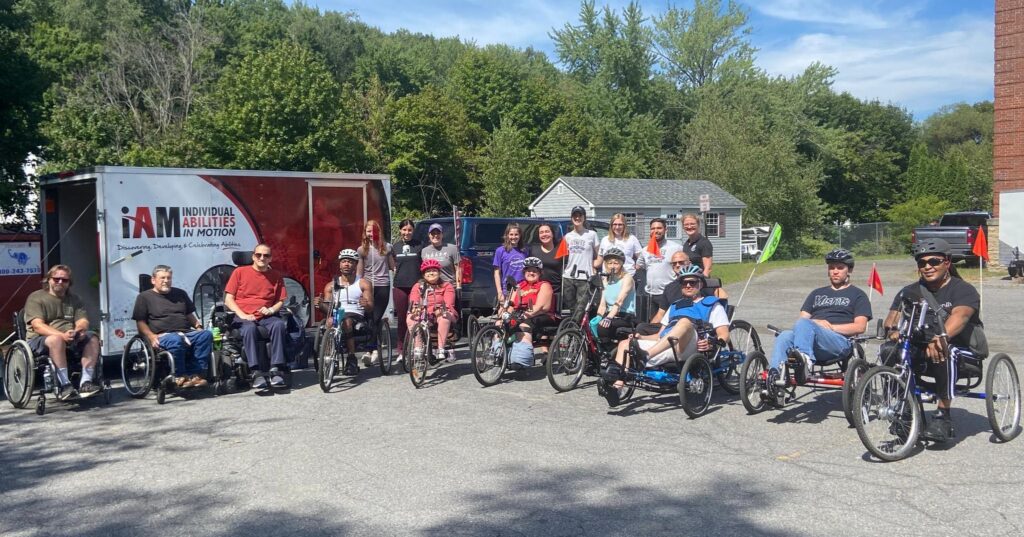
Joe Salva is a pro at organizing exciting and accessible outdoor events. His organization, the United Spinal Chapter Individual Abilities in Motion (I AM), sponsors programs such as the annual Bike Buddy Awareness Event and Adaptive Ride. The group always has something going on, from bowling to mudding with trackchairs.
“Planning starts with determining if you will be holding the event yourself or partnering with another organization or company,” says Joe, a wheelchair user with a C5-6 spinal cord injury. He suggests checking with organizations such as Move United and United Spinal’s nonprofit partner, Kelly Brush Foundation (KBF), for potential collabs.
Once you have your partners lined up, it’s time to delve into logistics, such as determining the location and timing of the event.
“I recommend taking the time to survey potential locations beforehand and in person, if possible,” says Joe. He looks for potential barriers, such as terrain or access to bathroom facilities. These factors can significantly impact the comfort and overall success of an event for individuals with mobility impairments. He takes notes and pictures to help convey to potential guests what they can expect.
Providing trained staff is also essential because they are the face of the event. Proper training is critical and should include cultural sensitivity training, disability etiquette, inclusive language, and active listening. Having someone specifically assigned to coordinate the event accessibility planning can be a helpful option. Joe also suggests that volunteers should be well-trained on how to transfer people safely. “We collaborate with the physical therapy department at local universities for this purpose,” he says.
Make accessibility a forethought
One of the keys to creating a successful, inclusive outdoor event is not to think of accessibility as an afterthought. If you plan for accessibility from the very beginning, the chances of creating an event that is enjoyable for everyone improve. Suppose accessibility efforts are not considered before critical decisions, such as the selection of a location, are made, and accessibility is implemented as an “add-on” solution.
In that case, the result can be less effective and more expensive.
“A common barrier is having the necessary equipment or expertise to do a certain activity,” says Joe. “Sometimes this can be overcome by reaching out to another organization or company. In some cases, you can partner with others and either have them come to a location of your choice or meet them at their location.”
One example is when looking for options to go kayaking, try reaching out to a local chapter of Team River Runner.
Another potential barrier is site accessibility. “Not all sites will be perfect, but various adjustments can be made to make them more conducive to those with mobility impairments,” he says. “If a site does not have accessible bathrooms, you could rent a portable lavatory and wash station. If the terrain is grass or gravel, which is not suitable for wheelchairs, consider placing a mat, such as a product called GRASSMAT, or a surface that can be easily wheeled over.”
“It is important to remember to let people know what they can expect as best as possible so they can make a more informed decision about attending.”
Now you’re ready to invite folks to your outdoor event
Once you’ve settled on the event details, such as location, date, and time, it’s time to advertise on a website or other platform where people can learn about the event and pre-register. This allows participants to understand better what to expect and offers an avenue to collect information that helps you prepare as well.
“In your event overview, consider including a description of features centered around accessibility, such as parking, access to bathrooms, and overall accessibility. Include pictures, if possible,” says Joe.
“Pre-registration may include items such as contact information in case the event details change. You may also want to ask them to outline their mobility challenge, if they need assistance with the activity, and if anyone will be joining them. This will help you know if you can accommodate their needs and what type of support might be required.”
Ensuring that attendees with disabilities have access to the same event information as others is crucial to the event’s success. This includes the event website. All digital content, from websites to event apps, should adhere to the Web Content Accessibility Guidelines to ensure it is easily navigable and understandable for people with disabilities. Current technology not only supports compliance but has also evolved to enhance the inclusivity and engagement of all participants.
Communications and marketing materials for the event should contain accessibility information and should be accessible. Ensure that any marketing, registration, or other materials related to the event are also accessible.
Removing every single barrier from an event is extremely rare. Remembering to communicate often, clearly, and in advance can help people plan and be prepared for any challenges. Sharing information about barriers that cannot be removed shows the disability community that you are aware of the barrier and are working on solutions.
More tips on creating an accessible and fun outdoor event
Dustin Berg, executive director at Global Opportunities (GO) Unlimited, and Joe teamed up to share the following list of considerations:
- Have participants and volunteers sign a liability waiver and a media release waiver, allowing the event’s success to be shared.
- Plan your event step by step to ensure everyone’s safety. Safety and fun should be top priorities.
- Look for local financial support months in advance, specifically to help reduce the cost of participation. Free participation makes it significantly more likely that your event will be well attended.
- Collaborate with relevant groups and organizations for various event activities. For example, coordinate with local mountain bike clubs and businesses for adaptive mountain biking events. Be creative when thinking about who your potential collaborators could be — the more collaboration, the merrier!
- Create a fun environment. For example, add a barbecue to the event or a door prize. Music, food, and fun conversation are usually key ingredients in successful group activities.
- Have pop-up canopies set up to provide cover from direct sunlight or rain
- Take care of your volunteers! Take them out to dinner, include them in fun events such as white elephant Christmas parties, and give them swag, shirts, etc.
- Document any success the project has. Pictures, videos, personal testimonies, facts, stories, perspectives from family members, and volunteer accounts are all valuable things to document. Those successes will be critical in your ability to support future events.
- Be creative, learn from your experiences, and implement that new knowledge and experience in future events.
Proactive planning for access and inclusion increases the likelihood of a well-planned, accessible event and minimizes the need for individuals with disabilities to request accommodation to participate. Remember that accessibility is more than just ensuring things like ramps are at the venue.
It is about creating a space where everyone can fully participate, regardless of their physical or sensory abilities, and fostering an inclusive environment where everyone feels valued and can participate equally.
Two great nitty-gritty accessibility guides
The Outdoor Working Group recommends A Planning Guide for Making Events Accessible to People With Disabilities. It is an excellent resource for anyone considering organizing an event. This guide includes helpful checklists toward making your event accessible, as well as detailed information on compliance with the Americans with Disabilities Act. Like parking. And, of course, restrooms.
The Accessible Outdoor Events Checklist provided by the Cultural Access Collaborative recommends consulting with representatives from the disability community. It will help you plan and anticipate how guests with disabilities will need to access the event.
More Resources!
A Planning Guide for Making Temporary Events Accessible to People With Disabilities
Accessible Events: Planning and Preparation are Key
Tips for Organizing Accessible Outdoor Events
Best Practice Guidelines for Planning an Accessible Event
Tough Mudder Adapts So Everyone Can Get Dirty
Featured image credit: Individual Abilities in Motion (I AM)
United Spinal’s Outdoor Access Working Group collaborates with advocates across the United States to help remove barriers to outdoor recreation for the disability community and promote adaptive recreation activities of all kinds. We’d love to have you as a member. To fuel the fight for accessible communities, equitable healthcare, and policies that foster independent living, support our Advocacy Impact Fund.