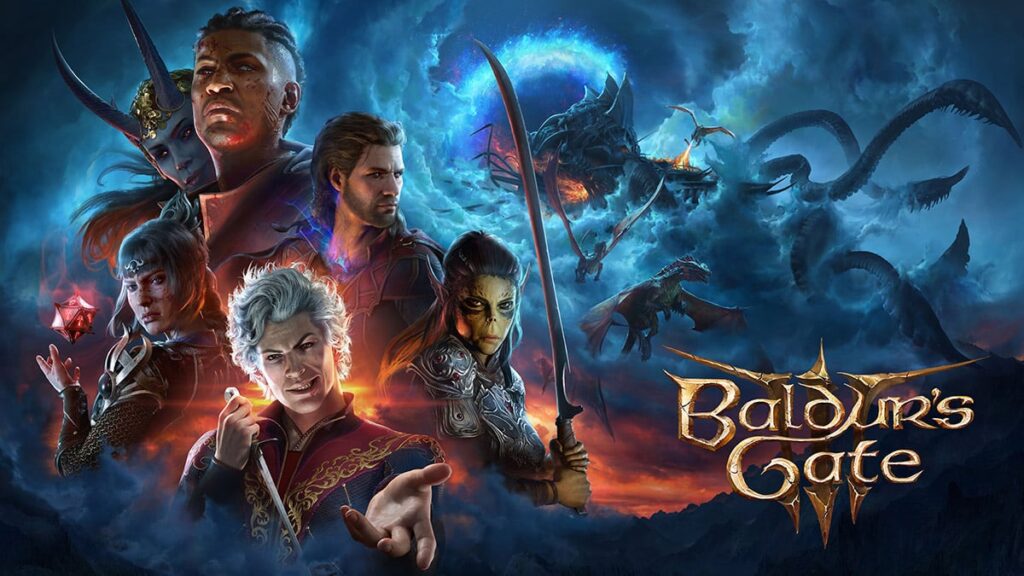
At $60, Baldur’s Gate 3 might seem like a hefty investment, especially if you’re like me—hesitant to spend more than $10 on a game. My caution comes from years of frustration, falling in love with a game, only to hit a wall at levels demanding quick-time events or fine motor skills I don’t have due to my cerebral palsy.
That’s why Baldur’s Gate 3 feels like such a breath of fresh air. It’s stunningly accessible. Options for players of varying abilities are just as deep as the rich storytelling, immersive gameplay, and epic reactivity. Accessibility is built so seamlessly into the game that its turn-based combat, which ensures that players can strategize and progress at their own pace, feels like an accessibility feature all of its own.
Watch the session DisabledgamR streamed on BG3.
Baldur’s Gate 3’s cultural significance gives its attention to accessibility real weight
Baldur’s Gate 3 becoming a legitimate and entrenched part of mass culture—having sold over 15 million copies—can’t be divorced from the recent ascension of tabletop RPG Dungeons and Dragons. The game takes place in the Forgotten Realms setting and is a largely faithful adaptation of its fifth edition ruleset. Baldur’s Gate 3’s depth and endless replayability does justice to its TTRPG progenitor. Originally designed to be played with friends over extended time frames, D&D laid the foundation for immersive storytelling and collaborative gameplay.
In the 1980s and 90s, D&D was a purely subcultural phenomenon—it seemed like only geeks played it, at a time when “geek” was a disparaging term. Older readers of this publication may recall Mazes and Monsters, released during the height of the Dungeons & Dragons Moral Panic and starring a strapping young Tom Hanks. Intended to warn against the dangers of tabletop gaming, the film campily portrayed fantasy RPGs as a gateway to dark and sinister forces. It’s a far cry from the current era, where Stranger Things and the Critical Role crew have made D&D a household word, and normies will admit to unironically enjoying 2023’s Dungeons & Dragons: Honor among Thieves.
Turn-based computer strategy and role-playing games also once occupied a niche at the edge of popular consciousness—a niche-within-a-niche, before consoles and gaming PCs became ubiquitous in American homes.
Gaming is big business
Now, video games are also a big business. Titles with budgets of tens of millions of dollars, known as AAA games, feature realistic graphics that push the edge of what consoles can handle. AAA games are designed to captivate players with stunning visuals and immersive worlds, setting new benchmarks for what the industry can achieve. The allure of modern graphics, however, can be overshadowed by the disappointment experienced when encountering vast but often shallow worlds. Starfield, one of the most anticipated games of 2023 and released right after Baldur’s Gate 3, was billed as an AAA title, but left players wanting more due to unmet expectations in depth and engagement.
Baldur’s Gate 3, meanwhile, is still luring players into its dark fantasy. It has amassed dozens of awards, while Starfield continues to experience backlash and dwindling player counts. It is a credit to Baldur’s Gate 3’s developer, Larian Studios, that accessibility has been and remains a major priority as they continue to improve a title that is now heralded as one of the best games of all time.
Larian’s commitment to accessibility runs deep
Larian’s most recent patch responded to criticisms from disabled gamers about an indispensable feature in such a massive RPG: map legibility. As with previous patches, it also included more UI customization options that make it even easier for gamers like us to navigate what can be an incredibly dense combat system. I eagerly await what the upcoming Patch 8, due this spring, has to offer.
Games that add accessibility content after their release are a rare item, but Baldur’s Gate 3 is designed to be played as a slow, thoughtful game. It’s much more like chess than anything resembling a modern action-oriented video game today. Turn-based games like Baldur’s Gate 3 emphasize tactics and strategy. With multiple playable characters making up your party, and dozens of subclasses to choose from, players must manage their team’s strengths and weaknesses. Its methodical game system rewards players who take the time to analyze their options and predict enemy actions, calling back to its pen-and-paper roots.
The biggest accessibility benefit of this kind of turn-based game is that it can be played with only a mouse. The game, much like old-school games, is pointing and clicking. Not needing a keyboard frees up the player to use all sorts of assistive devices, such as eye controllers and touchpads.
Killing some goblins for gold is worth 60 dollars this time around.
Jason’s Video Games Source shows the basics of setting the game up for PC.
For more adaptive tech content, sign up for our TechAccess Newsletter and attend our TechTalks. Email Lance Pounds at lpounds@unitedspinal.org for an invite to our private Facebook group, Tech Access Connection.