
When the winter winds howl and the snow piles up outside our door, we all want to be cozy and warm, safe inside. Our Emergency Preparedness Working Group members share their experiences and strategies to help you prepare for any wintery messes you may find yourself in.
Emergency Preparedness Working Group members Julie Withers from Wisconsin and Renae Beeker from Washington put together the following resources to help you prepare for freezing temperatures and abundant snow. These preparations should be completed before the winter season begins.
This is part one in a two-part series on preparing for winter weather. Part two covers staying safe while outside.
Maintain your Furnace
Julie‘s furnace quit in the midst of a winter storm. This unexpected breakdown resulted in no heat for eight days. Julie shares what she did during that week to stay safe, healthy, and warm. “If you are a homeowner, do NOT neglect your furnace,” says Julie, who uses a wheelchair. “Keep it in good working order and get an opinion from a professional if your furnace is reaching its end of life. A good furnace lasts approximately 20-25 years. If your furnace dies, be ready.”
Something similar happened to Josie Byzek, United Spinal’s communications director, who has multiple sclerosis. “We had an old boiler in our home that died in the middle of a cold snap about 10 years ago,” she says. “We did the best we could with space heaters. Our local Ace Hardware store gave us guidance on how to choose and monitor them to minimize the chance of a house fire.”
Her family was careful not to turn the temperature too high and to ensure the heaters were plugged directly into appropriate sockets. “Fortunately, we have a service contract with a local home maintenance company, which covered part of the cost of replacing our boiler with a new HVAC system. As part of the deal, our furnace, ducts, and AC unit are inspected annually.”
Similarly, if you plan to use a fireplace or wood stove for emergency heating, have your chimney or flue inspected yearly.
Julie concurs, “If you don’t already have a good relationship with an HVAC company, it’s a good idea to establish one.”
Space Heater Safety Tips
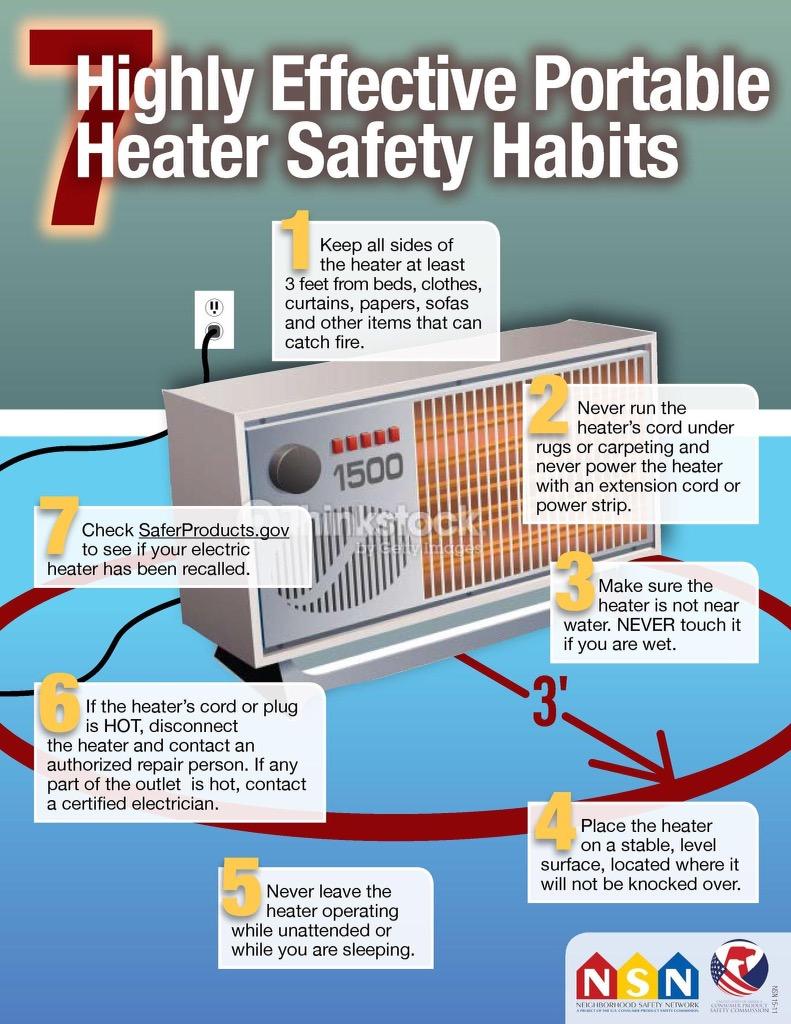
Space heaters approved for indoor use are an option for warmth in your home, but they should only be used if you are in the room and awake. Here are four space heater safety tips:
- Never run space heaters when you are sleeping. Instead, use a sleeping bag to keep warm at low and freezing temperatures. Piling blankets on top of the sleeping bag will help retain as much escaped heat as possible.
- Electric blankets or heating pads can also be used if you can access power. But if you have a spinal cord injury, only use them on body parts with sensation to avoid burns.
- Keep flammable materials, including furniture, drapes, blankets, and rugs, at least three feet away from the heat source. Never drape clothes over a space heater to dry.
- Keep a multipurpose, dry-chemical fire extinguisher nearby.
Avoid Carbon Monoxide Poisoning
Carbon monoxide poisoning is more common in the colder months when temperatures plummet, and furnaces are fired up. The gas is produced by furnaces, kerosene heaters, vehicles “warmed up” in garages, stoves, lanterns, gas ranges, portable generators, or by burning charcoal and wood. The fumes can build up in enclosed or partially enclosed spaces.
Every year, over 100,000 people in the U.S. go to the emergency room due to accidental carbon monoxide poisoning, according to the Centers for Disease Control and Prevention. The most common symptoms are headache, dizziness, weakness, nausea, vomiting, chest pain, and confusion. People who are sleeping or who have been drinking alcohol can die from carbon monoxide poisoning before ever having symptoms.
Here are three tips to avoid carbon monoxide poisoning:
- Install carbon monoxide monitors and smoke alarms and keep them in working condition. Some alarms are equipped with backup batteries.
- Never use gas stoves or portable gas heaters indoors to heat your home. Also, ensure all candles or fireplaces are out before bed.
- Learn more about smoke detectors from the U.S. Fire Administration and carbon monoxide detectors at the United States Environmental Protection Agency (EPA).
Always have a back-up plan
The best time to prepare your home for cold weather is before the winter winds howl and snow piles up against your door. But it is never too late to do what you can to protect yourself and your house.
- Winterize your house by weatherstripping your doors and windows. Take special care to prevent your pipes from freezing. USA Today provides further recommendations to winter prep your home.
- Create a winter survival kit that includes water, matches, easy-to-prepare food, a shovel, flashlight and batteries, blankets, a sleeping bag, flares, a fully charged mobile phone, medications that are essential to you, sanitation and personal hygiene items, personal documents, emergency information, and seven days of pet supplies.
- Assure batteries for needed equipment are available. Speak with your provider if you have medical equipment that needs electricity. Your local Emergency Management Department may also be helpful. Do not wait to do this. It is essential to advocate for yourself early and allow adequate time to get these important preparation steps done.
- Always have a backup power source. If you have a generator, know how to use it safely. For help purchasing a generator, try asking your state’s Assistive Technology Act Technical Assistance and Training Center. “They may or may not consider a backup generator as assistive technology, but it does not hurt to ask,” says working group member RJ Adler, the director of growth at WheelPad.
Sign Up for More Assistance
It’s important to create and test an emergency communication plan with your home care aides and know your home health agency’s emergency plan. Also, many city and county emergency management agencies maintain voluntary registries for people with disabilities to self-identify in order to receive targeted assistance during emergencies and disasters.
- Contact your city or county’s mayor, commissioners, or council people to find out if your jurisdiction maintains such a registry,
- Inquire with your utility company about becoming listed as a life-sustaining equipment customer.
- Sign up for local Wireless Emergency Alerts (WEA).
More Resources
From United Spinal Association
Winter Weather Wheelchair Tips
Tips For Staying Warm In The Winter
Wheelchair Snow Tires – An Easy & Inexpensive Do It Yourself Project
A comprehensive list of adaptive winter recreation opportunities
From our membership magazine, New Mobility
Wintertime SCI Skin Protection
Winterizing a Spinal Cord Injury Body
Wheelchair Users’ Guide to Fall and Winter Clothing and Accessories
Additional Online Resources
Preparing for a Winter Storm
Toolkit: A Happy and Healthy Winter
Winter Safety Tips for People With Disabilities
Infographic: Avoid Spot Treat: Frostbite & Hypothermia
Join our Emergency Preparedness Working Group
If you are interested in participating in United Spinal’s Emergency Preparedness Working Group to collaborate with advocates across the United States on emergency preparedness for the SCI/D and wheelchair user community to deal with natural or anthropogenic disasters, please fill out the online form at unitedspinal.org/working-groups/.