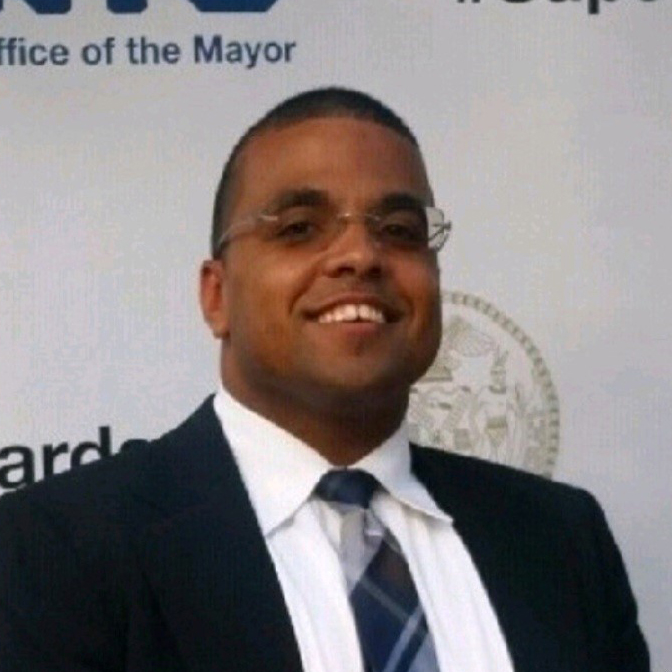
You may remember Rhonel Cinous as the United Spinal member who virtually flew to the moon last year. The 37-year-old Haitian American from Miami lives with a C4-5 level spinal cord injury and is a leader with our TechAccess program. Rhonel shares with our Pathways to Employment program how he found the courage to seek employment.
Q: What were your job-seeking experiences before and after your spinal cord injury?
Before my injury, I was completely independent and working on my career. I applied for a position, interviewed, and was either hired or not, depending on my skills and experience. Seldom did I give any thought outside of that process.
Post-injury, it became more of the employer wondering if they could employ me or if I was capable of working at all. Being put in a position where I wasn’t sure I could provide for myself was very stressful. I had to rely on the system for my basic needs.
The path I’m on now is taking me deeper into the technology field and further into disability advocacy. Working as a digital accessibility tester, I ensure that technology is accessible to people of all ability levels who use all sorts of assistive devices to interact with technology and the Internet.
Q: How did you motivate yourself to keep pursuing employment?
To be straightforward … bills!
Your expenses do not care at all if you are injured, disabled, or dealing with illness. Now, with medical expenses, those bills have multiplied. So, not wanting to drown in debt or be forced to borrow money from family and friends and rely on the kindness of strangers, I told myself I needed to find a job!
My first step was to update my resume. At that point, I had about a two-year gap in my work experience, and I felt like I had fallen a bit behind the technological curve.
I consulted my peer mentor, who directed me to vocational rehab, which assisted me in updating my resume. With the help of vocational rehab and a few other resources I found, I began addressing the challenges of being a bit behind technologically and pursuing further education to change career paths potentially.
Q: When did you believe you could be successfully employed?
I received a few responses to resumes I sent out and had a couple of interviews. But I feared how I would be received and did not go to a few. After feeling rejected from earlier attempts, I wasn’t sure how to deal with the potential of being rejected again and the pressure of getting back into the workplace, especially in person.
I spoke to my therapist and discussed how I was feeling about the potential rejection and the pressure of getting back to work. Then I started volunteering with assistive technology and peer mentorship, leading me to a job as an accessibility tester. I applied for the position, did two rounds of interviews, passed a proficiency test, and then did about a week of training.
Q: Was that a career you were interested in before being hired?
I was looking for anything, to be honest. I have administrative and clerical experience alongside sales and customer service, so the first positions I applied for were along those lines. At the time, I was not thinking career. I was thinking of getting a job to start addressing my financial situation.
To be honest, the jobs didn’t interest me, but they felt comfortable, and I did not have to push myself too much. I was still in a vulnerable position both physically and emotionally post-injury, so I wanted something familiar and easy. Something that I felt I could not fail at and could occupy my time while I made a little bit of money.
Q: How did you prepare yourself for the position?
As many others did during the pandemic, I took some online courses, which led me toward technology, especially in the disability space. I communicated with others in that space, and they referred me to certifications and training, which I’m currently finishing. Thankfully, I had some experience in technology that I could apply to this career path.
Q: What are your job responsibilities and any accommodations you need?
So, the greatest accommodation I have working for the company is that it’s 100% remote. I get to work from my home office, and I create my schedule. I can also decide how much or how little I work.
As far as technology, I came into it with assistive devices of my own, but the company does assist if you need to upgrade any devices or operating systems to complete your daily tasks. As for my responsibilities, clients send us websites or apps to test for accessibility based on specific assistive devices. I am assigned specific tasks to complete on those platforms using my technology. I rate the level of accessibility and occasionally suggest ways to improve the problem areas I find.
Sign up for our newsletter to receive job opportunities in your inbox. Learn more about our Pathways to Employment program. Contact our Community Support team for more information about all United Spinal’s chapters and programs. Join us by signing up for a free membership. To support our mission, donate here.