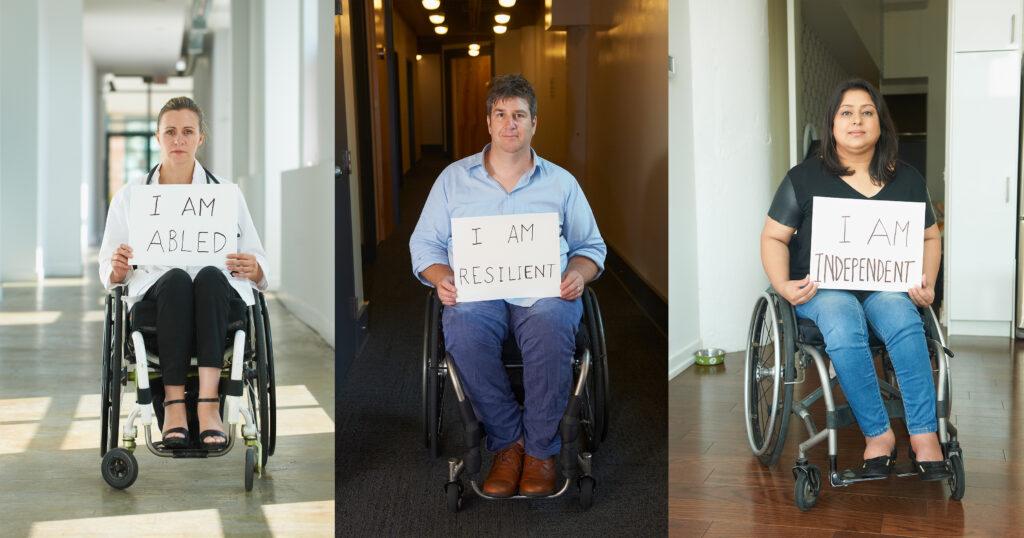
In a society filled with inaccessibility, people with disabilities are often at a disadvantage when it comes to status. It can be hard to feel good about ourselves when it seems like we can’t catch up.
How do we deal with feeling left behind when everyone else seems to be moving forward?
Many of us have had anxiety about our status at one point or another: that sinking feeling that we’re not measuring up to others. And there seem to be oh-so-many ways to be measured: salary, education, family, material possessions.
These thoughts may cause occasional discomfort or bother us so much that we begin to see ourselves as lesser human beings. We may worry about status only when we’re around our peers, or we may obsess about it so much that it steals the possibility of joy from our days.
Those of us with a spinal cord injury or disorder know what it’s like to put our lives on hold while we try to pick up the pieces and figure out how to live again.
While some in the able-bodied community might assume that this may take a matter of months, we know it can take years. During those years, we watch our peers move forward with their lives while it seems ours has been frozen in time or at least slowed significantly. This can be particularly hard if those years are in our late teens or early twenties.
Marriage, children, vacations, and promotions — while these things are happening to others, it might feel like we’ve been pushed to the side, assigned by life as spectators to a sport in which we were once full participants.
Everyone’s disability experience is different
It’s difficult not to define the success of our lives by the milestones of our able-bodied peers, particularly when we might have already had our own futures laid out in our heads pre-injury – futures that may have had to shift drastically post-SCI/D. Our lives have jumped the track. Many of us find it hard to face the fact that we may have to build a new one that looks very different than the one we previously imagined.
It’s not only our able-bodied peers we might compare our status to. Have you ever read about or heard of someone with a similar injury to your own who seems more accomplished, active, or “put together?” You might have asked yourself, how do they do it? Why can’t I do what they do?
It’s important to remember that everyone’s spinal cord injury or disorder is different, even those that carry the same letters and numbers, complete or incomplete. The forces that injure and affect our spinal cords don’t cut across a perfectly straight line – they are messy and disorganized, and the effects are sometimes unpredictable.
Every person with SCI/D has unique physical quirks: spasms with different triggers, bowels that may or may not be temperamental, or nerve pains that can range from mildly bothersome to completely debilitating. Many other factors can affect a person’s SCI/D experience, including access to and quality of our healthcare; our geographic location; our financial situation; our social support; and much more. It’s helpful to consider these things when we start comparing our lives to someone else’s.
What do we value about ourselves?
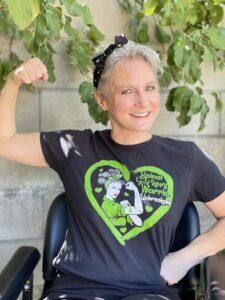
One way we can begin to move away from comparing ourselves to others and towards honoring our own lives is to try to recognize what we value in ourselves.
Zac, 36, has a genetic condition known as neurofibromatosis type 1. He also developed primary progressive multiple sclerosis, becoming a wheelchair user three years ago. Zac is proud of the self-awareness he’s gained through dealing with his disability.
“I was born with a genetic condition, so I’ve been disabled to some extent for my entire life and I’ve been unable to acknowledge or address that for much of my life,” he says. “I feel it’s been a really big accomplishment that I’ve reached a point where I’ve been willing to work with it and face it head-on.”
Dauk (name has been changed to protect anonymity), a C5-7 incomplete quad since the age of 13, feels the things he experienced in life made him stronger. “I went through hardships in my life and came out of them, and I appreciate that they happened to me,” he says. “Also, I know I’m not really supposed to say this,” he continues with a small smile. “But I’m very intelligent and creative.”
Still, we can struggle with negative emotions when we see our lives in contrast to others. This can be particularly difficult when those moving forward are the ones closest to us. “I have a sister who’s six years younger than me,” Zac says. “And while I love her very much, it’s hard to see someone who’s so much younger than me hitting these life goals that I really would like to.”
Finding our happiness and joy
How do we carve out a positive space for ourselves when we encounter situations that cause us feelings of envy or inadequacy? To help him find happiness in the accomplishments of his loved ones, Zac engages in sympathetic joy, the Buddhist practice of feeling the joy that someone else is experiencing.
“What does it mean when I see my sister getting married? Sure, it brings up my own feelings, but ultimately I love her and want to be happy for her. I try to nurture and get in touch with those feelings,” he says. “Of course, it only helps to an extent. I try to have compassion for myself about this longing that I have for these things that I’ve not been able to achieve so far.”
Dauk turns to his spiritual belief in reincarnation to help him figure out his place in the world. “Even though we think this life is long, it’s a blink, it’s a breath,” he says. “This body is just an avatar.”
He also studies the philosophy of stoicism. In a nutshell, stoicism encourages one to build a resilient self that stands firm through the ebbs and flows of existence. Dauk feels practicing this saved his life. When asked how he felt about his status compared to his peers, he referenced a quote by Theodore Roosevelt: “Comparison is the thief of joy.”
Even though Dauk is strong-minded on his own, gaining recognition from those around him still has an effect on him. He says with his family and community’s traditional Cambodian background, he initially experienced low status – others thought that his disability might be due to bad luck he carried or that perhaps he had done something wrong in a past life. He feels even his mother didn’t respect him.
However, he did eventually gain some respect. After he graduated college with a master’s degree in social work, the “big players” in his community came to shake his hand and congratulate him during a Cambodian New Year celebration. Dauk says once this happened, his mother “seemed to realize that [he] was doing pretty well,” and since then has been showing him more love and respect – something he cherishes.
Support groups help foster community
As much as we may cultivate a life of accepting ourselves and living outside of society’s expectations, positive recognition from that same society will, more often than not, feel good. Humans are deeply social creatures who long for some type of connection.
Accepting ourselves is important, but we’re also hardwired to look for acceptance from others. When we’re wanting to build ourselves up, we need to think about who we’re looking for acceptance from. If the only people we’re surrounding ourselves with and looking up to are those who are coming from a traditional framework and are unlikely to modify their definition of respectable, we may find we’ll never measure up – in neither their eyes nor our own.
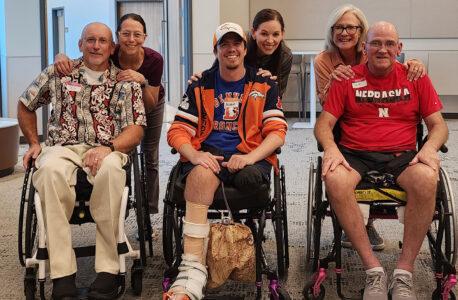
When asked if they had anything they’d like to share that might help newly injured or disabled people, Dauk and Zac quickly mentioned SCI/D support groups. “Go to peer support groups – you can’t try to get by on your own, or else you will internally suffer and take it out on your closest people,” Dauk says.
A support group may be one of the best places to find others who will accept us for who we are and where we’re at. Accomplishments that may seem small or easy to able-bodied people – such as driving, cleaning the house, or simply getting out of bed – are recognized for the difficult tasks they can sometimes be for someone with SCI/D.
“Having community is important because then I know I’m not the only one struggling,” Zac says. Being part of an SCI/D community – either in-person or online – can put us in touch with a network of people who face the similar challenge of leading a unique life.
SCI/D – and disability in general – is indeed an outsider path. Status and success are areas in which we may have to make our own ways and create our own definitions in order to have a more fulfilling life. Yes, it may be exhausting to keep having to draw our own maps instead of following the well-worn ones that most people use. But in the long run, it can be far more painful to find ourselves continually out of sync with a set of standards only made for a certain population segment.
“We’re all on our own journey. We’ve all been told that there’s one way to live, and that’s simply not true,” Zac says. “Just because we’re on a different timeline doesn’t mean it’s not in the cards for us.”
Find a virtual or in-person support group on United Spinal’s Peer Support Group page. Contact our Community Support team for more information about all United Spinal’s chapters and programs. Join us by signing up for a free membership. To support our mission, donate here.