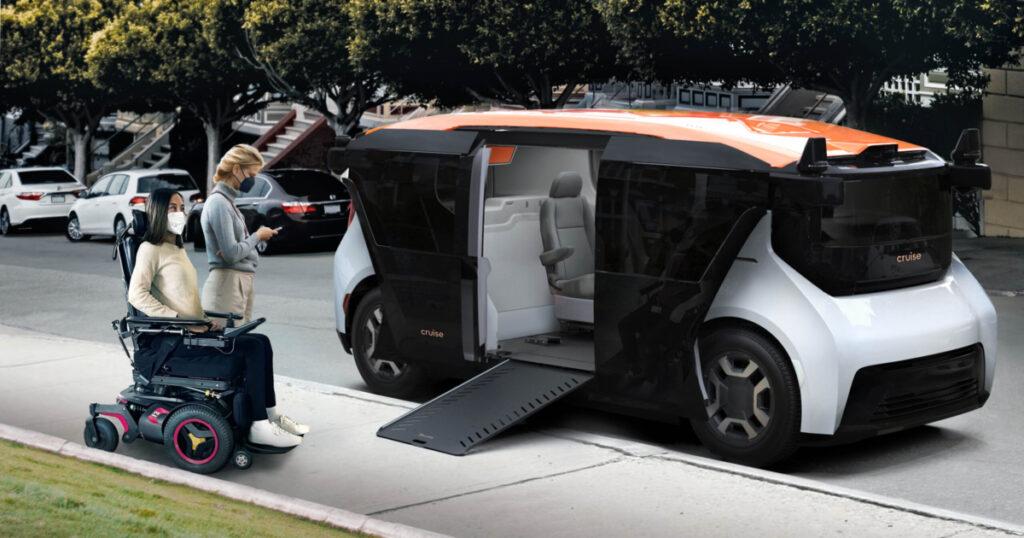
- If wheelchair users aren’t at the board where tomorrow’s technology plans are drawn, access will be an afterthought or forgotten entirely.
- That’s why United Spinal Association works with innovative industry leaders to design and test tech before it hits the market.
- This post is part II of our three-part series, “The Future is Inclusive (and Here’s How We Get There).”
Designing technology to be inclusive on all levels is a game-changer for people with disabilities. That’s why United Spinal Association ensures our members are involved in developing tomorrow’s technology before it rolls out.
It’s not just about sending rockets to the moon — although we’ve done that. It’s also about improving telehealth and ensuring delivery bots don’t drop our packages where we can’t reach — and everything in between.
Meet Dr. Brooke Ellison
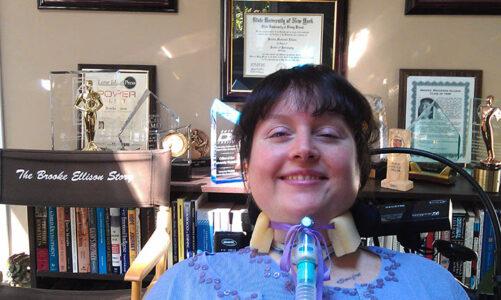 Brooke is our Vice President of Tech Access and Innovation and the first quadriplegic to graduate from Harvard. Like Christopher Reeve, she uses a ventilator for her high-level injury. Reeve was so taken with her early accomplishments that he directed a movie about her life.
“Tech is not just gadgets, but ways people can create some real activism,” says Brooke. “Inclusion has changed considerably with remote work, telehealth, and other ways to be connected without traveling to a location.”
Consider how United Spinal pioneered virtual meetings during the pandemic. With these tools, we supported our members to cope with medical, work, personal assistance, and other relevant issues. And we broke down isolation, built up our community and kept our advocacy on track.
“This integration of technology into the achievement of human rights represents the new vision of Tech Access for United Spinal,” says Brooke. “But we need to think much more broadly about how tech can facilitate full, rich, and productive lives.”
Why shouldn’t wheelchair users be able to shape the built environment to be more accessible on demand? “I see a time when people with disabilities will design and create a comprehensive series of criteria to measure the accessibility of a building or a space,” says Brooke. “We could use it to isolate the quickest path from the elevator to our desk, from our house to transit to our office.”
That’s huge. And so’s this: “We are working with engineers on developing fully integrated tongue touch for all aspects of computer and work environments,” says Brooke. That project could radically expand access for many people with limited hand mobility. “Engineers don’t fully understand the nature of what people with disabilities face, so we must outline our needs so they can address them creatively and innovatively,” she says.
Wheelchair accessible vans that drive themselves
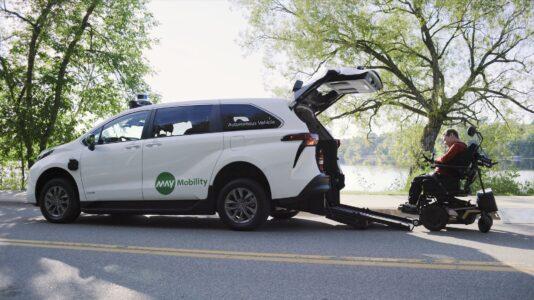
United Spinal Policy Fellow Kent Keyser is our point person for automated passenger vehicles. He’s passionate about ensuring accessibility is a built-in feature, not a clunky retrofitted add-on.
“Separate but equal doesn’t work — AV fleets must be 100% accessible,” says Kent. “The moment you segregate wheelchair users and only provide a small number of vehicles accessible to us, we face delays, being stranded and all the health and safety hazards that arise from that lack of services.”
A quadriplegic injured from a 2007 fall in his home, Kent was a senior policy advisor and chief of staff for U.S. Rep. Nick Rahall II before joining United Spinal. He spools out ways that accessible AV fleets could save our nation money. Think of all the medical appointments missed when accessible transportation falls through or doesn’t exist. That costs our nation billions. “Accessible automated fleets could be part of the answer,’ he says.
A fully automated passenger vehicle must have these four accessible components :
- An automated ramp to board and depart the vehicle safely.
- An automated securement system for wheelchairs and the person in the wheelchair.
- A redundant emergency response system to get assistance promptly in an emergency on the road.
- A fully accessible communications system on board so passengers can reach a human being for assistance. And wheelchair users must be able to access all the assets — think wifi, artificial intelligence, and advanced information and entertainment technologies.
United Spinal partners with big names in AV toward these goals, including Waymo, Beep, and May Mobility. May Mobility partnered with BraunAbility, to make its Toyota Sienna Autono-MaaS (S-AM) vehicles wheelchair accessible. The company uses the modified vehicles at its Grand Rapids, Minnesota, project. Also, we are a founding member of Cruise’s cross-disability Accessibility Council.
Accessible delivery bots
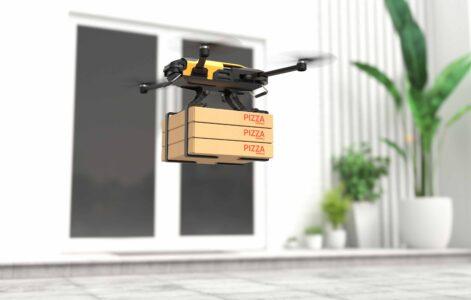
Delivery bots, too, could benefit our community — if the delivery systems are accessible. “During the pandemic, home delivery kept many people safe. But what if the delivery bot — whether it is bringing home supplies, fresh produce, or a warm meal from a restaurant — doesn’t have a height that I can reach from my wheelchair and a convenient way to hand over the products being delivered?”
It’s all very exciting, says Kent. “The great news is that almost everyone leading AV research and development is young — and young engineers see access and inclusion as a natural. It’s rewarding to work with people who know about access, believe it’s the right thing to do, and know how to achieve it.”
Thank you to Cruise for the photo illustration at the top of the page. Sign up for our newsletters for the most up-to-date information on accessible automated vehicles, drones and more. Register for our TechTalks to learn and exchange ideas about how technology can improve your life — and how you can help develop technology that right now is just a thought.