
What is it like being an LGBTQIA+ wheelchair user?
Douglas Lathrop shares how he came out of two closets. Kris McElroy tells how his life sits at the intersection of biracial, disabled and transgendered identities. Five lesbian couples talk about their weddings. And a young gay artist with cerebral palsy paints his way to self-acceptance.
Their stories are told in United Spinal Association’s membership publication, New Mobility. Following are excerpts from those articles:

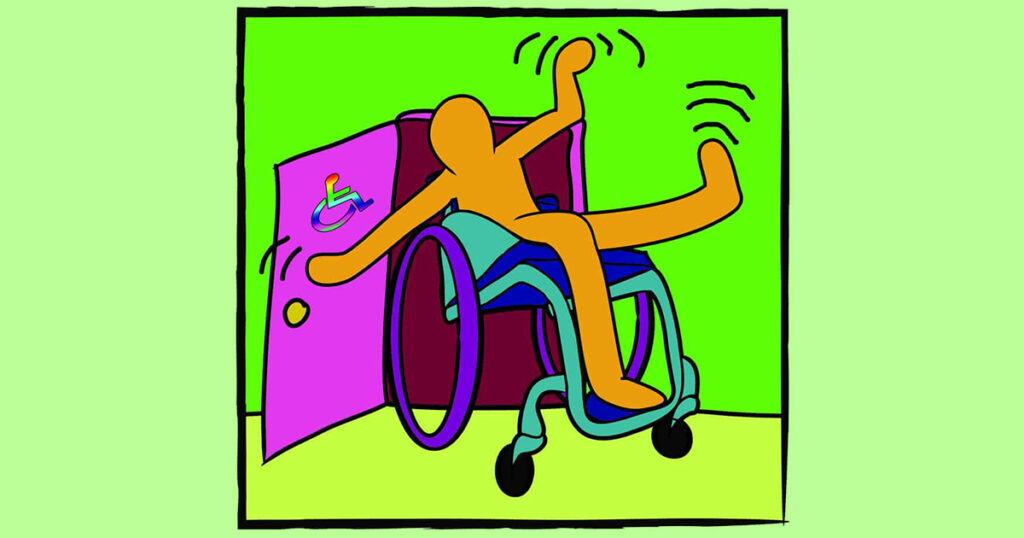
A Tale of Two Closets
I sometimes think I should have come out decades ago. It certainly would have made my college years a lot more fun. On the other hand, I might have simply worn myself out, fighting my way out of two closets at once. Being a member of one socially stigmatized group of people was exhausting enough without proclaiming membership in another one.
Nor is staying out of both closets — living proudly as gay and disabled, all the time — as easy as you might think. Being openly gay hasn’t been a cure of loneliness, though at least now I’m looking for love in the right places. There is also homophobia to deal with among people with disabilities, as well as ableism among LGBTQIA. When I’m around gay people I’ve met since coming out,
I often find myself downplaying my disability, in a way I don’t around straight friends I’ve known for a long time.
Black Lives Matter: Finding and Reclaiming Who I Am
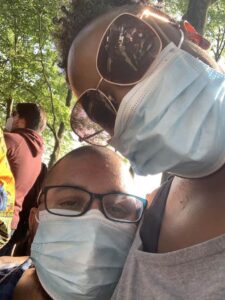
By Kris McElroy
The racial trauma of what it means to be black and brown in our society was passed down to me from my grandmother, mother, and our family. At the same time, racial slurs, maltreatment, microaggressions and discrimination were dished out in our neighborhood, communities, schools and when we sought assistance. This racial trauma interacted with my growing up with multiple disabilities in a community without much accessibility and full of ableism. I experienced the same slurs, maltreatment, microaggressions and discrimination, but in the context of my disabilities. Then when I got older and came out as transgender — all the same.
I internalized and wrestled with the consistent messages that I was an abomination just because my parents got married and decided to have a child. I internalized the consistent messages that my physical disabilities were the punishment for that marriage. The messages and treatment I received from my peers and adults was that both the color of my skin and my physical and developmental disabilities made me less than human. When I tried to fight against those messages, I was shut down in various ways. And when I expressed my voice, it was unheard, filtered through their biases, and changed. When I tried to advocate for myself, I was shut down by those who viewed me as unable and those who meant well and thought they knew what was best for me.
Because of these experiences and more, there was not a place I felt safe or a place where I knew I could be myself and be loved unconditionally — until recently. These experiences merged to create an interactive, complex, deep lens through which my identity developed around my race and disabilities. I took the complex convergence of marginalization and oppression I externally experienced and internalized it because that was all I knew, and I didn’t have anything or anyone to really counter it by offering different data or support navigating it. I wish I had earlier in my life, but I am thankful for the therapy and work I have done, including my advocacy work, to get to know myself and merge these once very separate identities into one, while fighting for change.
Here Comes the Bride … and Bride
By Josie Byzek
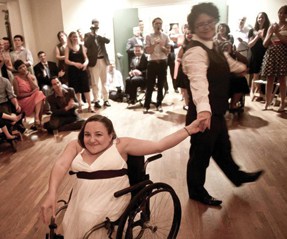
What Bethany Stevens remembers most about her wedding is how stressful it was. “The events leading up to it, not the actual ceremony, which was wonderful,” says Stevens. “We told love stories. Instead of vows, we told how we fell in love, and so there was laughter.” Weddings are stressful for everyone, regardless of the situation, and brides often bear the brunt of that. But in addition to the typical jitters, Stevens notes that her situation also was fraught with fears of being rejected, since Stevens was marrying another woman. And Sarah Palmer’s family had to deal with her not only marrying a woman, but a woman who uses a wheelchair.
“This was our first big proclamation of love in front of all of them,” says Stevens. “It was our chosen family and our parents that we were sort of pledging to, if that is even the right word. It was a way of publicly saying this is real, please get with it.”
“While there certainly was a lot of stress involved, it really was amazing to be around so many people that were so happy for us,” says Palmer. “It made me realize how much I tend to limit my expectations that people will be supportive of my relationship. I was overwhelmed with a sense of gratitude.”
Painting With Pride
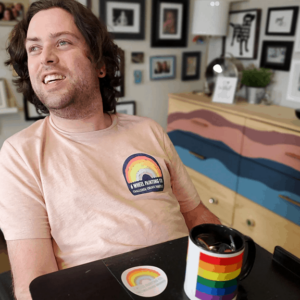
David Wudel paints to bring some positivity into an otherwise dreary year and process his feelings around being a gay person with cerebral palsy. Also, painting gives him an escape from the more right-wing residents with disabilities in his building who call him homophobic slurs like “fairy” when they see him in the halls. Brasch and Johnson find themselves on a similar journey to Wudel — also wanting to connect more to their queer identity and inject some positivity into their lives.
“It’s this subtle gay pride abstract painting, and both Preston and I have been trying to embrace that side of ourselves,” says Johnson. “Both of us are white cis-gender men so we tend to pass a lot in society, but we’ve been trying to dig deeper into our gay history, culture and stories and just be a little more intentional about it in our home. We don’t really have anything that’s overtly gay and we’ve been trying to reapproach that by reframing our stories in a positive way and own our queerness.”
With each painting he does, it’s getting easier for Wudel to own his queerness as well.
Rolling with Pride, our LGBTQIA wheelchair users virtual support group, meets every first Tuesday at 1 p.m. Eastern Time. United Spinal Association is committed to supporting all wheelchair users to live their authentic lives. Join our community by signing up for a free membership. To support our mission, donate here.
The illustration of a wheelchair user emerging from a closet is by Liz McHugh and the photo of Bethany Stevens dancing with Sarah Palmer is by Michael Mullady.