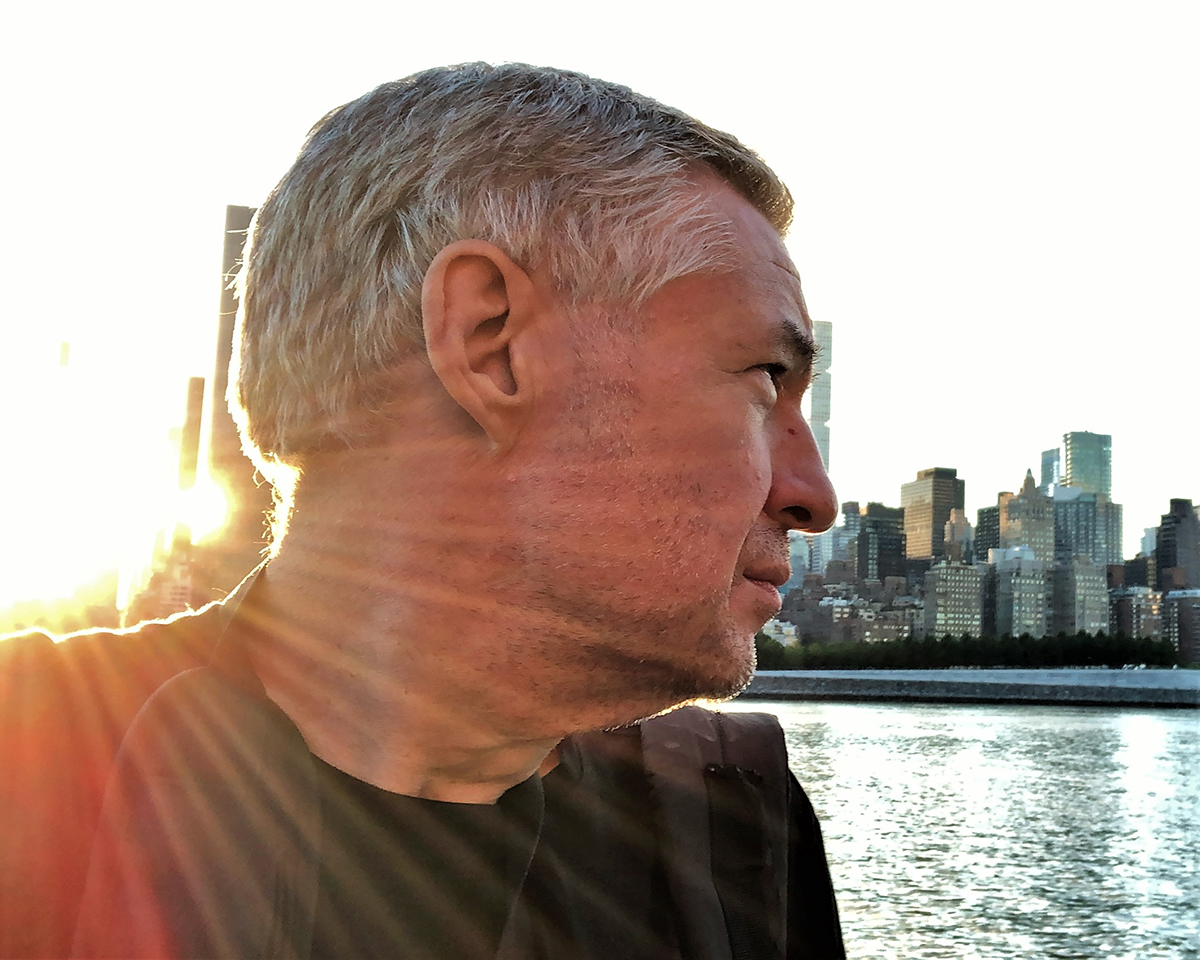
Anyone who has heard Portugal. The Man’s Grammy-winning music or seen Eric Howk’s guitar work during a seminal American Music Awards appearance knows he can rock.
The question, when the 40-year-old guitarist-vocalist owned up to years of substance abuse and sought treatment, is could he roll…into a residential treatment center that accommodated people with disabilities.
Howk, a member of Portugal since 2015, grew up with the band’s singer John Gourley and bassist Zach Carothers in Wasilla, Alaska. Howk sustained a spinal cord injury in 2007 and uses a manual wheelchair for mobility.
He was sitting against a wall in a friend’s yard when the wall collapsed. Howk fell 12 feet and ended up with a T4 spinal cord injury.
The guitar riff power behind Portugal. The Man’s huge hits, “Feel It Still,” and “Live in the Moment,” was used to traveling in cramped vehicles, maneuvering through tight spaces and finding most rock clubs do not have wheelchair lifts or ramps to the stage.

But when it came time to getting clean and sober, he wanted to stay at a facility that had wheelchair access in the sleeping quarters, bath, dining hall, grounds, therapy session and more. It’s a pretty simple request in the 21st century, but Howk kept striking out when he searched for an in-patient treatment facility with even the most basic of access. And the band is now based in Portland, not some isolated one-horse town with only one tiny substance facility available.
“Addicts, people chemically dependent: the justifications, the excuses – it’s something we’re all really good at,” Howk said. “It’s not good, because of lack of access, to provide one more excuse to not seek treatment. “It’s not good, to have the best facility saying `I don’t know if you can get in, maybe through the side door. Or the bathroom can’t work, well…but maybe we can take the door off the hinges, but you’d have no privacy.’”
The Centers for Disease Control and Prevention Studies estimates that roughly five million people have both a substance use disorder and a co-existing disability. The over-prescribing of opioids for pain has contributed to growing addiction rates. Studies have found that up to 50 percent of individuals with spinal injuries, orthopedic injuries, and traumatic brain injuries indulged in heavy drinking.
“I haven’t done any hardnosed research on it, but I’ve noticed a tendency in people dealing with traumatic injury and pain management to self-medicate,” he said. “I know people who have gone through the sobriety journey as a disabled person. They probably started doing the research and couldn’t find real answers (on accessibility at a facility) or they got the dreaded vague answers.”
Howk, who admits that he cropped his wheelchair out of his photos for the first few years after his injury, created a straightforward, personal video celebrating the 30th anniversary of the ADA.
He is sharing his story, not as a personal complaint, but as way of shining a light on the issue of far too many substance abuse in-patient facilities not having accessibility.
I went in 10-10-2020 for 28 days,” Howk said. “I went to an old building — a former retirement community built before the ADA. It had some wide doorways – but some unbelievable angles to negotiate and some questionable decisions with overall design. I made it work, they put me in the room they thought could work – but even that had two doors to get into bathroom and big lip on the bath. “I wasn’t sure till I brought my bags in and they took my phone and shoe laces away, was I certain this would work for me.”
The reality is that many treatment facilities are not fully accessible and very few advertise wheelchair access as part of their online presence.
Matthew W. Dietz, founding member and Litigation Director of Disability Independence Group, has spearheaded hundreds of ADA, Fair Housing Act and civil rights cases over the past 25 years.
“I would say the ADA applies, but they would need to be as accessible as any other public accommodation,” he said of residential rehab facilities. “They need to be proactive in ensuring that barriers are removed if it’s not previously made or built accessibly. Because sober homes were almost originally all homes, they would need to be accessible, and would need to do what is readily achievable.”
Dietz said a person with a disability seeking to stay at such a facility has the right to request a reasonable accommodation or modification to make it accessible. Howk hopes telling his story will empower people with disabilities to push for more readily-accessible in-patient facilities.
“We tour a bunch; we do a couple hundred shows a year in non-COVID times. “I’ve toured all over Eastern Europe and South and Central America, so I’m used to adapting,” Howk said of less-than-ideal access on the road. “But people with disabilities seeking sobriety, it should never be prohibitively difficult to be accommodated at a facility – to have difficulty even getting through the front door, let alone every other area that you will need access to during a month of in-patient treatment.”
The Substance Abuse and Mental Health Services Administration, a division of the federal Health and Human Services agency, has a stated mission to reduce the impact of substance abuse and mental illness on America’s communities. Sadly, the agency’s searchable treatment center function on its website contains zero information on finding ADA-compliant, or even minimally-accessible in-patient facilities. A simple search of “wheelchair access” among the millions of words on the SAMHSA website produces fewer than 10 results – none of them pertaining to accessible residential substance treatment centers.
Many of the nation’s largest, multi-state providers of residential addiction treatment shied away from going on the record for this story, or declined to provide any details about how accessible they are or how they accommodate treatment seekers who use wheelchairs for mobility. American Addiction Centers, a publicly-traded company with several residential and outpatient treatment facilities, issued this statement: “Several of our facilities are wheelchair accessible and regularly care for patients with disabilities. Our main prerequisite is that the patient be able to perform activities of daily living and meet other criteria to qualify for addiction treatment services.”
Howk is trying to raise awareness of the need for more accessibility and the need for a database or other easy-to-access way of getting accessibility information.
Howk is sharing every frank detail of his recovery as part of the band’s PTM Foundation’s focus on National Recovery Month (always observed in September) Last year, the human rights-focused foundation raised thousands of dollars for the United Spinal Association in observance of the 30th Anniversary of the ADA.
Portugal. The Man’s “Feel It Still” went 6X platinum, broke the record for most plays in a week and most weeks on the Alternative charts, and was used in ads for Apple and Vitamin Water. “Live in the Moment” hit number one on the Billboard Alternative chart and broke a record for most plays in a week. All the while, its guitarist was continuing a pattern of heavy drinking and using some pills. A silver lining of the ongoing pandemic was that its impact motivated Howk to modify his behavior.
“COVID hit, the quarantine started and I started drinking like a fish. I always a had a troubled relationship with alcohol, but all that stuff exploded with the isolation, the unknown,” Howk said. I was asking, `is my job ever going to come back.’”
Howk said he once was clean and sober for 40 days, then he had a glass of wine at dinner. Before the night was over, he had downed a bottle of hard liquor.
“I had a million excuses not to go to rehab. “`I haven’t driven my car off a bridge. I haven’t killed myself. I’m drinking a bottle of whiskey a day, but I’m holding it together. I’m a successful touring musician. I can address this 10 years from now,’” he said, recounting the ways he put off getting clean.
This exclusive for United Spinal is the most lengthy, candid sharing of his substance issue story Howk had ever done. He said even if there are many musicians and people with disabilities that have substance problems, he feels his is a genetic issue.
“I have a ton of family history with it. It took my grandfather out and it took my father super early,” Howk said. “I had years and years of drinking and having this bad relationship with alcohol for 20 years.”
“The isolation and sedentary life of COVID stirred up a lot of my demons. I’m grateful that it did,” he continued. “I could see my body falling apart, I gained a bunch of weight. For the extent alcohol and some of the pills I was using helped spasms in short term, it was ruining my life…killing me.”
United Spinal continues to advocate for greater accessibility of the built infrastructure. A recent focus for the organization’s Advocacy and Policy department has been accessible medical diagnostic equipment in hospitals and clinics. Over the last couple of years, United Spinal and others have been working with the Administration for Community Living in providing guidelines for medical providers on accessibility at Federally Qualified Health Centers – also known as health centers which do provide treatment for mental health. More recently, the Advocacy and Policy team has been working with the U.S. Access Board as well.
If you or someone you know has encountered access issues at substance use disorder and mental health disorder treatment facilities, United Spinal wants to hear your story. Please contact our Online Help Desk.
You can also view the Fact Sheet on Drug Addiction and Federal Disability Rights Law.
Find the protection and advocacy agency in your state.