

This is the second part of a three-part series featuring 10 individuals’ insights on living with a disability or an illness. Be sure to check out Part 1 and Part 3 of the series.
Cameron has Ehlers-Danlos syndrome (EDS), a connective tissue disorder.

EDS affects the joints and other bodily systems, such as the digestive and respiratory systems, to name a few. Cameron has observed that EDS needs more support in the medical community. More research needs to be carried out, and medical treatments and facilities for patients with EDS need to be more extensive and readily available. For Cameron, as it is for many other EDS patients, seeking the appropriate help she needs is a tedious process, as she often has to wait a year to get an appointment.
It is not just the medical community that needs to provide more support, but general society, too. “One thing I run into a lot is people staring, which seems to defy basic manners,” Cameron says. Not only can staring seem offensive, it does not do any physical good either. Instead, the public should be proactive in lending their support, such as offering their seats on public transports, or simply by being more empathetic.
Cameron notes that there is a general lack of understanding in both society and in the medical field towards people with EDS, and this is something which needs to change. Her optimism is what gets her through. With all the complications that arise from EDS, Cameron jokes that “EDS should be called ‘The Catch 22 Disease.’ After all, “you cannot win unless you laugh.”
Ariana had a pulmonary embolism when she was 22 years old.
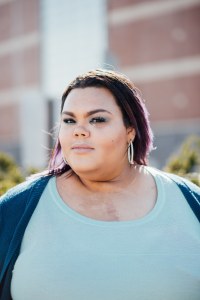
She underwent an emergency open-heart surgery and multiple surgeries on her leg which resulted in her limp. Now, Ariana is 26 years old, and she is living her life, just like everybody else. She has a different approach to life now, recognizing how much she has taken for granted in the past. She has also received cynicism from others who accused her of using her disability to gain sympathy. But her strength powers her through this negativity. “I don’t want anyone to pity me; I just want people to respect me like they do everybody else,” says Ariana.
She has also recently started a beauty and lifestyle YouTube channel, Diva on a Dime. There, she discusses issues related to body image, and empowers people to look their very best.
Mary has myelomeningocele, which is a form of spina bifida.
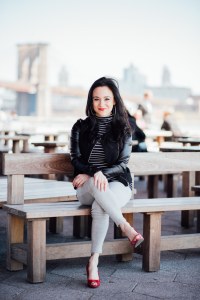
It affects several of her body functions, including her spinal, motor, internal organ, and psychological functioning. Mary pushes herself to the best of her abilities. She recalls various occasions when she continued completing school and work assignments even when she was hospitalized. Mary has achieved much success through her determination, and also with the support of her family and doctors. She has had both academic achievements, such as obtaining her master’s degree, and career success. There are times when Mary has felt the need to prove herself, especially to the spina bifida community or to the general public.
“There have been times when people haven’t believed the battles I go through just to live my life – even people at conferences have shunned me because I don’t look like their kids with spina bifida.”
As for the able-bodied, they expect her to be like them, “to do all the things a ‘healthy’ person can do” because of how she looks. Recognizing this stigma placed by both communities, Mary has found a bigger voice to actively speak for the community and in the spina bifida community itself. “People with spina bifida all look and function differently, but we can all be ‘messengers.’ It’s time to give a name and face to spina bifida!”